Daring To Be Different - Growing Produce Website | GrowingProduce | Article
Follow us: RSS Feeds Twitter Facebook Produce Community
Search

Daring To Be Different
The 2011 Citrus Achievement Award winner takes an alternative approach to HLB that gives hope to the industry.

May 18, 2011

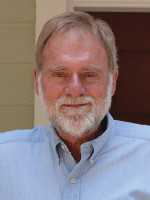
  •  Maury Boyd, 2011 Citrus Achievement Award winner  © 2011
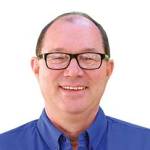
    Maury Boyd, 2011 Citrus Achievement Award winner

In the spring of 2006, something was not looking right in McKinnon Corporation's Orange Hammock grove near Felda. At first, Maury Boyd, president of the company, and Tim Willis, manager, attributed it to recent hurricanes. But soon, FDACS Department of Plant Industry had confirmed HLB as the culprit.

The discovery set Boyd on a path that drew criticism and praise along the way as he shirked conventional wisdom and developed a foliar nutrition program aimed at maintaining the health and prolonging the productive life of his infected grove. According to Boyd, following the recommendation to remove infected trees was not an option. To do so, he would have pushed so many trees that continuing to produce would not be economically viable.
In addition, Boyd opened his grove and books to share with the industry what he was doing come what may. Considering how controversial it was at the time, it took a stiff upper lip and perseverance to calmly stand his ground in the face of some strong opposition.

"Perseverance" was referenced often in Boyd's multiple nominations to be this year's Florida Grower Citrus Achievement Award winner. Florida Citrus Mutual's Mike Sparks, executive vice president/CEO, and president Vic Story submitted a nomination on behalf of the board of Mutual that sums up the sentiment of other nominations: "We can think of no other grower who has impacted the industry more than Maury over the past few years. His cutting edge nutritional program has given the industry hope in its fight against HLB. Maury was originally ostracized for the program, but like a true leader, he persevered. Now the rest of the industry views nutritional therapies as a bridge between the current situation and the day when research yields a long-term solution."

The Tipping Point

Boyd says the decision to remove trees or not might be determined by where you are located in the state and the level of infection in one's grove. "Tree removal at low infection rates is logical, but we had already reached our tipping point before we knew we were infected," he says. "In Southwest Florida, it was so much further along versus the northern citrus growing area."
 
Labor Looming Large
Maury Boyd says the inability to obtain a reliable source of labor poses as big a threat to the citrus industry as HLB. Without real reform and a workable guest worker program, he says there is a possibility growers will not be able to find workers to harvest crops. Florida Grower Editor Frank Giles asked Boyd about how changing labor laws are impacting ag.
Q. How big a challenge is today's labor environment and why?
A. The present political environment is not addressing the immigration issue positively and is of great concern to me. Just focusing on agriculture, most of the U.S. vegetable and fruit crop harvesters and field employees likely will have no-match social security numbers or will not be E-Verified. So what will happen? Like other U.S. industries, vegetable and fruit growing will move to other countries or likely those already there will expand to meet the demand. Many U.S. farms will cease to exist.
Of interest is many of these people, who are employees, are native Indians or mixed — mainly from Mexico and Central America. Before the Europeans arrived, they populated in tribal form across continents with developed civilizations such as Maya, Aztec, and Olmec, which rivaled anywhere else in the world. These Indians roamed wide areas not bounded by European-introduced borders. Now, many Americans call them illegal and want to send/prevent them from crossing the border as they look for economic livability.
Q. What do you believe is necessary to improve the labor/immigration situation in agriculture and America?
A
. Recognize them as guest workers and document them. They do not become citizens, nor do their children. They return to their homes when the work finishes, but they will know they have a return job. While U.S. unemployment is 10%, our unemployed group still will not be doing the harvesting or operating the field equipment.
By the time inspectors had confirmed HLB, infection rates were likely as high as 35% overall in the Felda grove.
Boyd had always been a believer in foliar nutrition and had used applications in the grove because both the older block and young block are on low fertility soils. The HLB find led him to step up his nutritional program and add salicylic acid in the form salicylate (SAver, Plant Food Systems), which is a systemic acquired resistance (SAR) material.
 
Working on the knowledge that the HLB bacteria prevents and impedes the ability of a wide spectrum of nutrients to move in a citrus tree, Boyd has developed his "cocktail," which contains 11 different nutritional and SAR products. His theory is trees weakened by HLB must be fed all essential nutrients. "If any deficiency occurs, even one, it will interfere with the overall tree health," he says. "Therefore, all known and unknown nutrients should be applied with the objective of tree enhancement and recovery."
 
How has Boyd's grove progressed since the nutritional program was initiated in 2006? Certainly, HLB has continued to spread throughout the grove. The young block is by all accounts 100% infected and the mature block not far behind. But, the trees are maintaining and yields are respectable. In fact, Boyd has recorded some of his highest yields in the grove during this time frame.
"I think everyone who has been in the grove will agree the mature trees are no worse, and probably better," he says. "The young block is better. We are seeing very little symptomatic fruit the last couple of years. We've seen fruit that is small and I thought it was symptomatic. But, when you cut them open, usually it's OK inside, including the seed. All Valencias have been normal size.
"My whole theme is growers need a short-term answer to bridge the gap while science finds a long-term solution. In the meantime, we want to stay in business."

Psyllid Control A Must

Psyllid control is right at the top tier of importance in Boyd's program. He often uses the analogy "death by 1,000 cuts" to describe the destructive effect of many psyllids on a citrus tree.
"Our objective is 100% control of the psyllid or as close to 100% as possible," he says. "We are involved with the area-wide sprays and are seeing good results. In 2009, we finally got good control of the psyllid and we could see things change for the better in the grove."
Boyd has psyllid control applications made every four to five weeks. He credits his manager, Tim Willis, for being an early proponent of areawide sprays. "We try to kill them before they have time to mate and lay eggs," he says "Since 2009, I believe our program for the psyllid is working that well."

The World Is Watching

Many people have referred to Boyd as an open book when it comes to the program he has developed for maintaining tree health in the presence of HLB. From the start, he never claimed what he was doing was a cure, nor did he claim he know what the future held. He laid out his program and opened the gates to his grove and let people draw their own conclusions.
 
Nearly six year later, Boyd maintains transparency regarding his program and its effects in the grove. When he began the program, some critics said the grove would be dead in two years. Yet, it remains and hundreds of growers and scientists from all over the world have toured the grove in Felda to get a firsthand look at the results of the program. It is no exaggeration to say his is the most famous grove in the world today.
 
Boyd stresses the critical importance of funding more research into the area of foliar nutrition to help define what's happening in his grove and other groves where other foliar programs are being utilized. He credits the HLB research being done at the Southwest Research and Education Center in Immokalee.
Dr. Bob Rouse, a researcher at the Immokalee center, has been trialing Boyd's nutrition program and says he is a great choice for the Achievement Award. "I don't think anyone recently has had a bigger and more important positive effect on the Florida citrus industry," he says. "Maury has been a leader with his nutritional and psyllid management approach in maintaining his groves from the beginning in the fight to survive with HLB.
"Maury has given much of his time for the past several years inviting anyone he could to visit his grove to observe for themselves the condition of his trees. Maury has shared his production records from before he had HLB to his most current harvest. No one could be more giving and willing to share his information for the benefit of all citrus growers."
 
Much of this grant money for research comes out of the growers' pockets. Boyd says. "Politics can come into play on how and where the money is spent, but we as growers must call for accountability of how our money is being used."
When asked why he has been so vocal about his program and opened himself up for criticism from his opponents, Boyd replies: "It is pretty simple. In the citrus industry, we are all in the same ocean. We rise and fall together. We might be in different size boats, but we are all in it together. I've had a number people ask why I'm doing this. The reason is to find a way to survive and make a living growing fruit while we wait on long-term solutions."

A Word From The Sponsor

Chemtura AgroSolutions is proud to sponsor the Florida Grower Citrus Achievement Award. Maury Boyd is an excellent choice by his peers in the industry. When HLB was found in his groves in 2006 and removal of the high number of greening infected trees would essentially put him out of the citrus business, Boyd decided he would try to extend the productiveness of his groves with an aggressive nutritional program. His research and demonstration efforts in his own groves has been an open book for growers to see and has been observed, discussed, dismissed, criticized, attacked, praised, and followed from many angles and the "proof is in the pudding" as his trees continue to survive and yield sustainable crops. What is a fact is that Maury Boyd's program generated grower hope when the industry needed it most.

Chemtura AgroSolutions proudly supports this award because it represents a commitment to the future of the Florida citrus industry by people working to keep citrus viable in the state. Chemtura AgroSolutions salutes Maury Boyd as the 2011 recipient of the Florida Grower Citrus Achievement Award.

Giles is editor of Florida Grower, a Meister Media Worldwide publication.

Leave a comment: (All fields are required)
Name:  E-Mail: 
Type only the numbers from the code into the textbox:
[ CAPTCHA ERROR ] (DO NOT enter the brackets [ ] )