



Taking An Antibiotic Approach To HLB: 2012 Florida Citrus Show Extended Content Coverage
 June 1, 2012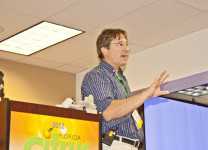
Multiple presentations during the 2012 Florida Citrus Show provided varied aspects of vital research and the encouraging progress being made to not only produce tastier fruit, but also hardier trees. “The solution to HLB is a resistant plant,” said Harold Browning, COO, Citrus Research & Development Foundation, at the Show. Based on the information presented during the sessions, scientists are getting closer.
Bob Shatters, a research molecular biologist at the USDA-ARS Horticultural Research Lab in Ft. Pierce, led a discussion on introducing antibiotics into citrus for HLB management. Basal bark application therapy of antimicrobials on young trees is showing positive results in the efforts to cure an HLB-infected tree and possibly prevent infection in the first place. “One treatment reduced development of CLas (Candidatus Liberibacter asiaticus)-positive trees by 50% under heavy psyllid load,” Shatters said to an attentive audience.
Interesting breakthroughs were found in the ability to apply the antibiotic mixture directly to the bark (via “nicotine patch”/painted-on approach) and have it uptake into the tree. According to Shatters, further studies are being conducted on more mature trees at USDA’s Picos grove.
Subscribe Today For
