



Global Discussion On Vineyard Trunk Diseases
 January 11, 2013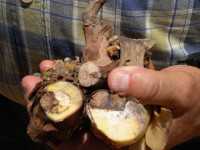
Pathogen Detection And Characterization
The session began with a controversial presentation by French scientists suggesting that bacterial rather than fungal pathogens might be the primary cause of grapevine trunk disease. The work using both molecular and microbiological experimental methods based its premise on the observation that similar fungal diversity is equally present in healthy and diseased vines. In contrast, they observed a large diversity of species of bacterial populations between healthy and symptomatic vines. Their conclusion that bacteria, rather than fungi, cause trunk diseases goes against the well-accepted etiology (cause of disease) of many known and characterized trunk diseases such as young vine decline (aka Petri Disease), Esca, and Bot Canker in which the fungal pathogens are endophytic organisms that live and colonize a vine without causing any disease until the vine is stressed. In other words, the traditional point of view is that the same fungal populations are present in healthy and diseased vines.
Related to stress and fungal pathogen association, another presentation given by Eurofins STA addressed the new syndrome, Red Blotch, reported in California vineyards in the 2011 fall season (for more, see page 10). The laboratory tested many samples from a variety of vineyards exhibiting Red Blotch foliar symptoms for the presence of viruses and fungi. No evidence of known virus infection in the Red Blotch syndrome plants was found. However, pathogenic fungi were routinely found in the symptomatic vines. In all instances of Red Blotch, the plant material showed typical fungal cankers and streaking in the wood. Additionally, most samples had constrictions caused by grafting tape or had twisted and/or “J” shaped roots.
Recently (17th International Grapevine Virology Meeting held in October 2012 in Davis, CA), a new Gemini-like virus was reported to be associated with the Red Blotch syndrome. There is no information on the biology of the virus and further studies are required to show that the virus causes this disease. It is possible that the presence of this virus makes the vines more susceptible to fungal pathogens or vice-versa. More research and the testing of many symptomatic vines will allow us to correlate symptoms with the presence of virus and fungal pathogens in diseased grapevines exhibiting red “blotchy” leaves.
The focus of the session then moved to pure fungal work, starting with a study on the genetic diversity of the fungus, Eutypa lata, in Californian vineyards, orchards, and riparian areas. This study showed that the fungal population is more genetically diverse in vineyards and orchards (planted to Prunus species) as compared to the riparian areas populated with willow. This suggests that Eutypa spp. fungal spores are dispersed between the orchards and vineyards, while the infections in the riparian areas most likely originate from the orchards and/or vineyards.
Phomopsis fungal species associated with wood cankers in North America were the subject of two papers. One presented the association of foliar symptoms with wood cankers. Another discussed the historical perspective of Phomopsis spp. as it is associated with trunk disease. According to the author, Urbez-Torrez, phomopsis has been overlooked as the cause of grapevine trunk disease for more than 40 years. Urbez-Torrez proposed the name “Phomopsis dieback” for the disease caused by P. viticola.
The session culminated with a presentation by Pedro Crous pleading with the audience to standardize the nomenclature of fungal pathogens. If all researchers agree with this proposal coined as “one fungus, one name,” the future nomenclature of fungal pathogens will be much simpler. The new proposal would drop the dual scientific names of pathogens with sexual and asexual stages in their life cycle. For example, the proposal would drop the name Diaporthe as it is less used than Phomopsis in scientific literature (Phomopsis is the asexual stage of Diaporthe).
For more on epidemiology, click on the additional page.
Epidemiology: The Study Of Disease Epidemics
This session had many practical presentations. One confirmed the role of pruning wounds on the dispersal and infection of fungal trunk disease pathogens. Another presentation from work performed in France showed that diagnosing Esca based solely on foliar symptoms is difficult, but confirmed the relationship of known fungal pathogens with vascular disorders. Another presentation was of a study performed with artificially inoculated vineyard soils demonstrating that Phaeomoniella chlamidospora is able to survive in soils. This study may help explain how contaminated soil could disperse fungal pathogens throughout a vineyard or nursery. An independent study using “bait” seedlings planted in soil from nurseries and commercial vineyards confirmed that soil is a potential reservoir of inoculum of black foot and Petri disease pathogens.
Other presentations focused on the potential transmission of fungal pathogens from pome, stone, kiwi, and olive trees planted in proximity to vineyards. These studies showed that the fungal pathogens that cause grapevine trunk disease are not host specific and the neighboring plants can function as a source of inoculum for infection of vineyards. Richard Smart ended the session with “the vineyard consultant’s” perspective on grapevine trunk diseases, with examples of the incidence and severity of trunk disease issue in Australia, England, and Thailand.
Disease Management And Control
Recently, it has been recognized that many fungal pathogens are transmitted during pruning. This led to research into optimizing the use of fungicides for vine wound protection. A South African study found the use of benomyl and carbendazim are the most effective fungicide treatments to control Eutypa dieback. Related to this, Doug Gubler’s laboratory presented a summary of their work performed over the years showing that a combination of pruning wound protection with late or double pruning is an effective measure to reduce the incidence of trunk diseases in California vineyards.
In France, late pruning was shown to decrease Eutypa dieback symptoms but had no effect of Esca symptom development, suggesting that these diseases do not follow the same infection mechanisms. A few presentations showed that endophytic fungi such as Aureobasidium, Chaetomium, Epicoccum, and Trichoderma species may be used as biological control agents against Esca and Dead Arm diseases.
One remarkably long-term study performed in the Cognac region of France described the effects of cultural practices on grapevine trunk disease (Eutypa dieback and Esca) expression. Specifically three different viticultural related variables were studied: training (cordon vs. Guyot), fertilization (three different nitrogen concentrations), and rootstock (four different rootstocks, none of them widely used in California). It found that, even though the Guyot training system displayed the least disease associate foliar symptoms, the vines trained with this system had the highest mortality. It also found that high mortality was correlated with the use of high nitrogen concentrations. Another related long-term study using pruning wood protectants concluded that none of the treatments had an effect on vine mortality and/or symptom expression. Other presentations focused on the beneficial effects of sanitation of nursery mother blocks and grafting material, concluding that hot water treatment (50°C for 30 minutes.) was the most effective tool to improve the health status of nursery vines.
A Field Trip
Meeting delegates visited the region’s School of Enology and Viticulture and vineyards and wineries in the Valencian Utiel-Requena wine growing region. Of interest was the demonstration vineyard with trellised rootstock, wine, and table grape variety trials.
The group learned about the Bobal grape variety, indigenous to the Valencia wine growing region. Its thick skins used to be used for increasing the color of wine made with Tempranillo. But now winemakers have been crafting high-quality wine using just Bobal grapes.
Plant pathology aside, what would a trip to Spain be without the tasting of local wines, savoring of the famous Paella, exquisite tapas, and horchata (an extremely sweet and refreshing drink made with tubers from a plant called chufa) grown only in this region of Spain?
Subscribe Today For
