An Apple Empire Grows Strong in New York State
 June 30, 2026
 On the southern shore of Lake Ontario, where fertile soils and a favorable climate have supported fruit production for generations, Robert (Bobby) Brown III farms with one eye on history and the other on the future.
View all
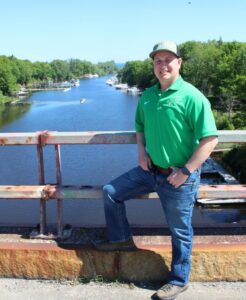
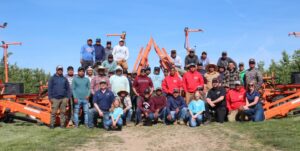
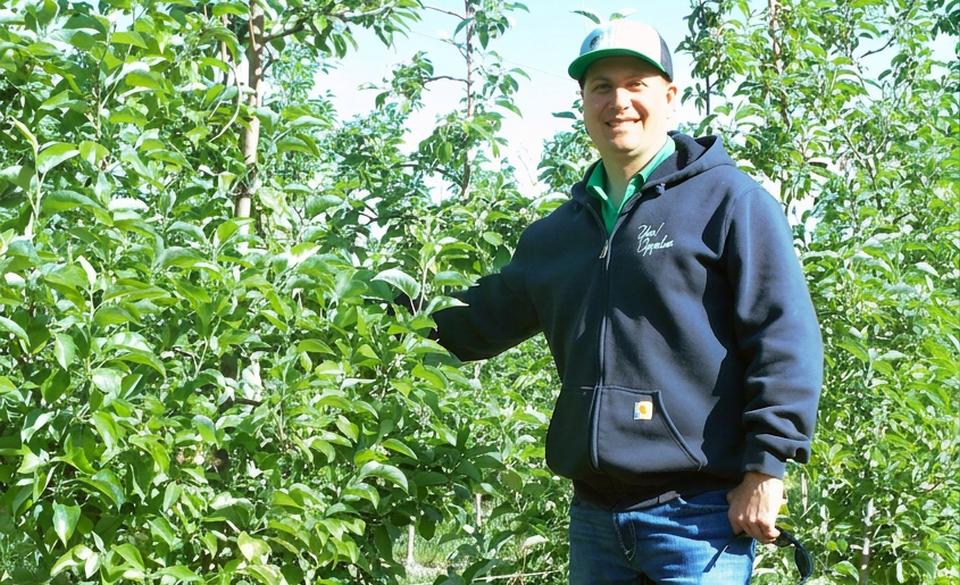
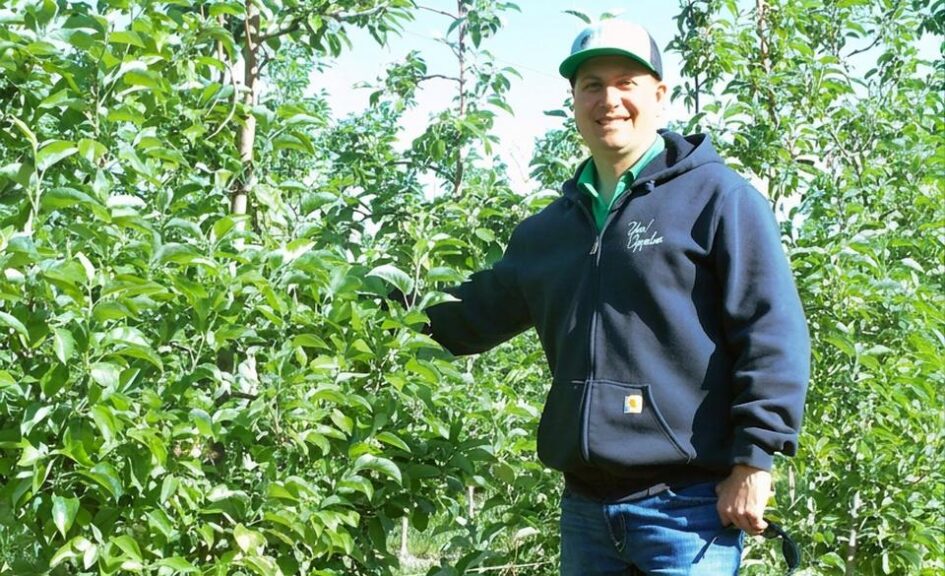
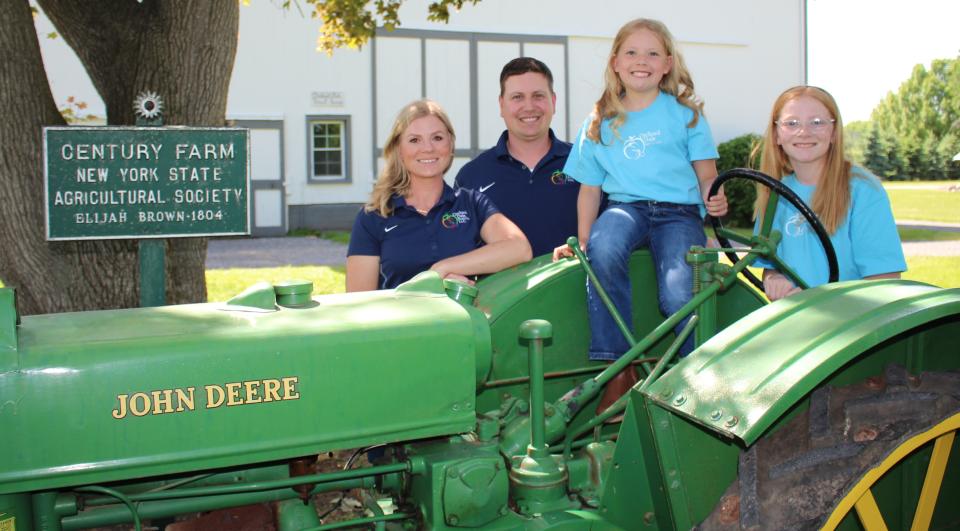
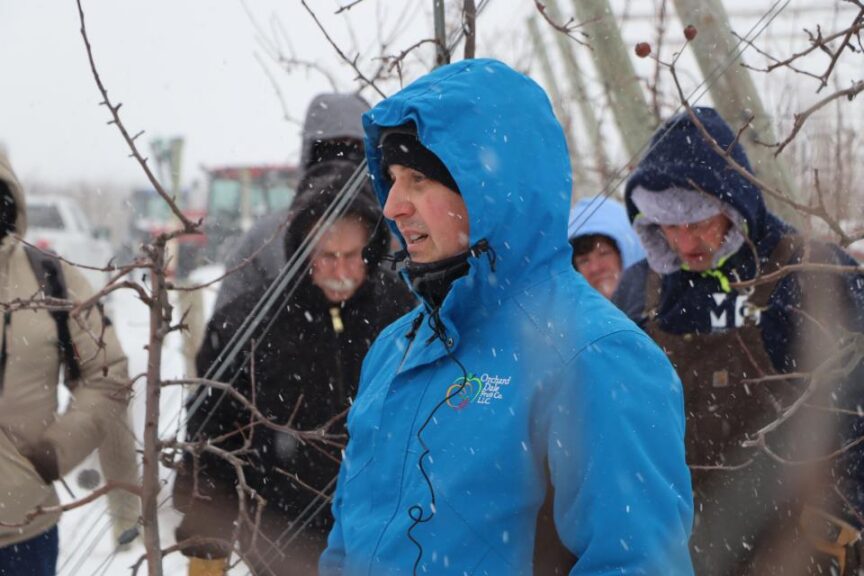
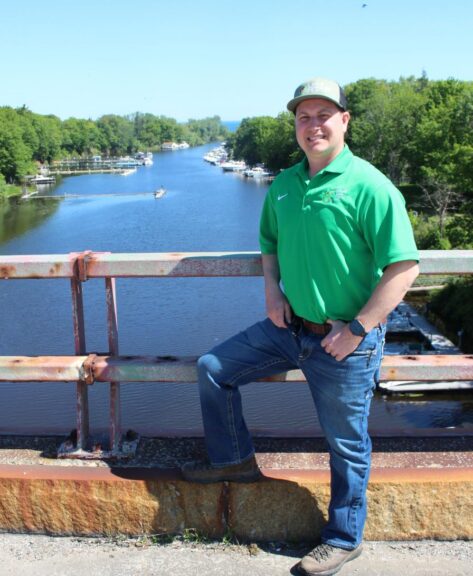
Brown — the 2026 American Fruit GrowerSM Apple Grower of the Year — represents the eighth generation of his family to farm the same land in western New York state. More than two centuries after his ancestors first settled in the region, he now leads Orchard Dale Fruit Co., a 450-acre operation that produces fresh-market apples, strawberries, and blueberries. He also serves as President of Lake Ontario Fruit, one of the largest apple packing and storage operations in the Northeast.
At age 42, Brown is one of the youngest of 38 recipients of the annual Apple Grower of the Year award. Yet among the dozen industry leaders who nominated him, the same themes surfaced repeatedly: innovation, collaboration, leadership, business discipline, and a relentless commitment to people.
Taken together, those qualities have helped transform Orchard Dale from a successful family farm into one of the industry’s most respected operations.
GROWING INTO THE BUSINESS
Upon graduating from Cornell University in 2006 with a degree in applied economics, Brown did not return to his family’s farm intending to become solely a horticulturist. He immersed himself in the operation’s financial side before taking on greater production responsibilities.
“I worked in our office for a couple years to really learn the business,” Brown says. “It gave me a way to find areas where we could be profitable and where we should invest.”
That business-first perspective would later shape some of the farm’s most significant decisions.
A turning point came in 2012, when a devastating spring freeze reduced crops across much of the Northeast. For growers who still had fruit to market, the season highlighted the value of supply, quality, and strategic investment.
“It opened up the equation,” Brown says. “Things can be rewarding. Things can be successful. It changes your income statement, it changes your balance sheet, and it gets you excited to reinvest.”
The following year, Brown attended a Cornell summit headlined by Applied Fruit Crop Physiologist Terence Robinson. Discussions about crop load management, orchard architecture, and maximizing returns per acre reinforced his belief that the future belonged to growers willing to modernize.
“Since then, we’ve invested acres and acres and acres of fruit,” Brown says. “And we’ve been able to get a lot of that investment back.”
For Beth Brown, Orchard Dale’s Business Manager and Bobby’s wife of 16 years, the farm’s transformation was never about chasing trends.
“When you make big changes like that, I think it’s natural to have some stress or think to yourself, ‘Is this the right thing to do?’“ she says. “But he always has a plan. He laid out a long-term plan as far as planting and transitioning the farm.”
More than a decade later, watching that vision come together “has been pretty amazing,” she says.
PUTTING PEOPLE FIRST
Ask Brown about Orchard Dale’s greatest asset, and he does not talk about technology, equipment or varieties. “No. 1 is people,” he says.
He credits much of his development to the opportunity to work alongside his father, Robert (Bob) Brown II, and his uncle, Eric Brown. Bob Brown passed away Nov. 23 at the age of 70.
“I’ve had the privilege to work with my father and my uncle over the last 20 years,” Brown says. “They’ve taught me a lot. They helped me start my career, and I can’t thank them enough.”
Family remains central to his life. He and Beth are raising two daughters, Emaline and Addison, while managing the demands of a growing farm business. “Family’s No. 1,” Brown says. “I’m grateful for my wife, my kids, my parents, and my uncle.”
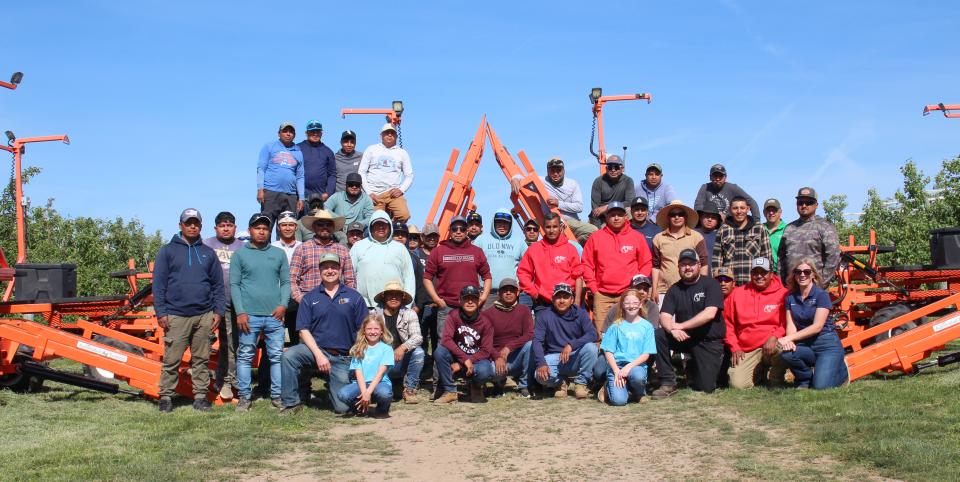
Orchard Dale’s Equipment Operations Manager, Quinton Vercruysse, sees that people-first philosophy throughout the operation. “It’s kind of like a family,” he says. “We talk every day, seven days a week. We’re always figuring out the plan for the next day and the next challenge.”
He says Brown’s enthusiasm sets the tone: “He’s a busy guy. He just doesn’t stop. He likes to push, push, push and see what we can do. He loves horticulture, he loves apples, and he loves the people.”
Beth sees the same determination from a different perspective.
“It’s all-encompassing with the business,” she says. “His ability to plan for the future. And, also, with apples we have to be flexible and be able to make changes. He has the ability to do that and stay positive.”
As business partners, the couple work closely together on virtually every aspect of the operation. “He has the ability to take all the pieces and juggle them successfully,” she says.
Michael Keller, a Sustainable Agriculture Specialist with Valent USA, believes Brown’s treatment of people may be one of his defining characteristics.
“Whether you’re an H-2A worker, a vendor or a person from the community, he treats everybody with respect,” Keller says. “I think that’s what separates him from other people in the industry.”
TECHNOLOGY WITH A PURPOSE
Brown’s name is often associated with precision horticulture, but he rejects the idea of adopting technology simply because it is new. “We try to find a balance,” he says. “We want to be doing a good job implementing technology, not just chasing it.”
Orchard Dale’s precision journey began with intensive soil sampling and variable-rate fertility programs. Over time, the farm expanded into precision spraying, orchard scanning, crop load management tools, and data-driven decision-making systems.
“Everything we do, we’re trying to push the envelope of something new,” Vercruysse says. “Whether it comes down to tracking equipment, repairs, fertilizer applications, spraying or orchard platforms, we’re trying to keep everything consistent and track it so we can look back at the data.”
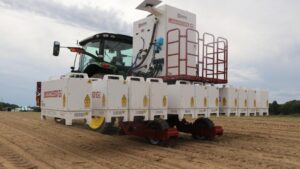
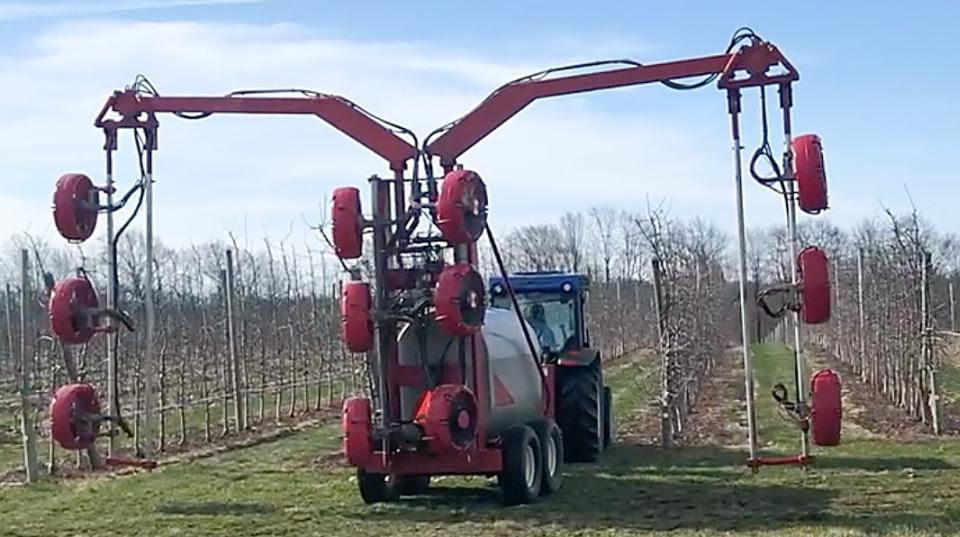
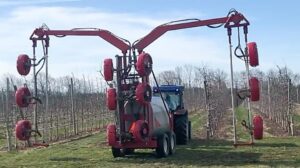
One example is the farm’s work with variable-rate spraying technologies capable of treating individual trees differently based on crop load and orchard conditions.
“Certain trees don’t need the same amount of spray,” Vercruysse says. “We can scan the orchard, get tree counts, apply that to a spray program and reduce a lot of manual labor.”
Keller says Orchard Dale has been among the industry’s leaders in evaluating such systems.
“They’re one of the first farms in the country to look at variable-rate spraying,” Keller says. “Sure, they’re saving on product, but they’re also going to have a better crop and more consistency across the farm.”
For Keller, that pursuit of consistency reflects a broader management philosophy. “Production agriculture isn’t just big acres,” he says. “It’s doing everything right. To be successful, you have to do everything right.”
The farm’s technology investments extend beyond the orchard as well.
Beth, who sits on the board of USApple, oversees labor, payroll, food safety, insurance, and compliance programs. She says software systems adopted during the past decade have improved both operational efficiency and decision-making.
“It helps me with payroll and cost accounting, and it helps him with metrics in his daily life,” she says. “Knowing what jobs need to be done and whether they’re being done productively and efficiently.”
Brown sees all of these tools as enhancements to sound horticultural fundamentals.
“You still need to have the basics,” he says. “You still need the right bud ratio, the right canopy, and all those things. When you add precision and do it the right way, you can increase those economics.”
A STANDARD OF EXCELLENCE
Ask Keller what separates Orchard Dale from other successful farms, and he does not immediately mention technology. He talks about standards. “Everything is top-notch,” Keller says. “There’s no cutting corners on anything.”
From equipment maintenance and orchard appearance to crop management and employee housing, he sees a commitment to excellence throughout the operation.
“If you wanted to put a postcard of an orchard together, this would be the orchard you would put on the postcard,” Keller says.
He points to the farm’s strawberries, blueberries, and apples as examples of a management philosophy built around consistency and attention to detail.
“They do the basics right,” Keller says. “That’s why university people, researchers, and growers come here. It’s the way you should be doing things or at least striving to do them.”
DESIGNING THE MODERN ORCHARD
Orchard Dale’s production system reflects years of investment in modern orchard design.
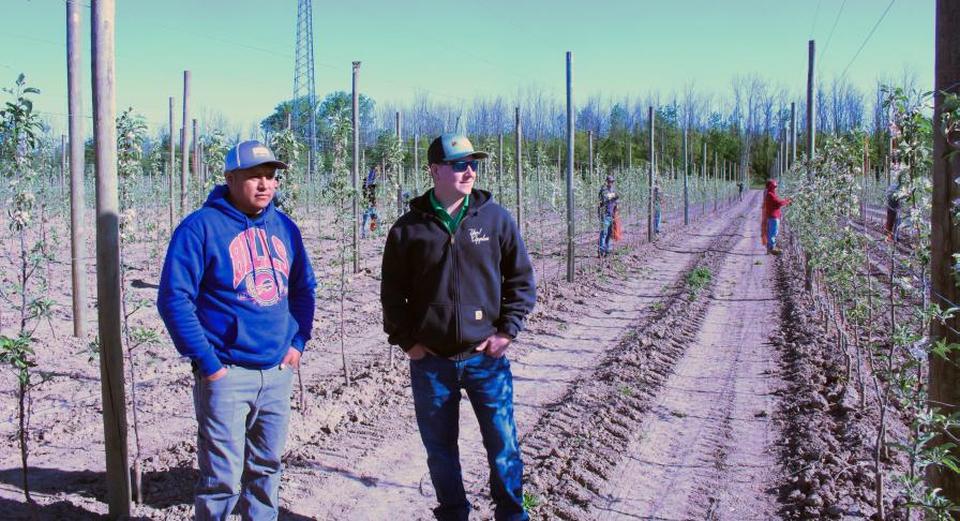
The farm’s newer plantings utilize a hybrid system combining elements of super spindle and tall spindle orchards. Trees are planted at densities ranging from roughly 1,600 to 2,000 trees per acre and trained into fruiting walls designed to maximize light interception and fruit quality.
“We’ve kind of blended the systems together,” Brown says.
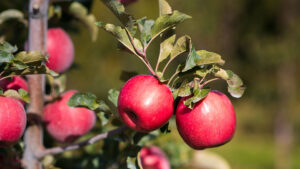
The operation has also focused heavily on premium fresh-market production, building around varieties such as Honeycrisp, Gala, SweeTango, and Snapdragon.
THE POWER OF COLLABORATION
Technology may be one hallmark of Brown’s career, but collaboration may be the other.
The breadth of support he received during the Apple Grower of the Year nomination process reflected relationships built over decades with growers, researchers, marketers, suppliers, and industry leaders.
“Bobby comes up with an idea or a solution, but usually he’s talked to several other people first and gathered opinions,” Vercruysse says. “He’s not afraid to help out a neighbor or work together.”
Brown credits his father with teaching him the importance of relationships. “Know your marketer. Know your neighbors. Build those relationships,” he says. “You can build ideas off of them.”
Scott Henning, COO of Lake Ontario Fruit, says Brown’s network has become one of his greatest strengths.
“Bob has a lot of good relationships in the industry,” Henning says. “Through those collaborations and friendships, he’s been able to help others succeed in their businesses and personally, as well as helping his own farm.”
Keller believes that spirit of cooperation extends throughout the Lake Ontario fruit region. “You’re not on an island in agriculture anymore,” Keller says. “Your neighbor needs to be successful for you to be successful.”
He points to the close relationships among Lake Ontario Fruit growers as one reason the region has produced multiple Apple Grower of the Year recipients. “Together they’re strong,” Keller says. “Individually, they’re just people working really hard.”
LEADING BEYOND THE FARM GATE
Brown’s leadership extends well beyond Orchard Dale. His family helped establish Lake Ontario Fruit in 1982, joining neighboring growers to create stronger marketing opportunities through cooperation and shared investment. The organization has since become one of New York’s most influential apple marketing operations through its collaboration with New York Apple Sales.
Henning says the Brown family’s impact on both the cooperative and the industry spans generations. “Bob Brown and his family have been involved in the New York apple industry for many generations,” Henning says. “His family’s been instrumental in Lake Ontario Fruit’s growth and success.”
Keller believes Brown’s business background helps shape his leadership style.
“Everything here is calculated,” Keller says. “They’re not just going out and planting 20 acres of a new variety and hoping it’s successful. They’re making sure there’s a pathway for sales before they invest the money.”
He sees that discipline as one of the defining characteristics behind Orchard Dale’s success. “He’s not afraid to invest,” Keller says. “But every investment has a purpose.”
LOOKING AHEAD
Unlike many recipients of lifetime-achievement honors, Brown views this recognition not as a pinnacle but as a responsibility. When asked what advice he would offer younger growers, his answer reflects the lessons he has learned throughout his career.
“You have to have desire, energy, and passion,” he says. “You will experience adversity, but you need to adapt. After that comes the success.”
He also believes growth should extend beyond acreage and profitability. “Find a way to give back,” Brown says. “Find a way to get ready for the people who come behind us.”
Those who know him best believe he is already doing exactly that. “He’s always on the move,” Vercruysse says. “He’s always trying to figure out what’s the next best thing.”
For all the responsibilities that come with managing a modern fruit farm, Beth says he has never lost sight of what matters most. “Even when he’s busy, he finds time to help out or show up if they have an event going on,” she says. “He makes it a big priority to be there for the girls.”
Asked what it has been like to watch the farm’s evolution over the past decade, Beth becomes reflective.
“I’m very proud of Bobby and everything he’s accomplished,” she says. “It’s fun to do this together in life. I’m very proud of seeing his vision come together.”
Henning offers perhaps the simplest assessment of all: “Bob works really hard,” he says. “He’s a great leader.”
Subscribe Today For