Berries
Longtime blueberry producer Fall Creek Nursery acquires Italy-based Berryplant and Berrytech to bolster its genetics platform and expand market reach.
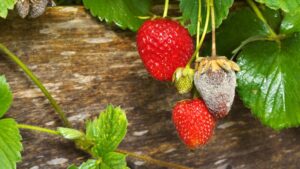
New study digs into the influence of El Niño-Southern Oscillation on Botrytis infection in Florida strawberries.
Demand for locally grown fruit is creating opportunities for producers in the Northeast U.S. Cornell researchers are on the case.
Two DNA‑based markers have been identified to predict primocane-fruiting. Learn how this research could speed development of improved blackberry varieties.

U.S. Highbush Blueberry Council and VentureFuel team up again to find the next generation of blueberry innovation.
Learn how N.C. State University scientists are working with blueberry growers on a more precise way to decide when to harvest, using computer vision and AI.
With a review of the United States-Mexico-Canada Agreement (USMCA) approaching, specialty ag groups hammer on the impacts of low-priced imports from Mexico.
Was it a good year — or not? According to latest State of the Fruit Industry survey, berry growers saw a sharper divide in revenue in 2025.
The U.S. Highbush Blueberry Council has been awarded a $850,000 grant from the USDA Foreign Agricultural Service’s America First Trade Promotion Program.
If left to their own devices, strawberry runners can ruin slow up a healthy crop. New research aims to find the parts of DNA that control runner growth.
Find out who the U.S. Secretary of Agriculture appointed to the 2026 U.S. Highbush Blueberry Council Board.
Apex ‘FCM14-057’ is an early- to mid-season blueberry variety with proven field performance, 45-day shelf life, large yield potential, and more.
Chemical-proof pathogens require a new perspective from farmers fighting blueberry disease.
Blueberry trials show benefits of using pulsed irrigation. Learn more about this irrigation method.
Learn how Jon Marthedal helped blueberries find a home in California while carrying forward a century of family farming.
Public berry breeders, facing reductions in their programs, need to be supported and compensated.
The next wave of CEA berry production will depend on disciplined economics, crop-specific genetics, and systems designed around the plant.
Grower operations like Miles Berry Farm well know, expectations can change in a hurry. Such has been the case this winter in the unusually frigid Southeast.
U.S. Highbush Blueberry Council has been awarded $513,948 from the USDA’s Market Access Program to expand export opportunities.