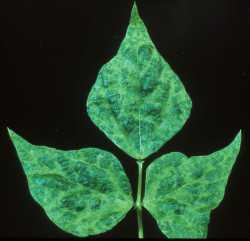
he main symptoms of bean yellow mosaic potyvirus (BYMV) are yellowish and green mosaic patterning of the leaf. Some strains of the virus may cause more intense dark-green mottling.
It is important to note that pods are not affected. The number of seeds per infected pod, however, may be reduced. This virus is primarily an issue for legumes such as bean, pea, and cowpea.
As BYMV and common bean mosaic virus (CBMV) are in the same virus family, growers can sometimes confuse the two. The big difference is that the symptoms in CBMV typically are more severe. Growers will see apical growth in plants with CBMV, showing green veinbanding followed by heavy blistering and malformed leaves. These are symptoms not usually seen with BYMV.
The BYMV virus is vectored via aphids. In fact, about 20 species of aphids can transmit the virus. The ones to look out for typically are more common aphids on beans, such as bean aphid, pea aphid, cowpea aphid, and the green peach aphid. Once the aphid feeds on the plant, it can be infected in as fast as 60 seconds.
It is key to remember that the insect doesn’t retain the virus much longer than an hour. It can be less time if they are actively probing. The only way they can again transmit the virus is if they begin feeding from an infected plant. Because the aphid can infect the plant so quickly, insecticides are not a viable alternative to prevent transmission in the field.
Preventive Controls
In general, growers should choose virus-resistant varieties especially for bean common mosaic virus.
Using a variety resistant to CBMV will reduce the overall damage if BYMV is also present.
In addition, growers are encouraged to reduce weeds bordering the crop
before it is established, especially Trifolium species and chickweed.
The main symptoms of bean yellow mosaic potyvirus (BYMV) are yellowish and green mosaic patterning of the leaf. Some strains of the virus may cause more intense dark-green mottling.
It is important to note that pods are not affected. The number of seeds per infected pod, however, may be reduced. This virus is primarily an issue for legumes such as bean, pea, and cowpea.
As BYMV and common bean mosaic virus (CBMV) are in the same virus family, growers can sometimes confuse the two. The big difference is that the symptoms in CBMV typically are more severe. Growers will see apical growth in plants with CBMV, showing green veinbanding followed by heavy blistering and malformed leaves. These are symptoms not usually seen with BYMV.
The BYMV virus is vectored via aphids. In fact, about 20 species of aphids can transmit the virus. The ones to look out for typically are more common aphids on beans, such as bean aphid, pea aphid, cowpea aphid, and the green peach aphid. Once the aphid feeds on the plant, it can be infected in as fast as 60 seconds.
It is key to remember that the insect doesn’t retain the virus much longer than an hour. It can be less time if they are actively probing. The only way they can again transmit the virus is if they begin feeding from an infected plant. Because the aphid can infect the plant so quickly, insecticides are not a viable alternative to prevent transmission in the field.
Preventive Controls
In general, growers should choose virus-resistant varieties especially for bean common mosaic virus. Using a variety resistant to CBMV will reduce the overall damage if BYMV is also present.In addition, growers are encouraged to reduce weeds bordering the crop before it is established, especially Trifolium species and chickweed.
0
1
5
Pest of the Month: Yellow Bean Mosaic Virus
Gene McAvoy is a Regional Vegetable Extension Agent IV Emeritus for the University of Florida Institute of Food and Agricultural Sciences. In addition, he is President of his own company Have Gun Will Travel Agricultural Consulting.
See all author stories here.




 January 13, 2012