


The Importance of Foliar Calcium During Apple Fruit Development
Agronomics: How Calcium Impacts Fruit Quality
Fruit calcium level is one of the most important factors relating to fruit quality in apple production.
It plays a critical structural role in the formation and stability of both cell walls and cell membranes. One of physiological disorder that occurs in apples when there is a localized deficiency of calcium within the fruit is Bitter Pit. Symptoms typically show up first near the calyx end of the fruit where calcium levels tend to be lowest. Multiple necrotic lesions around 2-10 mm in size will develop. It is believed that this is due to breakdown of the fruit cell membranes within these low calcium parts of the fruit.
Maintaining high fruit calcium level leads to better quality, fruit firmness at harvest and better pack out rates for fruit coming out of controlled atmosphere facilities during the marketing season. This is due to the role that calcium has in strengthening cell walls and reducing the activity of enzymes that breakdown pectins in the fruit.
Conditions That Lead to Calcium Deficiencies
Most soils used for apple production have adequate levels of calcium for leaf development. Calcium related fruit disorders occur due to the lack of calcium mobility within the plant. In early fruit development, calcium moves through the transpiration stream through the xylem directly from the soil into the fruit. Excess early season vegetative growth due to high nitrogen levels can lead to an imbalance of too much calcium going to the leaves and not enough into the fruit. Low soil moisture and/or high heat will also diminish calcium uptake from the soil.
As the fruit gets larger, the xylem delivery of nutrients to the fruit will be cutoff and only the phloem will be able to supply the fruit. From this point forward, calcium is completely immobile in the phloem and only foliar calcium applications that directly contact the fruit will be able to increase fruit calcium levels.
Certain apple varieties like ‘Honeycrisp’ are more susceptible to bitter pit. High fruit ratios of potassium and magnesium to calcium have been shown to increase risk of bitter pit. In highly susceptible varieties, late season applications of magnesium and potassium should be moderated or eliminated.
Measuring Calcium Levels in the Soil, Leaves and Fruit
During the summer, calcium levels in leaf tissue test should be 1.5-2.0%. However, tissue tests do not indicate how much calcium actually got into the fruit where it is most needed in apples. Analyzing fruit calcium levels can be helpful in predicting calcium related disorders, but it varies a lot between varieties. It is much more reliable to examine past effects of cultural and fertility practices on actual fruit quality parameters like firmness and bitter pit levels.
Key Application Timing and Rates for Foliar Calcium
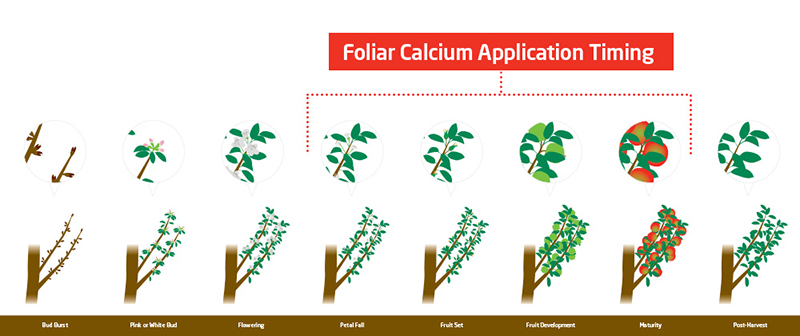
Foliar calcium applications can begin as early as petal fall. Early applications may be especially advantageous if conditions for soil uptake are impaired or if there is excess early season shoot growth. Most cultivars should receive at least 5-6 foliar applications. For more calcium sensitive apple varieties, 12 or more sprays may be needed. These should be spaced out throughout the fruit sizing period in order to maintain adequate fruit calcium concentration as the fruit get larger.
BRANDT Foliar Calcium Technology
BRANDT has several foliar calcium formulations that are highly effective. BRANDT® Manni-Plex® is a high performance foliar nutrient line formulated with sugar alcohol complexes. BRANDT® Organiplex™ is an OMRI Listed high efficiency foliar nutrient line formulated with amino acid complexed nutrients. Both product lines are formulated for superior nutrient delivery and mobility to ensure that nutrient applications get into the leaves and fruit tissue.
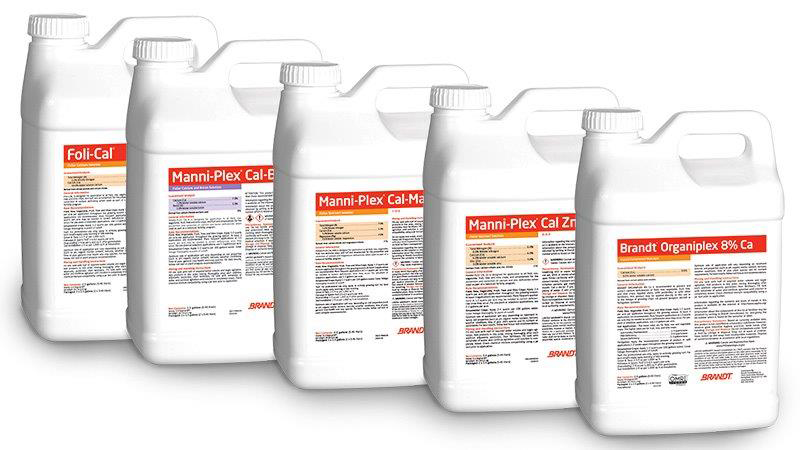
Key calcium formulations in these product line include:
- BRANDT® Organiplex® 8% Ca
- BRANDT® Manni-Plex® Foli-Cal®
- BRANDT® Manni-Plex® Cal Zn
- BRANDT® Manni-Plex® Cal Mag
- BRANDT® Manni-Plex® Cal-B
These products perform well at 1-2 quarts per acre application rate. The chart below demonstrates key foliar calcium timing windows.
Photos of Nutrient Deficiencies in Apples Indicating Physiological Disorders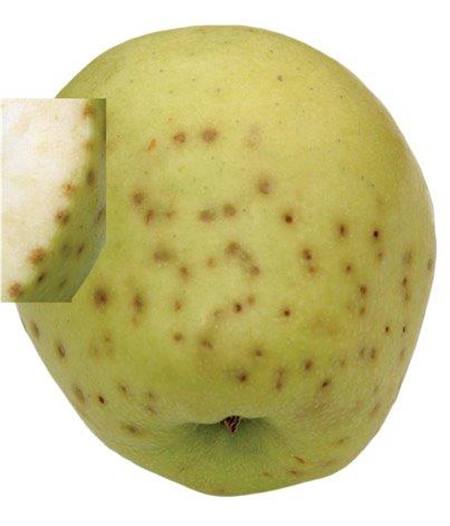
Apple bitter pit (source Washington State University Tree Fruit Research and Extension Center)