



Report Adds up Hurricane Milton’s Big Blow to Florida Agriculture
 December 20, 2024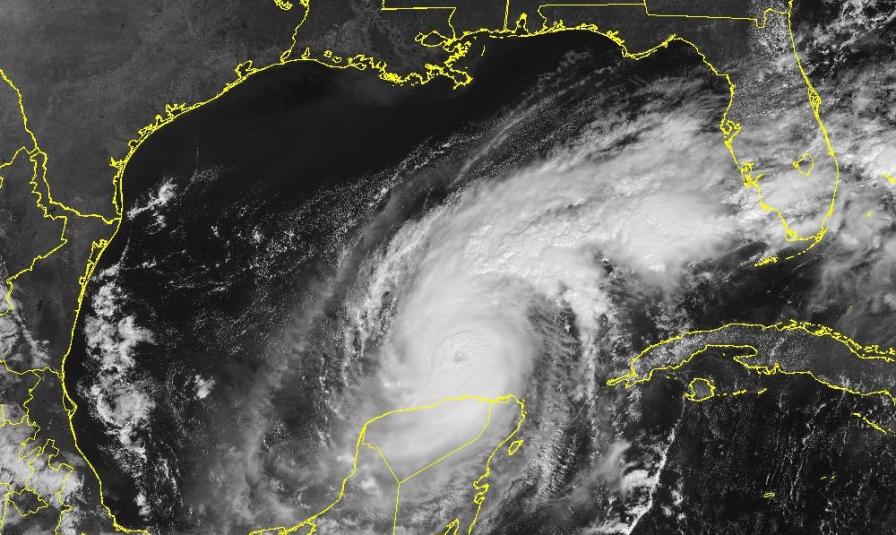
This satellite view of major Hurricane Milton as it made its way toward Florida in early October 2024. The major storm added salt to the wound in areas of Florida already reeling from two previous hurricane landfalls. Milton’s impact on the state’s agriculture is shaping up to be the biggest out of the three storms.
Image courtesy of NOAA
Florida endured three landfalling hurricanes in 2024. With each comes a price to pay for the state’s agriculture sector. It appears the third and final tropical punch of the season was the biggest blow. According to a newly released report from the UF/IFAS Economic Impact Analysis Program (EIAP), ag production losses from Hurricane Milton have an estimated value between $190.4 million and $642.7 million.
The preliminary report is based on a diverse set of baseline data and surveys UF/IFAS agricultural economists distributed to producers.
The low and high estimates of production losses for Hurricane Milton in the current growing or marketing season in Florida breaks down as follows:
- Vegetables, melons, and potatoes: $52.5 million (low); $233 million (high)
- Greenhouse, nursery: $66.9 million (low); $177 million (high)
- Citrus: $23.09 million (low); $55.15 million (high)
- Animals and animal products: $29.4 million (low); $86.5 million (high)
Vegetables, melons, and potatoes were largely impacted by heavy winds and flooding, the EIAP report notes. Growers reported substantial impacts of flooding to potatoes and beans, and of wind to crops including peppers, tomatoes, cabbage, and cauliflower.
Production losses for greenhouses and nurseries resulted from structural damage and loss of electricity.
Milton made landfall on Oct. 9 in Southwest Florida and plowed a diagonal northeast path through the peninsula delivering major hurricane winds, coastal storm surge, inland flooding, and numerous tornadoes.
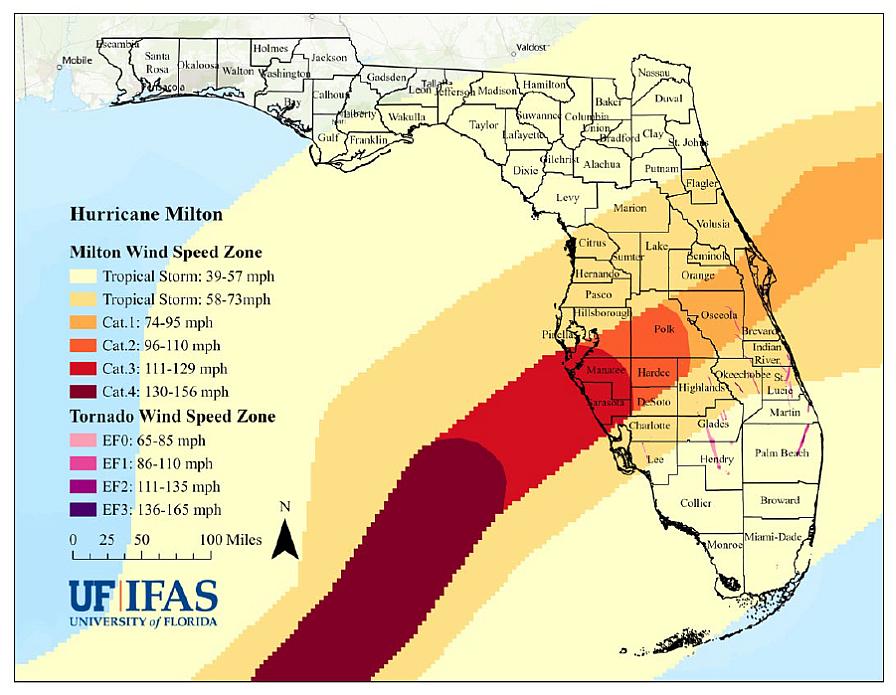
This map, derived from National Hurricane Center data, shows the wind swath pattern of Hurricane Milton as it impacted Florida.
Image courtesy of UF/IFAS via NOAA
According to the EIAP report, Milton impacted more than 5.7 million acres of agricultural land in Florida that collectively produces an estimated $8.6 billion in agricultural products over multiple growing seasons each year.
2024 Florida Hurricane Ag Impact Comparisons
EIAP economists have been super busy the last part of 2024. The team had to calculate ag production loss estimates for three storms, each with their own level of deep impact. So, how do these storms compare?
Category 1 Hurricane Debby impacted 2.2 million acres of agricultural land in early August and resulted in production losses of about $170 million, according to a soon-to-be released final report from the EIAP. Preliminary estimates were between $93.7 million and $263.2 million.
Major Hurricane Helene, a Category 4 storm, impacted 6 million acres of agricultural land in late September and resulted in production losses of between $40.3 million and $162.2 million, according to the preliminary EIAP report.
“Milton resulted in higher agricultural losses than Hurricane Helene, not only because it caused more intense weather conditions overall, but also because areas producing high-value commodities experienced higher-intensity weather conditions,” says Xiaohui Qiao, EIAP research Assistant Professor.
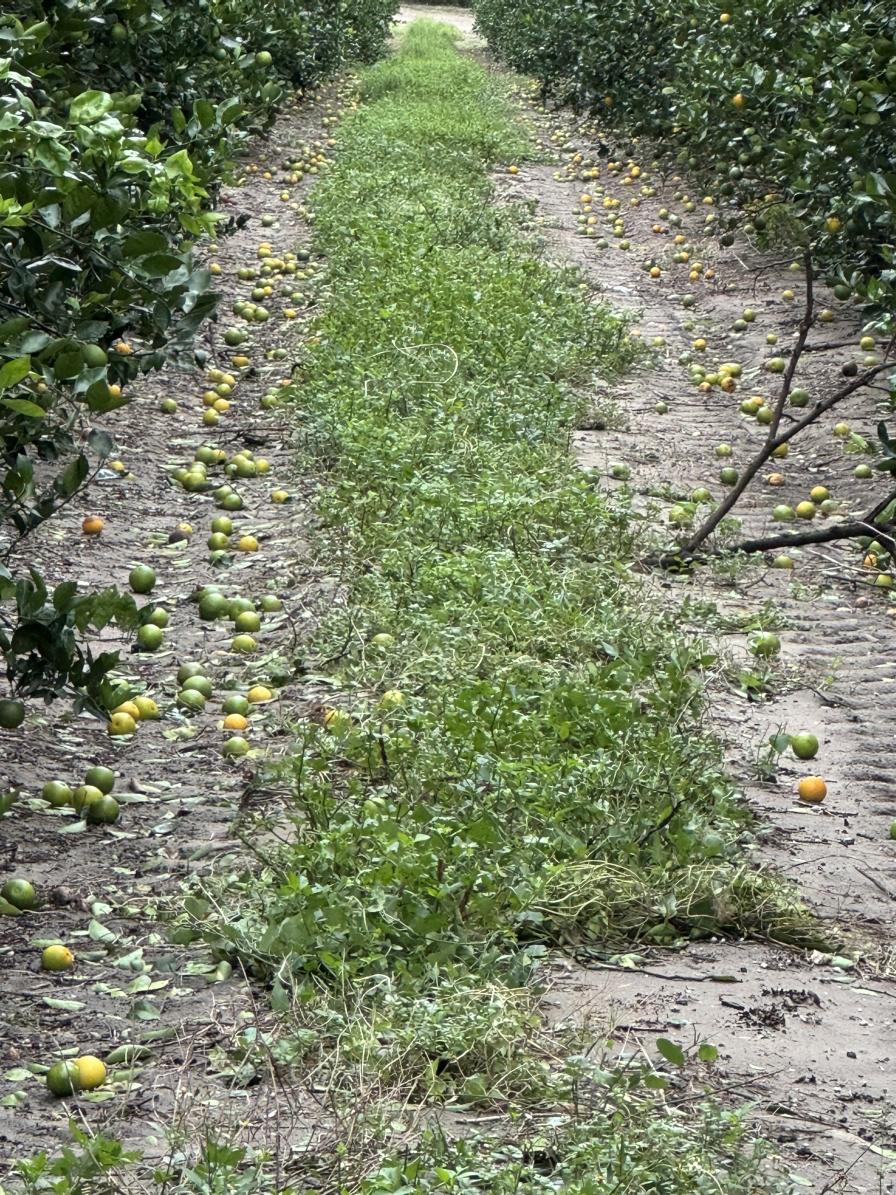
This citrus grove was left shaken after Hurricane Milton. This scene was a familiar one for Polk, Hardee, and Highlands counties in Florida following the major storm.
Photo courtesy of Florida Citrus Mutual
With Hurricane Milton making landfall less than two weeks after Helene, some extra care and thought were needed to properly account for all damages, says Christa Court, UF/IFAS EIAP Director.
“We had to do some quick thinking and make adjustments to both the data and the methods that we used for our Hurricane Milton analysis to account for the quick succession of Hurricanes Helene and Milton as well as the tornado outbreak that accompanied Hurricane Milton,” she says.
RELATED CONTENT: How Accurate Were Forecasts For The 2024 Hurricane Season?
The storms might be long gone, but the work continues. EIAP team members will continue to collect data related to Hurricane Milton through 2025. The information supplied will be used in the program’s final report on the storm, which is expected for release by spring 2025.
For more details on EIAP’s preliminary report on Hurricane Milton, visit fred.ifas.ufl.edu.
 Loading ...
Subscribe Today For
