


The Latest on Neo-P: Staying Ahead of Emerging Strawberry Disease
 December 30, 2024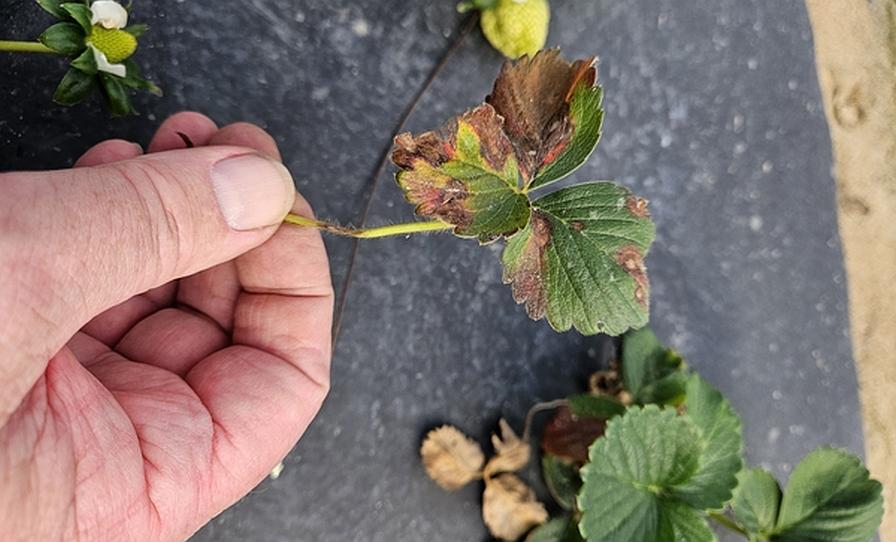
Pictured is a closeup of Neopestalotiopsis (Neo-P) leaf spot symptoms on strawberry plantings.
Photo by Bill Cline, NC State Extension
International berry nursery Nourse Farms continues to monitor what it calls a “challenging period” for the strawberry propagation industry — the outbreak of neopestalotiopsis (Neo-P), a fungal disease that spread across certain regions of the U.S. throughout 2024.
Researchers and Extension specialists from institutions such as the University of Georgia and North Carolina State University are investigating the disease, which thrives in warm, humid conditions, Nourse Farms wrote on the company’s blog in November.
Officials with the nursery explained what they have learned thus far about the disease:
- Neo-P’s spread is facilitated by water, with tropical storms aiding in long-distance movement and human activity contributing significantly to its spread.
- There is no evidence for airborne conidia.
- Neo-P thrives between 60°F to 78°F, with increased severity in prolonged wet conditions.
- The severity of the disease is directly related to the environmental conditions. The fungus spreads rapidly with rainstorms, and the disease is particularly favored by prolonged wetness following rain.
- Under optimum conditions of wetness and temperature, new symptoms are observed as soon as five days. Thus, many cycles of the disease can occur during wet seasons with multiple rain events.
Strawberry growers should remain vigilant and proactive in protecting their crops, according to Nourse. The nursery recommends implementing a comprehensive disease management plan that includes regular monitoring and timely application of fungicides. Growers should ensure that their spray equipment is in excellent working condition and that they have the necessary resources to maintain a consistent spray schedule throughout the growing season.
Strawberry licensing and testing group Flavorfirst has been proactive in the field, Nourse reports, speaking to various industry experts while providing updates on the issue. Nourse Farms, meanwhile, has invested in propagation techniques that mitigate Neo-P risks while enhancing overall plant quality.
“As the strawberry industry faces the challenges posed by Neo-P, it is more important than ever to work together and share knowledge,” Nourse wrote in its blog. “By staying informed and taking proactive measures, we can continue to grow healthy, productive strawberry crops.”
Subscribe Today For
