



Specialty Berries: The Profitable Path From Breeder to Basket
 December 5, 2025
 Savvy blueberry growers across the U.S. and globally are planting new varieties to stay competitive. But some are taking those efforts a step further — embracing niche or specialty berries to stand out from the pack and offer consumers a unique flavor experience at retail.
One such collaboration among Fall Creek Farm & Nursery, Twin River Berries, and Sprouts Farmers Market shows how this strategy, when paired with strong coordination across the supply chain, can create growth opportunities for all involved.
The partnership, built around Fall Creek’s proprietary PeachyBlue ‘ZF08-029’ blueberry variety, has not only captured consumer attention but also sparked renewed energy in the broader blueberry category. For growers and marketers alike, it is a model of how coordinated efforts — from genetics to retail display — can deliver measurable results.
ASSEMBLING THE TEAM
Fall Creek played a pivotal role in connecting Sprouts with innovative grower-marketer Twin River Berries. The initial introduction of PeachyBlue at retail was sparked by a 2023 Sprouts team visit to the Fall Creek trial site, where the berry’s unique qualities were showcased. This meeting, facilitated by Fall Creek at its annual Field & Forum event in Oregon, enabled direct collaboration between Sprouts and Twin River, setting the stage for PeachyBlue’s retail debut.
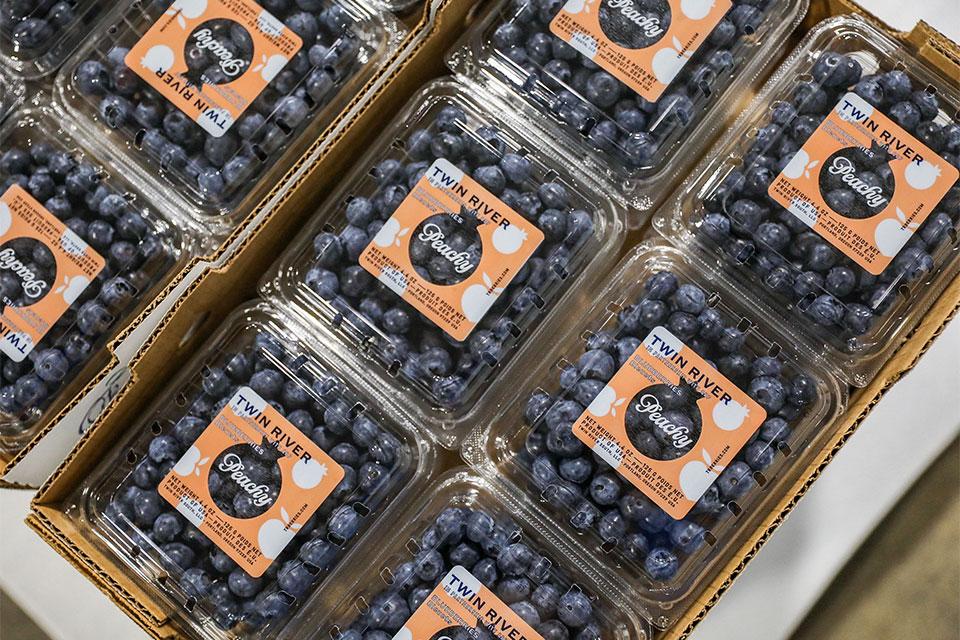
Photo: Val Shepler, Fall Creek Nursery
“PeachyBlue stood out in our minds — with its very differentiated, robust flavor of white peach,” Sprouts Farmers Markets Innovation Manager Matthew DeCeault says. “Fast forward, the relationship between Sprouts and Fall Creek has blossomed as we realized how unique this variety is.”
FROM TRIAL TO COMMERCIAL PRODUCTION
Twin River Berries, a leading vertically integrated grower-marketer known for exceptional quality, sustainable practices, and long-term relationships, quickly recognized PeachyBlue’s potential and was one of the first growers to trial the Fall Creek variety on a commercial scale. Acting as the marketer, Twin River supplied Sprouts with PeachyBlue sourced from both its affiliate company, Oregon Berry Packing, and a grower partner in Washington. For East Coast stores, Sprouts partnered with Consalo Family Farms to provide introductory volumes.
“Working with Sprouts on the PeachyBlue program has been a really great journey — from a small pilot to a full national promotion,” Twin River Berries CEO Ben Escoe says. “Sprouts came to us through Fall Creek with a focus on high-quality, differentiated products, and they’ve been proactive and collaborative from the start with PeachyBlue. It’s been a true partnership that’s evolved beyond just this promotion — now we’re working together on year-round support, improved merchandising, and plans for next season.”
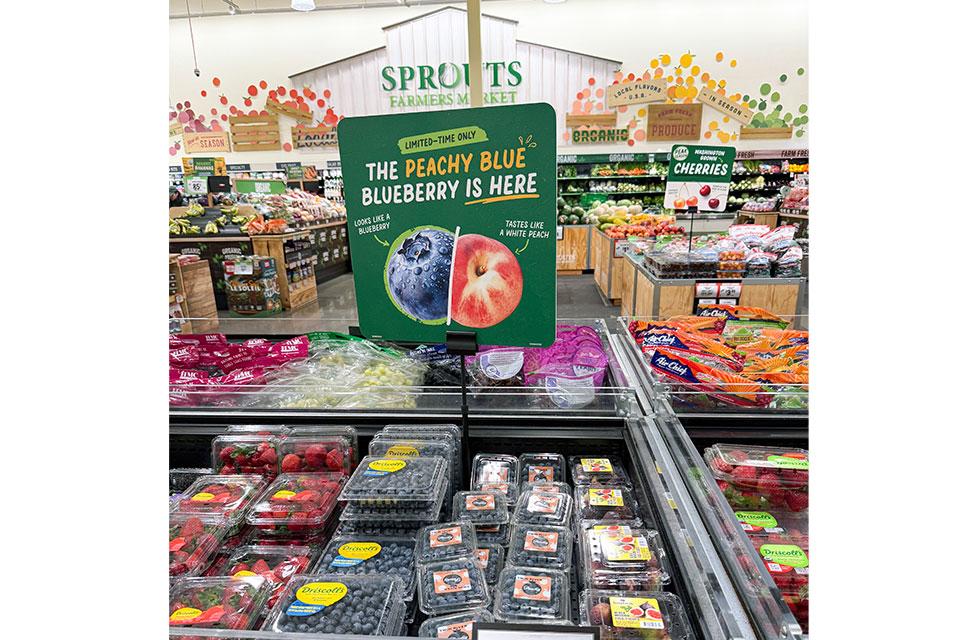
Photo: Val Shepler, Fall Creek Nursery
RETAIL LAUNCH AND MARKET RESPONSE
Sprouts initiated a pilot launch of PeachyBlue in summer 2024 in Northern California after meeting with Fall Creek, aiming to assess its market potential. The pilot quickly expanded, driven by strong consumer interest and positive results. In 2025, Sprouts promoted PeachyBlue in 4.4 oz clamshells in more than 400 stores nationwide.
“We had front door merchandising — prime real estate through the month of August, with signage created alongside Twin River,” Sprouts Senior Category Manager Jason Glunt says. “Stores were encouraged to actively sample, and we even designated an entire week at a dedicated sampling station.”
The results speak for themselves: PeachyBlue achieved total sell-through rates on par with the entire berry category, with its excellent shelf life proving a significant advantage for both Sprouts stores and customers. During the summer 2025 promotion period, Sprouts experienced an average 6% increase in total blueberry category sales, demonstrating PeachyBlue’s ability to help grow the entire category, not just capture share. PeachyBlue also ranked among the top 1% in sales dollars compared to other niche and innovative items introduced at Sprouts this year. Additionally, Sprouts tested a range of price points to better understand consumer behavior and price sensitivity — insights that will help guide future promotions for PeachyBlue and other innovative products planned for 2026 and beyond.
“We haven’t done anything like this ‘seed to shelf’ collaboration until Fall Creek’s PeachyBlue in the berries category,” Glunt says. “Working directly with the breeder has given me ideas on how to replicate this model with other partners to find unique and first-to-market products.”
KEYS TO COLLABORATION
The partners identified some key factors behind the project’s success. According to DeCeault, maintaining effective communication throughout the supply chain and clearly understanding each participant’s role were essential for anticipating and resolving issues early. He also emphasized that focusing on flavor created greater value, as a more cohesive supply chain allowed them to deliver exactly what consumers were seeking. Ultimately, these efforts resulted in a blueberry variety that satisfied both shoppers and produce managers.
WHAT GROWERS CAN LEARN
For growers exploring how to differentiate their operations, this project demonstrates that innovation does not necessarily start in the lab — it can start with relationships. Partnering directly with breeders allows growers to gain early access to promising genetics, while collaboration with retail helps ensure there is a market ready to receive the product.
RELATED CONTENT: Fall Creek Nursery Makes Changes for New Growth Phase
“PeachyBlue has been a fun, fluid project and a great way to spark conversations about the next generation of Fall Creek genetics,” Twin River’s Escoe says. “As early adopters of Fall Creek and Sekoya varieties, we wanted to show growers what’s possible, so we invested in our own plantings in Oregon and Washington. Many growers were hesitant about investing in new genetics, but PeachyBlue’s commercial success has helped reopen those discussions, showing that the right variety, backed by retail partnership, can deliver measurable returns.”
WHAT’S NEXT?
Looking forward, Fall Creek is prioritizing breeding for traits that balance on-farm economics, including machine harvestability and yield with consumer preferences.
Flavor, firmness, and quality are key traits for consumers demanding an excellent eating experience which is necessary for both repeat purchases and increased consumption. “Connecting our early adopter growers with Sprouts enables a model where the new variety feedback loop is condensed, creating a huge win for all parties including the consumer,” Fall Creek Area Manager Micah Weiss says.
For growers seeking growth in established categories, this case offers a clear takeaway: innovation flourishes where partnership takes root — from breeding trials to retail shelves.
Subscribe Today For
