



Banker Plants for Better Pest Control in the Greenhouse

Biological control agents are a proven advantage against damaging pests in high tunnels and greenhouses. Growers challenged to contain their insect assassins inside can turn to banker plant systems as part of a long-term biological control plan.
Banker plants provide a habitat and food source for beneficial predators — a veritable standing army that protects specialty crops, such as strawberries, raspberries, and peppers. Having a hungry insect troop on standby is preferable to paying for a nonstop supply of parasitoids and predatory beetles, Muhammad Ahmed, Assistant Professor of Turf and Ornamental Entomology at Clemson University, said during a December webinar hosted by Penn State Extension.
“Biological controls are a continuous expense because after you reduce pests they just take over again,” Ahmed said. “But banker plants sustain that biological control population via a continuous natural enemy reservoir.”
PREVENTIVE MEASURE
While typical biological controls often involve releasing predators during a pest invasion, banker plants deliver helpful insect populations weeks before the arrival of the enemy. With beneficials already living on the banker plant, they can target pests that enter the greenhouse, Ahmed said.
For example, papaya banker plant systems serve as a colonization space for parasitic wasps and predatory beetles, establishing a strong defense against the notoriously destructive whitefly. The system is effective against all whitefly types, including the silverleaf whitefly (Bemisia tabaci), considered one of the world’s deadliest invasive species.
In practice, the papaya plant becomes host to the papaya whitefly (Trialeurodes variabilis), offering a natural enemy to your biological control agent. Adults feed on the whitefly, while a resident population of beneficials grows on the banker plant. These predators will then disperse into the cash crop in search of more whiteflies to feed on. Even as pest densities subside, the integration of fresh banker plants will keep your insect fighters fully mobilized.
The logistics of banker plants allow greenhouse growers to spray their cash crops as needed, then reintegrate the system for continued use.
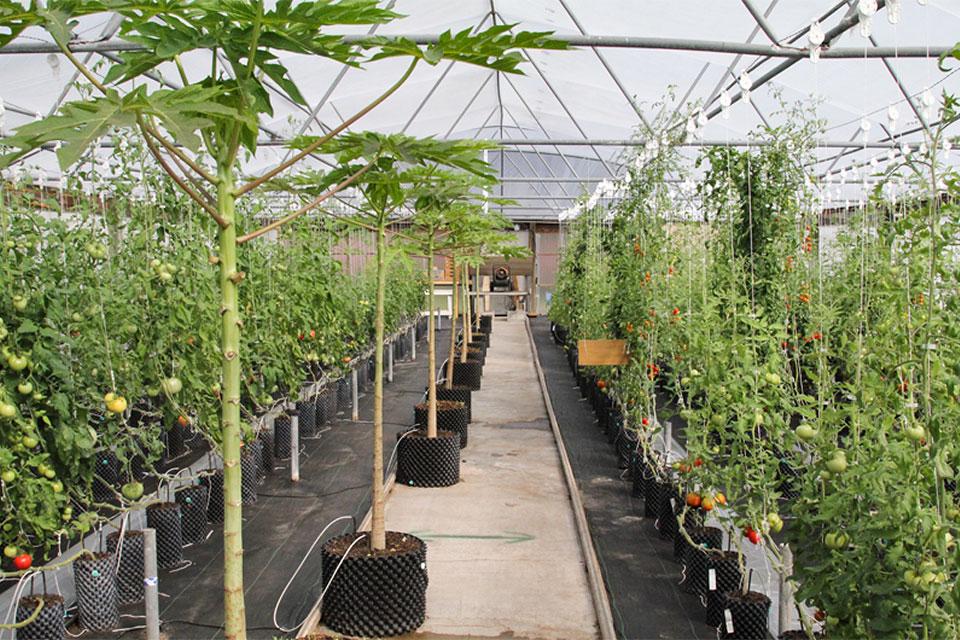
Papaya banker plants helping provide a safer environment for indoor tomatoes.
Photo: Jose Perez, UF/IFAS
“These plants are a nice way to integrate chemical controls with biological controls, so it’s a safer option for an IPM,” Ahmed said. “With banker plants as a constant source of natural enemies, you are reducing chemical pressure and not putting in too much resistance for the future.”
BANKER PLANT INFRASTRUCTURE
Banker plants are valuable against common strawberry pests, such as aphids, thrips, and two-spotted spider mites. Cereal banker plants combat this scourge through an ongoing supply of non-pest aphids, a nutritional bridge for predatory mites before their search-and-destroy mission moves to the strawberry canopy.
Developing an insect rearing system delivers a diverse diet of nectar and non-pest prey, preventing the predator population from crashing. Ultimately, banker plants ensure your beneficial workforce is well nourished and battle ready, Ahmed added.
“If prey on the cash crop is gone, there is still alternative prey on the banker plant to feed on,” Ahmed said. “Growers can create (a banker plant) infrastructure, but that requires training. If they are not trained, they will have to find a commercially viable option. The system has high efficacy and is an effective way to control pests.”
Subscribe Today For
