



Growing Ambition: When Blueberries First Took Root in California
 March 18, 2026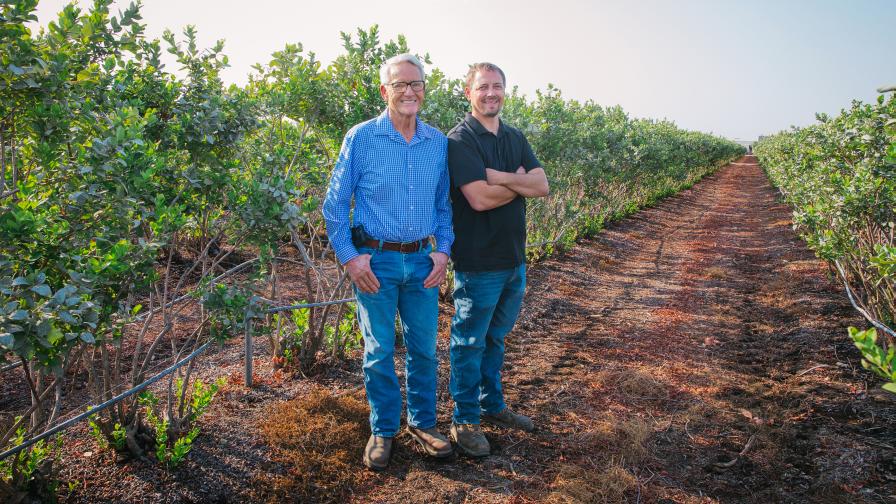
Marthedal Farms has been a family operation since its inception in 1903. Here, Jon Marthedal and his eldest son, Eric are making their way through blueberry plantings.
Photo: Marthedal Farms
On Jon Marthedal’s farm, history isn’t framed on a wall; it’s underfoot. The same ground his grandfather began farming in 1903 still produces today, and in nearby blocks, some of the same vines remain. More than a century of decisions, risks, and lessons are layered into the soil, connecting four generations of one family to the San Joaquin Valley.
“Driving by the house my grandfather bought when he arrived here, a 110-year-old redwood planted the same year my father was born — and farming some of the same vines my grandfather farmed — all that reminds me how long we’ve been at this,” he recalls.
While the land has remained constant, the crops, challenges, and industry around him have changed dramatically, and Marthedal has played a hand in shaping much of that change.
FROM DENMARK TO THE VALLEY
Like many farm families in the Valley, the Marthedal story begins across an ocean. Jon’s grandfather left Denmark in the early 1900s, drawn by the promise of land and opportunity. “He came from a big family on a small farm,” Marthedal says, “part of a wave of immigrants who followed letters and stories from relatives already settled in California.”
“He bought this place in 1903, went back to Denmark in 1906 to bring my grandmother here, and this is where they stayed,” he says. When his grandfather later died from pneumonia at a young age, Marthedal’s grandmother kept the farm going until his father could take over. That early chapter of loss and perseverance became part of the family identity, and a reminder that farming has always demanded resilience.
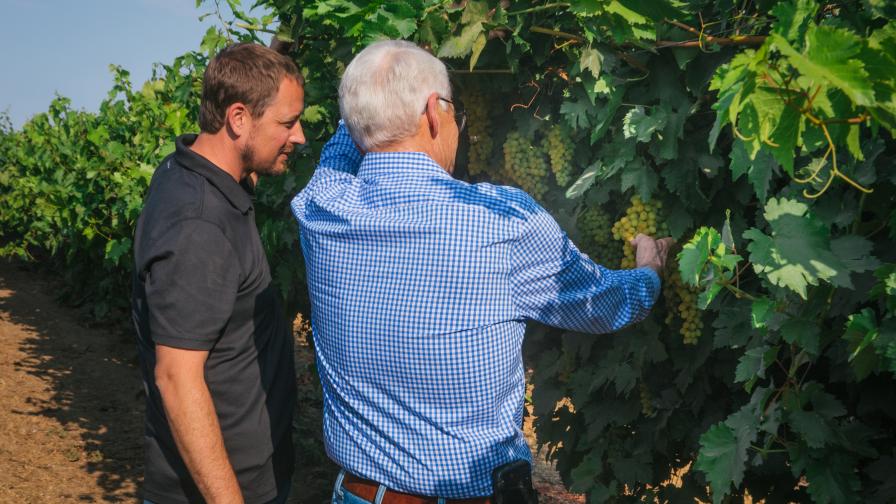
Marthedal Farms grows both table and raisin grapes, in addition to blueberries and almonds.
Photo: Marthedal Farms
LEARNING RESPONSIBILITY EARLY
By the time Marthedal was growing up, the operation was modest and diversified. Raisin grapes were the mainstay, but the farm also included livestock and other crops. Work wasn’t optional, it was daily life.
“It was much smaller scale than where we are today, and most of the work was done by our family,” he recalls. “We had livestock that needed to be fed before we ate. We all had chores. More than once I was made to go back and ‘fix’ whatever I’d done — to do it the right way, not the easy way. Those values served us far beyond the farm.”
By his teens, Marthedal was driving a 1955 Chevy pickup down the road to feed cattle, a truck he still owns. That upbringing instilled a work ethic and accountability that carried him through some of his toughest years. He rented his first vineyard as a high school sophomore and, at 16, secured his first loan with his father’s help.
Ambition met harsh reality in the early 1980s, when sky-high interest rates and low commodity prices squeezed growers nationwide. At one point, a lender advised him to declare bankruptcy. “That was the worst experience of my young farming career,” he says. To protect ground that had been in the family since his grandfather’s time, Marthedal gave up other property and took on two off-farm jobs. “The thought of my folks driving by their property and seeing somebody else own it, I just couldn’t let that happen.”
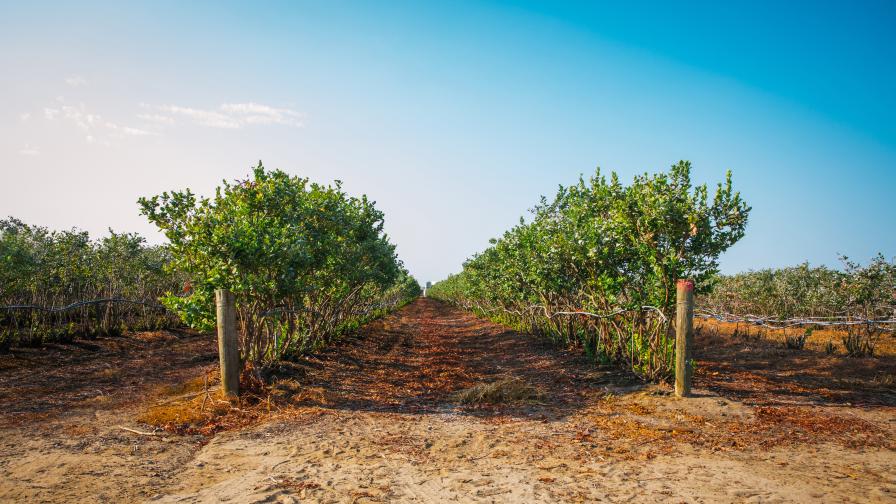
Today, around 180 acres are dedicated to blueberry production at Marthendal Farms.
Photo: Marthedal Farms
A RISK CALLED BLUEBERRIES
By the mid-1990s, Marthedal was ready to take another gamble, this time on a crop few believed could thrive in California. A stop at an Oregon nursery sparked the idea. “I was young and ambitious and decided I could make it work,” he says. He replaced an old almond orchard with 20 acres of blueberries.
The learning curve was steep. Soils needed modification, irrigation water required treatment, and pests behaved differently than in traditional blueberry regions. Local expertise was scarce. “There were no resources locally,” Marthedal says. “Figuring out how to grow blueberries was the steepest learning curve I’ve ever experienced.”
Through trial and error, he and other early adopters built a knowledge base that supported a new California industry. Improved varieties and practices followed, and the state now fills an important market window in global blueberry production.
As acreage expanded, Marthedal saw that individual success wasn’t enough. The young industry needed organization, research, and a unified voice. He helped form what became the California Blueberry Commission, laying the foundation for grower education, research funding, and advocacy. “I understood that agriculture was much bigger than my operation,” he says. “I hoped to help leave it stronger than I found it.”
THINKING IN GENERATIONS
Today, Marthedal farms alongside his two sons, Eric and Evan. He never pushed them into agriculture but knew passion and work ethic would be essential. “If you don’t have the passion for farming, it’s the worst occupation in the world,” he says. “Give me somebody with a work ethic and common sense, and I don’t care what they know, they’ll be successful.”
Now there are grandchildren, too — three young boys who already prefer being outside and recently received a small greenhouse of their own. Whether they farm one day is uncertain, but the legacy is there if they want it.
STEWARDSHIP FOR THE FUTURE
For Marthedal, the through-line across generations is stewardship — of land, family, and community.
“What matters most to me is wise stewardship of the resources we use to farm,” he says. “Leaving the land and the farming operation in better shape for the next generation, that’s the goal. I also want consumers to feel confident about the choices we made to grow it; that it’s safe, responsibly grown, and something my own family eats.”
From a Danish immigrant’s 20 acres to a multigenerational operation that helped establish blueberries in California, Marthedal’s story is one of persistence, adaptation, and care for both land and people. He has seen dramatic change in agriculture and anticipates more ahead.
“You’re either at the table or on the menu,” he says, reflecting on advocacy and leadership. “We’re able to tell our story better than anybody else. That’s how we leave agriculture stronger than we found it.”
Marthedal’s eyes sweep the fields his family has farmed for over a century. The vines his grandfather tended still produce, and the redwood planted the year his father was born still towers over the yard. For him, this continuity is not just pride; it’s a responsibility, and one he intends to pass on to generations to come.
Subscribe Today For
