



FFVA On The Line: Small Farms And Food Safety
 December 1, 2009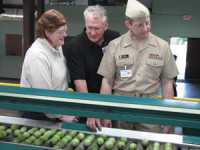
FFVA was one of several hosts for the Small Farms Produce Safety Listening Session, which was led by Mike Taylor, senior advisor to FDA Commissioner Margaret Hamburg. He was joined by Ann Wright, deputy undersecretary for marketing and regulatory programs with USDA. Several other senior food safety officials from FDA and USDA also came in for the session and a day-long packinghouse and farm tour held the day before.
“Regulation is coming,” Taylor told the group, which included a panel of six growers, the audience in Gainesville, and others who were tuned in via teleconference from IFAS research and education centers around the state. “We are on a path to set standards. But we need a plausible pathway to get there,” he said, adding that the agency is aiming to have a proposed rule next year.
“We’ve already learned a lot about how we need to approach making our rules” Taylor said. “We’re aware of the diversity we need to include and the need to target real risks.” He emphasized that FDA and USDA will work together. Indeed, Leanne Skelton, a 22-year veteran of the USDA-Agricultural Marketing Service’s Fresh Products branch, has moved over to FDA for six months to help draft regulations.
“We can set the standards, but it’s going to be a community, collaborative effort … a partnership between FDA and USDA,” he said. “There’s an unprecedented level of a collaborative spirit.”
Among the producers who provided comments were FFVA members Michelle Williamson of G&F Farms in Dover, and Danny Johns of Blue Sky Farms in Hastings.
Food safety regulation should apply to all producers regardless of size, Williamson said. “Food safety is something that should be mandatory for all farms with product going into the production system,” she said. “A microbial problem doesn’t skip over a two-acre farm to get to a 100-acre farm.”
G&F follows GAPs and BMPs, undergoes customer-driven audits, and can trace back its strawberries to the picker as long as the product is in the original container, she said.
Strawberry growers invest upwards of $12,000 per acre in every crop. “We have to be conscious that we’re doing everything to protect the public health and our investment,” she said.
Common-Sense Approach
Marty Mesh, executive director of Florida Certified Organic Growers & Consumers, urged caution and pointed out that organic producers already have standards and must pass audits to maintain their certification. He added that smaller growers will bear a disproportionate burden because of the costs to comply with food safety regulation. “A one-size-fits-all approach can’t address the difference in scale,” he said. “We need a fair, flexible food safety program that works.”
Fourth-generation farmer Johns, who’s also president of the North Florida Growers Exchange, applauded Taylor and Wright for coming to Florida. He pressed them to take a common-sense approach in developing regulation and to keep growers at the table. Johns said the food safety procedures he follows in his operations are practices he wanted to implement anyway … “This has just pushed me to do them sooner,” he said.
Get Out In Front
In addition to the listening session, the group spent the previous day touring packinghouses at West Coast Tomato in Palmetto and DiMare Fresh in Riverview, along with the Plant City Farmer’s Market and G&F Farms.
“We’re glad this group had a chance to see what we’re doing here in Florida in terms of food safety,” said FFVA president Mike Stuart. “It’s our hope that it was time well-spent for them to see the lengths to which our growers and handlers go to ensure the safety of the crops they produce and ship.”
Before the group toured the tomato line at his Riverview packinghouse, Tony DiMare elaborated on his company’s food safety philosophy and practices. “We started our food safety efforts in 1991 and have built upon that ever since,” he said. Of the food safety regulation that is coming, he said, “We’re on board. I don’t like regulation, but what we’re doing is a good thing.”
Subscribe Today For
