



Top 5 Pest Threats
 June 1, 2009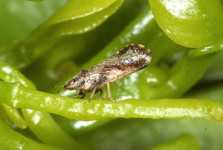
Florida’s tropical climate makes it a paradise for insect pests that do millions of dollars in crop damage every year. Needless to say, they are a nightmare for Florida growers.
Florida Grower asked some of the state’s top Extension scientists to list the leading pest foes in the state when it comes to damage and cost of control. While it could vary from crop to crop in terms of rank, the pests pictured on this page are certainly among the most troublesome in Florida. Whether it is the feeding damage they cause, or the diseases they spread, these Top five are ones to watch out for on any grower’s farm.
Did we leave out a pest that you believe should be in the Top 5? Let us hear about it by leaving a comment at the bottom of the page.
|
Asian Citrus Psyllid When the Asian citrus psyllid was first found in Florida in 1998, it brought with it the threat of spreading citrus greening. The disease was not confirmed until 2005, but since that time, greening has spread to every citrus-producing county in Florida. Some groves in South Florida are nearly lost to the disease, which has no known cure. Controlling the psyllid is essential in groves to slow greening, but it’s costly. |
|
|
Silverleaf Whitefly The silverleaf whitefly gives growers, particularly tomato growers, fits. It is the vector of tomato yellow leaf curl virus. The pest can develop tolerance or resistance to insecticides, making rotation of chemistries important. (for rotation tips.) Heavy feeding by the pest results in honeydew and sooty black and other molds. Other problems include leaf damage and abnormalities in fruiting on the plant. |
|
|
Western Flower Thrips These tiny insects are among the most widely distributed pests in the U.S. They will feed on many different flowering plants, and are considered one of the most effective vectors of tomato spotted wilt virus. The thrips are difficult to manage with pesticides because their thigmotactic behavior causes them to feed deep in the flowers and buds where they are sheltered from chemicals. The thrip also can develop resistance to pesticides quickly, making resistance management critical. |
|
|
Twospotted Spider Mite The twospotted spider mite is considered to be one of the most economically important spider mites. Fruit crops attacked include blackberries, blueberries, and strawberries. A number of vegetable crops such as tomatoes, squash, eggplant, and cucumber are also subject to twospotted spider mite infestations and damage. The mites generally feed underneath the leaves and cause them to gray and yellow. Necrotic spots occur in the advanced stages of leaf damage. Damage to the open flower causes a browning and withering of the petals that resembles spray burn. |
|
|
Pepper Weevil Vegetables and all varieties of pepper are susceptible to attack. Tomatillo is a moderately susceptible host, and eggplant grown in proximity to pepper will sometimes be injured by the pepper weevil. An important form of damage is destruction of blossom buds and immature pods. Both adult and larval feeding causes bud drop. Adult feeding punctures appear as dark specks on the fruit and are not very damaging. Sometimes the fruit is deformed. Fruit drop is very common, and is perhaps the most visible sign of infestation. |
Subscribe Today For
