



Winning the Battle Against Nematodes in Root Crops
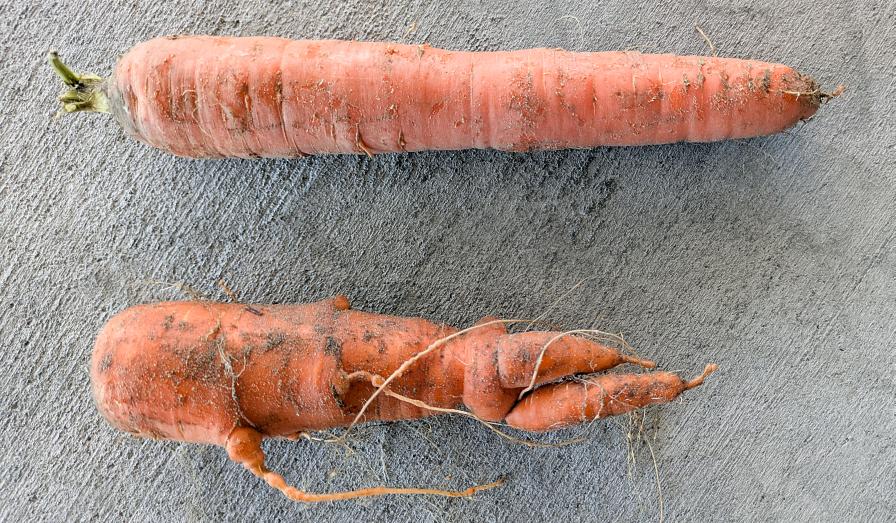
Nematodes are an unseen threat to root crops. The carrot on the bottom has forking and galling (knots) due to root-knot nematode infection. The carrot on the top is healthy.
Photo: UF/IFAS
In root crops, what happens below the surface can make or break a season. Soilborne diseases, nematodes, and weeds don’t just compete — they compound, creating hidden pressure that’s difficult to reverse once it takes hold. As these challenges intensify, growers are turning to integrated strategies that bring together soil management, targeted inputs, and precise timing to protect yield from the ground up.
Identifying which plant-parasitic nematodes and how many are present is a critical first step in managing them in root crops. Because different species respond differently to control strategies, management decisions should be tailored accordingly, with the level of intervention guided by overall population pressure.
There are a variety of plant-parasitic nematodes that vegetable growers may deal with, and the efficacy of many management practices is species-specific. The intensity of management practices warranted will vary based on nematode population level.
“Checking for symptoms of nematode damage on the crop, especially on harvested roots, and soil sampling to assess plant-parasitic nematode type and abundance are key components of monitoring nematodes and developing a management plan,” says Zane Grabau, PhD., Associate Professor in Nematology at University of Florida.
Most nematode species tend to cause greater damage in sandy soils, making close monitoring especially important in those environments. Warm conditions can also accelerate nematode reproduction, increasing the potential for crop injury, he says.
For winter root crops in southern regions, growers should pay close attention to later plantings for signs of root-knot nematode activity.
“Especially early or late-planted fields that experience warm conditions at planting or harvest are more likely to experience problems with root-knot nematode and may need more intensive management than other fields,” Grabau says.
Strategies for Nematode Control
Managing nematodes can be complex, but success often comes from using multiple tools in combination. Crop rotation remains a key long-term strategy, whether through cover crops, cash crops, or both, though the most effective options depend on the specific nematode species present.
Recent advancements in conventional nematicides are giving growers more viable options for in-season control. Products such as Salibro (Corteva) and NIMITZ (Adama) have demonstrated strong performance against root-knot nematodes in certain scenarios, at times approaching the level of fumigation, while offering greater application flexibility. However, fumigation continues to provide the most consistent, broad-spectrum control overall.
“In the last decade, several new non-fumigant (liquid) nematicides have also become available. These products can be useful tools and provide more flexible and targeted management than fumigation,” Grabau says. “Resistant cultivars are important tools when available (e.g. sweet potato cultivars with resistance to southern root-knot nematode) but are not available for most root crops.”
Growers should consult their local Extension resources for guidance on the proper timing and methods for sampling nematodes within their specific cropping system.
Ways to Sample for Nematodes
When to sample:
- Samples should be taken when plants are present, ensuring roots are available for accurate detection
- Diagnostic testing should include both soil and root samples from plants showing symptoms to confirm nematode activity
- Sampling symptomatic plants helps identify active infestations and distinguish nematode damage from other issues
How to sample:
- Collect at least 20 soil cores to create a representative sample of the field or management zone
- Collect soil from the root zone and near actively growing roots, where nematodes are most likely to be present
- Collect and submit separate samples from areas showing poor growth and from areas with normal growth to compare pressure levels
- Do not sample when the soil is excessively wet or dry, as it can affect results and sample quality
Sources: University of Florida, IFAS and North Carolina Department of Agriculture
Subscribe Today For
