



Cold Hardy Avocados Offering New Promise for Florida Growers
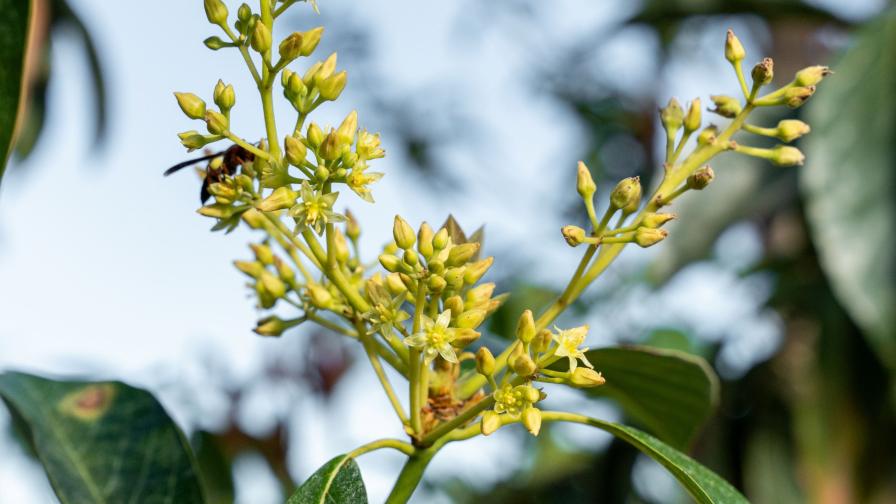
Despite the recent frost, this cold hardy avocado variety flowers in a North Florida field. Photo courtesy Dale Boettcher, UF/IFAS
The significant cold snap of January 2026, which sent temperatures plunging across the Sunshine State, has become the optimal testing grounds for University of Florida scientists developing new cold-hardy avocados. The chill underscored just how valuable this research is and demonstrated that several UF/IFAS-bred avocado types can withstand temperatures that would normally wipe out commercial varieties.
José Chaparro, Associate Professor of horticultural sciences at UF/IFAS, is leading the effort to breed avocados that can thrive in North Central Florida. This ambitious goal is inspired by both personal passion and decades of UF/IFAS innovation in adapting fruit crops to challenging climates.
“I’m from Puerto Rico, and we love avocados,” Chaparro says. “But in Gainesville and North Florida, there are very few trees because the types grown in South Florida or California just can’t survive our winters.”
The UF/IFAS avocado breeding program launched in 2005 with a simple purpose: to produce an avocado that survives hard freezes and meets commercial expectations for fruit quality.
“Standard commercial types like the globally popular Hass avocado cannot tolerate deep cold, as South Florida’s West Indian avocados begin to suffer damage around 31°F and California’s Guatemalan-Mexican hybrids struggle below 26°F,” adds Chaparro.
The UF/IFAS breeding lines are now demonstrating survival at temperatures as low as 17°F to 18°F, a significant advancement for avocado cultivation, according to Chaparro.
A major development in evaluating the breeding varieties came during the significant freeze of January 2026, which provided an extended, naturally occurring test of cold tolerance.
“This year was excellent for separating and categorizing different levels of cold resistance,” Chaparro says. “You could clearly see which trees were damaged and which ones stayed green.”
Chaparro’s team evaluates cold tolerance by growing seedlings outdoors and exposing them to natural winter events. Generational improvements in the breeding program have resulted in fruit that is larger, richer in oil and more resistant to anthracnose. This is when you compare it to the primitive material the project began with. Continued work is still needed to improve peel thickness and reduce cracking during Florida’s summer rains.
“We’ve made significant progress,” he adds. “But we’re still working on developing a peel that won’t crack and that meets the expectations of today’s avocado consumer market.”
For more, continue reading at blogs.ifas.ufl.edu.
Subscribe Today For
