


Consider Sudangrass — a Small Cover Crop With Big Impact
 October 30, 2026
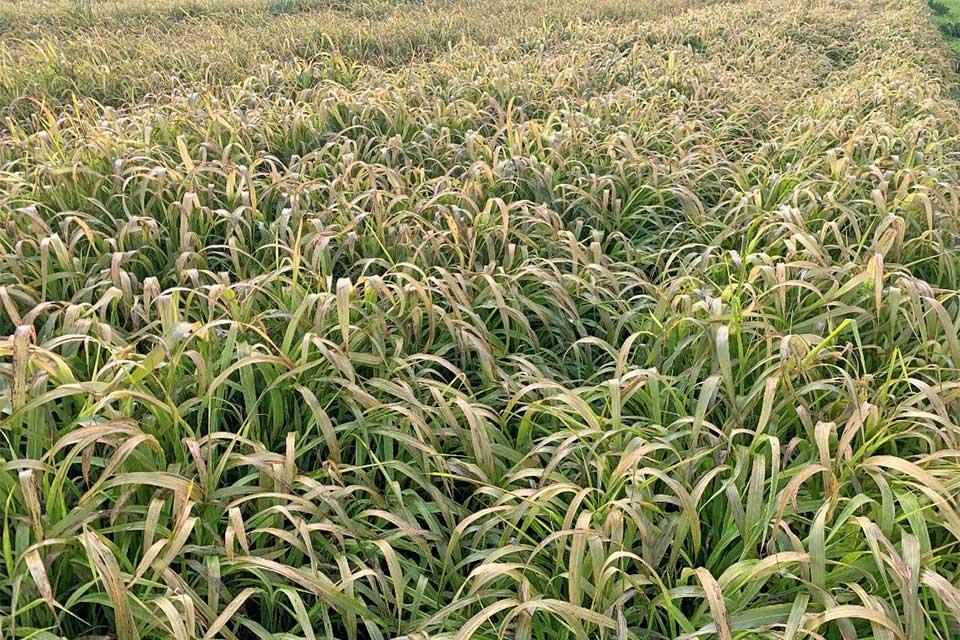
Research results demonstrate the potential for using low-biomass cover crops like sudangrass to lessen the impact of El Niño storm events.
Photo by Michael Cahn
The last vegetable crops of the season are being harvested on the Central Coast of California, and fields are getting tilled and prepared for next year’s crops. Meanwhile, there has been much discussion in the media about a potentially high-rainfall winter on the West Coast due to strong El Niño conditions in the eastern Pacific Ocean. El Niño is characterized by above-normal sea surface temperatures, which can change weather patterns and increase the frequency of atmospheric river storms that bring intense rainfall rates to the West Coast. On fields with soils susceptible to runoff because of their texture, slope, or both, high rainfall rates can lead to substantial runoff, soil erosion, and flooding. However, above-normal rainfall provides an opportunity to infiltrate and store more moisture in the soil profile, leach out salts that have built up over the season, and increase aquifer recharge.
Cover cropping is a critical management practice for maximizing the infiltration of winter rainfall and reducing runoff and soil erosion. Cover crop roots can also take up a significant portion of the residual nitrate in the soil profile at the end of the season, thereby reducing potential leaching losses during the winter. The challenge in vegetable production systems is fitting winter cover crops into rotations when most fields are planted with the first vegetable crop in late winter and early spring.
Over the past few years, we have investigated planting low-biomass cover crops on beds and/or in furrows in the fall and terminating and tilling the residue into the beds before following with a vegetable crop in the spring. We focused on planting sudangrass and sorghum-sudangrass hybrid cover crops in early fall, which grow well under warm conditions but slow down as temperatures cool in November and December.
By using season-adapted species, we can limit the aboveground biomass growth to less than 1 ton of dry matter per acre. Freezing conditions later in the winter can kill or greatly slow further growth of these species, so the risk of accumulating too much biomass is minimized. Furthermore, the biomass is relatively easy to incorporate into beds in late winter and spring. It can be flail mowed and tilled into the beds using a Lilliston or bed discs before planting.
Measuring Runoff and Soil Loss
We evaluated how this low biomass cover crop practice affected runoff, rainfall infiltration, and soil erosion in a fallow vegetable field in the Salinas Valley. Rainfall was measured at the field trial site. Flumes at the lower end of replicated 1-acre test plots monitored runoff flow rate and volume, and small pumps automatically sampled the runoff during storm events.
Results from the replicated field trial demonstrated that this low-biomass approach to managing cover crops greatly reduced runoff volume and the load of suspended sediments carried in runoff during intense storm events. Seasonal runoff volume was reduced by 79% in the cover-cropped plots compared with the bare (unplanted) plots, and rainfall infiltration increased by 48%. By the end of the winter, 92% of the rainfall (10.5 inches) had infiltrated into the ground in the cover cropped plots compared to 62% in the bare plots, which translates to 89 acre-feet of groundwater recharge per 100 acres of land managed under this cover-cropping strategy.
The concentration of suspended sediments in runoff was much greater in the bare than the cover-cropped plots. Because the cover-cropped plots produced less runoff with lower concentrations of suspended sediment, soil erosion losses were 99% lower than the bare plots. Bare plots lost an average of more than 4,000 pounds of sediment per acre, compared with an average of 35 pounds per acre in the cover-cropped plots.
The suspended sediment consisted mainly of silt- and clay-sized particles that do not settle easily and are likely permanently lost once the runoff flows off site. Soil organic matter, associated with these fine soil particles, is also carried with the runoff. Analysis showed that organic carbon accounted for 3% to 5% of the suspended sediment in runoff.

Graphics: Michael Cahn
Preparing for Spring Planting
The total aboveground biomass of the cover cropped was less than 1 ton of dry matter per acre. The cover crop was terminated with an herbicide application in mid-January, which also killed any winter weeds that had become established. The residue, which was left on the surface until it was incorporated into the beds in early March, continued to provide runoff control during storm events. The beds were rototilled and bed shaped, then planted with romaine lettuce later in the spring.
The results of this field trial demonstrated the potential for using low-biomass cover crops to lessen the impact of El Niño storm events and help recharge groundwater supplies in a region with limited water resources. This strategy could also play an important role in increasing the acres of land under cover crops and help improve soil health by preventing erosion during winter storms, adding carbon to the soil, and breaking the cycle of soilborne diseases.
Subscribe Today For
