




Better Nematode Control While Preserving Soil Health
Reconnaissance is a word often associated with a military’s observation of a region to locate an enemy or strategic features about that enemy. For fruit and fruiting vegetable growers, soil sampling is their form of reconnaissance, especially when the enemy is a pest threat to their high-value crops.
Two of the most destructive soil-borne pest threats to fruit and fruiting vegetable production continue to be the root-knot and southern root-knot nematodes. These two plant-parasitic nematode species multiply incredibly fast, producing multiple generations over one cropping season.
Intiaz Chowdhury, associate professor of cotton and vegetable crop nematology at the University of Georgia, has conducted research on nematodes for nearly a decade. His nematode control recommendations begin with knowing the enemy, or which nematode species are present below the surface of the soil.
“Soil sampling not only will identify nematode species, but also will provide valuable insight into their incidence, abundance and distribution,” Chowdhury says. “This information could lead to reduced input control costs and minimize environmental impact without reducing control effectiveness.”
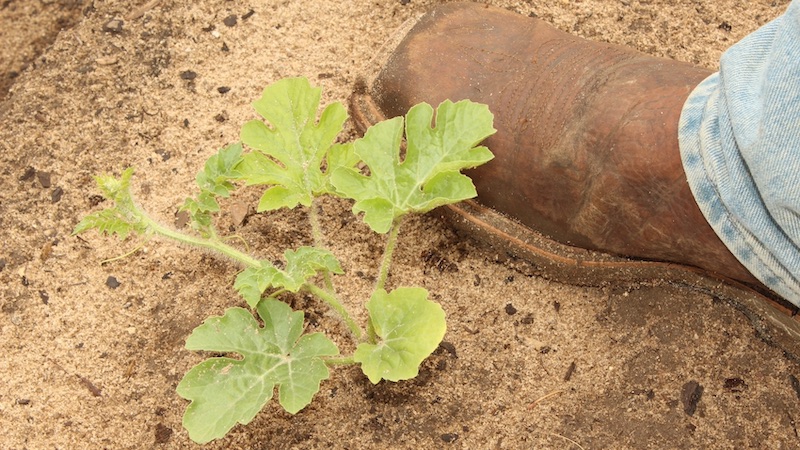
Protect young watermelon roots from plant-parasitic nematodes with Salibro® nematicide with Reklemel™ active to maintain your crop’s yield potential and marketability.
Watermelons
Chowdhury recommends that growers pull soil samples at the end of the cropping cycle or immediately after harvest.
“It’s at that point when the nematode population has most likely reproduced to its highest level,” Chowdhury says. “The higher the population, the greater the potential threat for damage will be on the next crop.”
Galling of a watermelon plant’s root system, the telltale sign of plant-parasitic nematodes, decreases the plant’s ability to take up water and nutrients, and ultimately leads to lower yield and fruit marketability. There are many types of nematodes and the damage done by the plant-parasitic species varies by region and by host plants.
Research has confirmed that although mature weeds may be host plants, plant-parasitic nematodes prefer to lay eggs on new roots from younger host plants like those in their early growth stages after transplanting. They are also more likely to thrive in warm and sandy soils.
Salibro® nematicide with Reklemel™ active protects crops roots without compromising beneficial insects and other organisms that play a role in healthy soils.
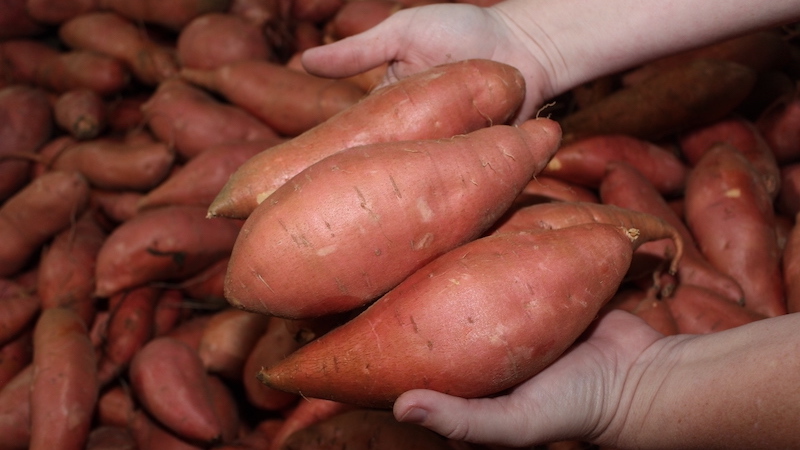
Sweet Potatoes
On the coastal plains of eastern North Carolina, sandy loam soils harbor multiple varieties of nematodes. At 30 years old, Frank Scott is all too familiar with the voracious appetite nematodes have for the roots of his farm’s sweet potato crop.
“Our primary nematodes have been the root-knot species,” Scott says. “In the past four or five years, the guava root-knot species have moved into our soils. They have become a real problem.”
Fumigants have been Scott’s control product of choice to date, but growers know fumigants come with higher costs and present certain application risks that include off-target movement and the use of personal protective equipment, including a respirator, when handling and making an application.
“When I first read about Salibro nematicide from Corteva Agriscience, I was intrigued because it’s a sulfonamide nematicide and can be applied directly to the root zone,” Scott says. “It brings a new mode of action, which can help strengthen my resistance management stewardship. That’s important to me and to our family farm.”
Scott recently worked with his local Corteva representative on some strip trials using Salibro nematicide as a control solution. While all the data is still being compiled and reviewed, Scott likes the direction the data is currently pointing.
As the agricultural industry continues to embrace initiatives and programs designed to improve soil health, Salibro nematicide is compatible with Integrated Pest Management (IPM) and crop soil health management programs.
“Salibro nematicide with Reklemel active can protect a wide variety of crops from plant-parasitic nematode damage while preserving the life of your soils,” says Todd Spivey, market development specialist with Corteva Agriscience.
Click here for a complete list of labeled crops for Salibro nematicide.
™ ® Trademarks of Corteva Agriscience and its affiliated companies. Reklemel™ is a registered active ingredient. Salibro® is not registered for sale or use in all states. Contact your state pesticide regulatory agency to determine if a product is registered for sale or use in your state. Always read and follow label directions. ©2025 Corteva. 026240 BR (01/25) CAAG4SBRO059