



Melon Grafting: Approach
 June 1, 2009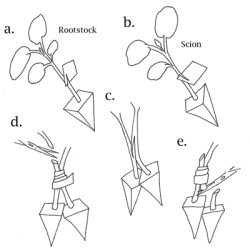
Approach Graft
Both the rootstock and scion need to be slit for the Approach Graft. The idea is to slit the rootstock’s stem and also create a slit going the opposite way into the stem of the scion. Those two slits must then be matched so they overlap. After matching the slits and making sure they overlap, the graft needs to sealed with foil or another type of material.
Rootstock and scion seedlings should have one or two true leaves (Fig. a).
With a sharp knife or razor blade, cut an angled slit halfway through the stem of the rootstock and an oppositely angled slit halfway through the stem of the scion (Fig b). Match the slits so that they overlap and then seal with aluminum foil or specialty materials available for this purpose (Figs. c and d).
Place the grafted seedlings in a seedling tray with larger cell size than what they were grown in. Place root balls of both rootstock and scion together in the same cell and add potting media if needed to fill the larger cell. Return to greenhouse or other growing area. High humidity and low light is not necessary to ensure success with this type of graft.
Advantages:
1) Relatively simple technique.
2) High humidity and low light environment not required for successful healing of the graft union. A normal greenhouse environment is sufficient.
Disadvantages:
1) After healing of graft union, requires removal of top portion of rootstock about nine days after making graft. Also requires severing of scion roots after an additional two or three days. (Can then be planted to field in about three more days.)

Subscribe Today For
