


Smart Tech
Why Optical Sorting Success for Fruit Packers Starts Upstream
 October 5, 2026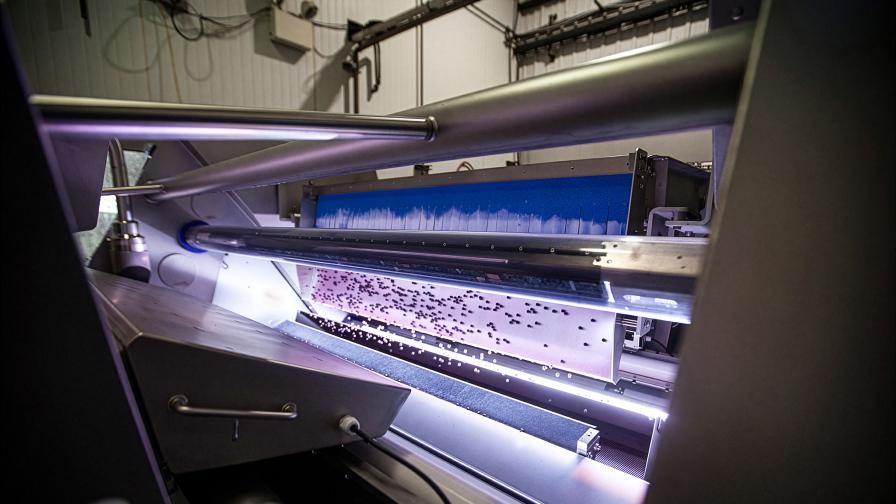
Blueberry optical sorter.
Photo: Bret Larreau, Key Technology
Optical sorting has become an important tool for fruit packers looking to improve quality, reduce reliance on manual inspection, and maintain consistent pack-out. Optical sorters use cameras and/or lasers to evaluate the color, size, shape, and structural characteristics of each piece of fruit, then analyze that information to remove defective and off-spec fruit as well as foreign material from the product stream.

When sorting results become inconsistent, the first response is often to adjust the sorter. However, that may not address the underlying cause.
Optical sorting success depends on more than the inspection technology itself. The system must receive fruit under conditions that allow it to see and evaluate each item clearly, with stable flow, minimal overlap, and limited interference from dust, moisture, or other environmental factors. When those conditions break down, sorting accuracy and consistency can decline even when the equipment is operating as designed.
For packers, this means many performance issues can be resolved by improving the operation around the sorter rather than changing the sorter itself.
START WITH PRODUCT PRESENTATION
Product presentation is the most direct driver of sorting accuracy. Cameras and lasers need an unobstructed view of every piece of fruit, and overlapping product can conceal defects and foreign material. Spreading fruit into a single, well-separated monolayer gives the sorter a clear view of each item.
Flow rate is where product presentation most often breaks down. When the infeed surges, the product separation established at startup can quickly collapse, reducing accuracy. Maintaining a steady, controlled product flow helps preserve separation while supporting efficient throughput.
Removing leaves, stems, fines, and loose debris upstream also reduces visual interference and improves sorting performance. For fruit conveyed in water, adequate dewatering before inspection helps prevent excess moisture from obscuring the sorter’s view.
CONTROL THE EQUIPMENT’S ENVIRONMENT
Conditions surrounding the sorter can affect performance more than many packers realize. Dust from field debris can accumulate on optical surfaces, while mist from wash lines may interfere with visibility in the inspection zone. Direct or reflected sunlight can change throughout the day and affect how cameras evaluate color. Vibration from nearby equipment can disrupt product presentation, and contaminated compressed air can reduce ejector reliability.
None of these issues requires an exotic solution. Packers should control dust and moisture at the source, maintain consistent lighting, prevent sunlight from reaching the inspection area, minimize vibration transfer, and keep compressed air dry and properly filtered according to the sorter’s specifications. Reviewing these conditions before adjusting sorter settings can often resolve the root cause of a performance problem more effectively than changing the recipe.
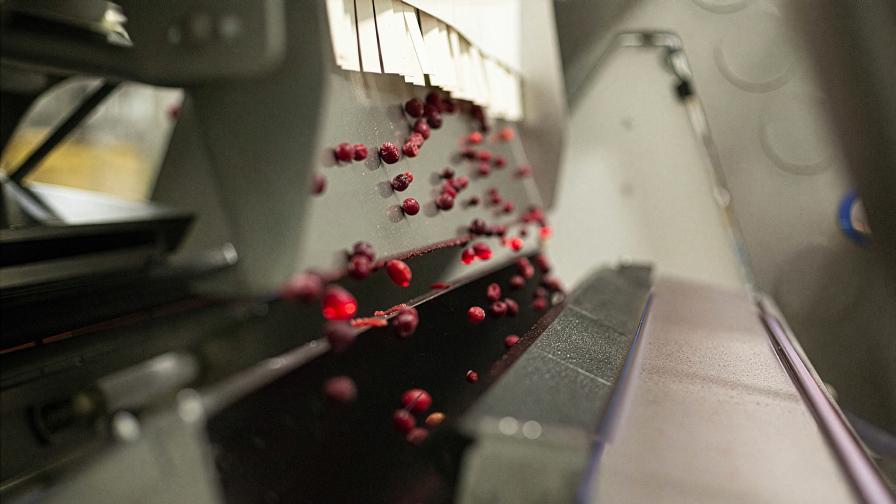
Cranberry optical sorter.
Photo: Bret Larreau, Key Technology
PROTECT FRUIT AFTER INSPECTION
Sorting performance does not end with detection. Poorly designed discharge points can bruise delicate fruit or cause damage. Fruit must leave the sorter without unnecessary impacts, excessive drops, or abrupt speed changes.
The sorter supplier should design the outfeed to match the fruit’s size, firmness, and sensitivity. Belt or vibratory conveyor transitions that receive fruit in the same direction as the sorter discharge promote gentle handling and help preserve fruit quality.
Outfeed geometry should also direct ejector airflow away from the inspection zone and toward the product streams. This helps keep optical surfaces clean and maintain clear, consistent visibility throughout production.
BUILD CONSISTENCY THROUGH OPERATION AND MAINTENANCE
Even properly configured equipment can produce inconsistent results when operators follow different procedures. Operators applying their own settings, making undocumented adjustments, or constantly tweaking the system in response to normal fruit variation can gradually erode performance. The most successful operations designate a sorting lead responsible for recipe validation, training, change control, and troubleshooting, while backing up proven settings so they can be restored when needed.
Maintenance follows the same principle. Sorters typically underperform long before they fail, so quick shift-level inspections of optics cleanliness, belt tracking, and reject behavior can identify problems early. A reject rate that suddenly rises or falls is a signal worth investigating, whether the cause lies in the sorter or the fruit. Addressing these changes promptly helps protect product quality, maximize uptime, and keep the system performing consistently over time.
Optical sorting performs best as part of a well-managed packing line. When packers stabilize product flow, improve fruit presentation, control environmental interference, protect fruit at discharge, and maintain disciplined operating practices, they create the conditions the sorter needs to deliver accurate, repeatable results.

For more Smart Tech topics, click here.
Subscribe Today For
