



Gray Mold a Problem for Many Crops - Growing Produce
  • Crops
    • Back
    • Vegetables
      • Back
      • Cucurbits
      • Leafy Vegetables
      • Potatoes
      • Sweet Corn
      • Tomatoes
      • More Vegetables
      • Grower Achievement Award
    • Fruits
      • Back
      • Apples & Pears
      • Berries
      • Grapes
      • Stone Fruit
      • Apple Grower of the Year
    • Nuts
    • Citrus
      • Back
      • Oranges
      • Grapefruit & Specialty
      • Insect & Disease Update
      • Varieties & Rootstocks
      • Citrus Achievement Award
  • Brands
    • Back
    • American Fruit Grower
    • American Vegetable Grower
    • Western Fruit Grower
  • Events
    • Back
    • Webinars
    • Bio Solutions Conference
    • Fruit and Vegetable Grower Connect
    • Greenhouse Connect
    • CEAg World Conference and Expo
  • Topics
  • Resource Center
  • Subscribe Now
  • Mobile Social Icons
  • Crops
    • Vegetables
    • Fruits
    • Nuts
    • Citrus
    • Back
    • Subscribe
    Back All Vegetables >

    • All Vegetables
    • Cucurbits
    • Leafy Vegetables
    • Potatoes
    • Sweet Corn
    • Tomatoes
    • More Vegetables
    • Grower Achievement Award
    Back All Fruits >

    • All Fruits
    • Apples & Pears
    • Berries
    • Grapes
    • Stone Fruit
    • Apple Grower of the Year
    Back All Citrus >

    • All Citrus
    • Oranges
    • Grapefruit & Specialty
    • Insect & Disease Update
    • Varieties & Rootstocks
    • Citrus Achievement Award
  • Brands
    • Back
  • Events
    • Back
  • Resource Center
  • Subscribe
  • Advertise
  • Subscribe
  • Advertise
  • Subscribe
Carol Miller

Carol Miller

Seeing Is Believing: There’s More Than One Way To Build a Successful Farm

Thomas Skernivitz

Thomas Skernivitz

Best Quotes From My Travels Around New York State’s Fruit Scene

Bob West

Bob West

Ag Executive Perspective With Chuck Broughton of Rovensa Next

Kevin Burkett, Clemson University

Kevin Burkett, Clemson University

What George Washington Could Teach Today’s Farmers About Recordkeeping

Cyclospora Outbreak Updates: News, Industry Analysis, and More
Sponsor Content

Presented By DuPont Crop Protection

Gray Mold a Problem for Many Crops
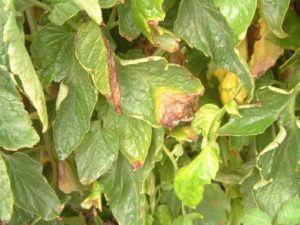
gray-leaf-spotGray mold is a fairly common problem in tomato and can be a major cause of postharvest rot at harvest and in storage. In addition to tomato, gray mold can attack beans, cabbage, lettuce, muskmelon, pepper, and potato, as well as many ornamentals.

Identification
The gray mold fungus, Botrytis cinerea, derives its name from the Greek word botrys, meaning a bunch of grapes, which describes the characteristic arrangement of spores.

Botrytis can cause a variety of problems including damping-off and blights of flowers, fruits, stems, and foliage. Entry often occurs through damaged tissue. Stems can become infected through leaf scars, dead leaves, or other forms of stem damage. Stem lesions appear as large elliptical water-soaked lesions. These may partially girdle the stem, but sometimes the entire stem is affected and the plant is killed.

Leaf lesions develop into wedge-shaped grayish-brown lesions. During cool moist weather, a gray fungal growth may be evident on infected tissue.
Fruit often are infected at the stem end or shoulder where they contact other infected plant parts. Young fruit also can become infected through the air. Water-soaked spots appear with a light brown to tan central region. Decay progresses rapidly. A soft rot may develop with the fruit skin remaining intact, while the inner tissue becomes mushy and watery. Sclerotia may form in infected tissues.

If there is a rapid weather change (not favorable to the fungus), fruit infections may abort. White circular (halo) spots appear on the fruit and are called “ghost spots.” These spots persist on green, breaker, and mature fruit.

Survival And Spread
The fungus survives between crops as sclerotia or as mycelium in plant debris. Other crops also may serve as sources of inoculum. Development is favored by cool, wet, humid weather. Airborne spores landing on tomato plants germinate and can produce an infection when free water from rain, dew, fog, or irrigation is present for prolonged periods. Senescent flower parts that have fallen onto leaves are a common starting point for leaflet colonization. Leaf lesions often start on senescent tissue or areas of physical or chemical damage.

Management Methods
Some research indicates that disease development is favored by low calcium to phosphorus levels in the soil. There is no known resistance to B. cinerea in tomato cultivars. Scala SC (pyrimethanil, Bayer CropScience) and Switch 62.5 WG (cyprodinil and fludioxonil, Syngenta) are labeled for control of this disease. Other fungicides including chlorothalinil, applied for the control of other diseases may provide some protection.

By Gene McAvoy, Regional Vegetable Specialist IV, University of Florida/IFAS

Leave a ReplyCancel reply

More from this sponsor

Integrated Approach Needed for Bacterial Spot of Pepper

Integrated Approach Needed for Bacterial Spot of Pepper

Sponsor DuPont Crop Protection

Bacterial spot of pepper, (Xanthomonas euvesicatoria) symptoms appear as small, water-soaked greasy spots on infected leaflets, which may coalesce. Fruit lesions appear blistered.

Latest Stories

Seeing Is Believing: There’s More Than One Way To Build a Successful Farm

By Carol Miller|August 18, 2026

6 Juicy Fruit Varieties You Should Grow Now

Posted by Growing Produce Staff|August 18, 2026

Best Quotes From My Travels Around New York State’s Fruit Scene

By Thomas Skernivitz|August 17, 2026

Ag Executive Perspective With Chuck Broughton of Rovensa Next

By Bob West|August 16, 2026

GrowingProduce GrowingProduce The leader in profits, production and education for produce

© 2026 Meister Media Worldwide

  • About
  • Contact
  • Advertise
  • Subscribe Now
  • Terms of Use
  • Privacy Policy
  • Reprint Permissions
  • Meister Media Worldwide
  • Meister Custom Business Solutions