

Ways One Farmer Is Taking on the Food Desert Dilemma
 December 4, 2024
 Like most entrepreneurs, there are many layers to Marquitrice Mangham. This Mississippi farmer was raised on her family’s 200-acre farm, but her service mindset goes beyond the hard work of farming her third-generation farm — incidentally, always owned by the women in her family. Her eight years of service to our country in the Army, on top of starting a nonprofit to serve the homeless and offer farmer education (yes, both!), plus opening a grocery store in one of the many food deserts in the Mississippi Delta, make Mangham a shining example of what a passion for service can accomplish.
View all
Here’s her story.
In Her Shoes
Mangham founded In Her Shoes (IHS), a nonprofit located in Webb, MS, in 2017 and operates it with a staff of three: a program coordinator, an outreach and communications coordinator, and an administrative assistant.
“Nonprofit work is something I never thought I’d want to do,” Mangham says. “It was something I was called to do.”
IHS is the means by which Mangham helps farmers learn the business of farming. It’s also the hub for everything else she does.
“You don’t see many black women commodity growers in rural Mississippi. That got quite a bit of attention and allowed me to secure funding. Not only was I growing, but I was showing other people, through my farm and through lands that I lease, how to produce. That’s basically the financial foundation for how In Her Shoes started,” she explains.
IHS began by helping the homeless. With the funds she had saved from working her regular 8 a.m. to 5 p.m. job as a Community Planner and later as a Transportation Planner for the Atlanta Regional Commission, Mangham saw a need and rented a house to provide a place for the homeless.
“But as we started to house people who had nowhere to go, we started to see all the other issues that surround being homeless,” she says. “One of them being health, because they never ate right.”
They didn’t have the means to prioritize fresh, healthy food. And they didn’t have the mindset nor the resources to even prepare it, she says.
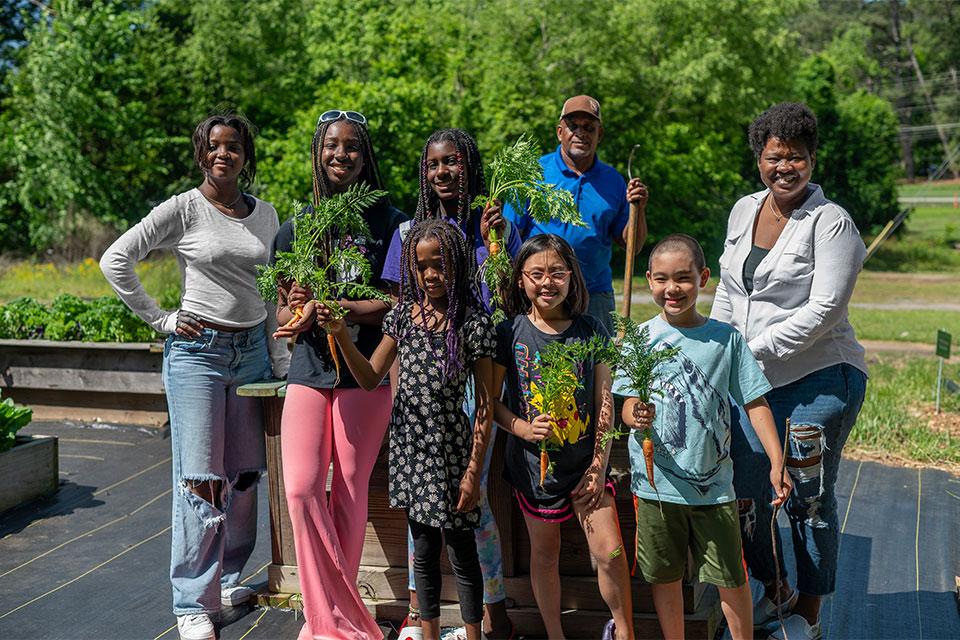
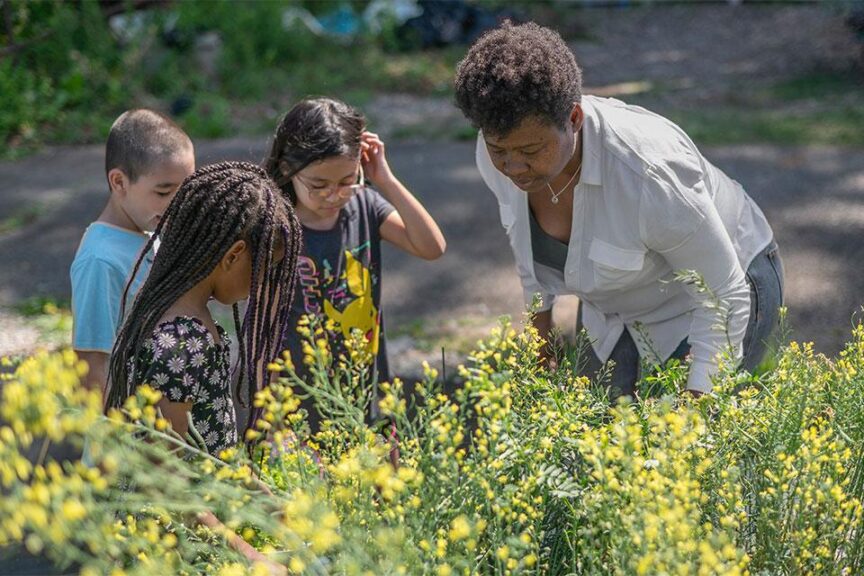
So Mangham put on her farmer hat and started showing people how to grow food in pots.
“We started growing food on the patio. You don’t need a yard to grow food,” she says. “We grew vegetables, and we eventually started to show them how to prepare healthy meals.”
Since 2018, IHS has provided short-term and transitional housing to more than 300 homeless women, children, unaccompanied youth, veterans, elderly, and disabled individuals.
Fresh Food Access Starts with Farmers
As word spread, Mangham explains, the local growing community began reaching out. “We started the most popular and biggest segments of IHS — the Food Access and Farm Business Enhancement programs.”
As it states on the IHS website (InHerShoesInc.org), the Food Access program provides fresh food outlets to those in rural and low-access communities. They do this by bringing together farmers, retailers, and the community. It’s a win-win for the local farmers in the area since they can learn to grow through IHS programming, then sell their produce at Farmacy Marketplace, a grocery store Mangham opened to serve the local community.
And this is where her own farm enters the picture. With 200 acres at her disposal, Mangham is able to partner with university Extension offices in Georgia and Mississippi to train local farmers on sustainable production practices, including soil health and how to amend soil to make it viable — from planting cover crops to other types of soil amendments. Whenever she needs technical advice, Extension is there to help.
IHS’ nine-month intensive farm-to-market integration program combines in-class workshops, field days, and personalized technical assistance to farmers so they can learn the economics of a farm business. This includes how to build a business plan, price their crops for market, and access USDA assistance programs. Farmers also learn how to test their soil and develop a whole farm plan.
“We know that at some point the nutrients in the soil are going to diminish, and you have to constantly replenish it,” she says. “How to replenish and add nutrients is a significant part of our program, because it’s constant. You don’t have to test your soil every year to know it is losing nutrients, but you do have to put the nutrients back.”
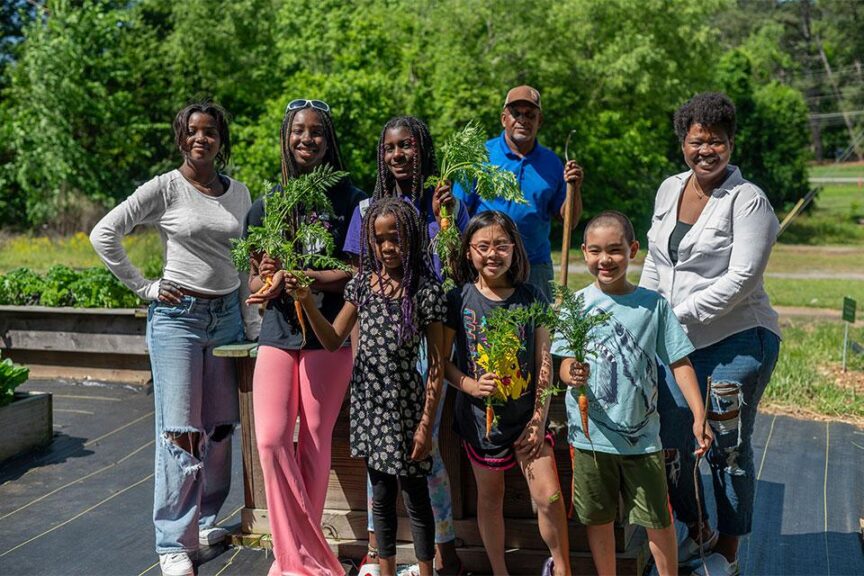
In addition, Mangham uses her farm to show farmers in the program how to operate simple equipment. “We do a number of different things, but we also have other facilities and farms that we partner with that are more specific to vegetable production. So on those farms, we actually teach young farmers how to grow, develop, or expand their business.”
“We also have a comprehensive program that we administer to young people that mimics our Farmer Business Enhancement program. This program is open to new and existing farmers, people who are already farming but want to get into a new market, and those who want to expand their farm business or increase their income,” Mangham says.
“We’ve trained more than 200 people in the past six to seven years,” Mangham says.
Enter Farmacy Marketplace
In addition to running IHS, Mangham regularly returns to run her farm where she grows soybeans and wheat.
The area, situated within a 620 square-mile community with a population of around 15,000 people, offers little in the way of access to fresh food and grocery stores. So in 2022, Mangham purchased a vacant retail building and turned it into a community grocery — Farmacy Marketplace. Here, the farmers who participate in IHS’ Farm Business Enhancement program, along with other vendor partners, provide a wide variety of fresh vegetables, fruit, and some meat to the area, helping to shrink the food desert gap.
Farmacy has been so popular that Mangham has received many requests from nearby communities asking her to open similar stores in their areas.
“After we opened Farmacy, we received so many requests, with so many people just tugging on us to help,” she says. “It really bothers me that there’s such a need.”
American Vegetable Grower’s GROW STRONGER initiative brings you positive stories from progressive growers filled with innovative solutions to help you grow a stronger future.
Mangham wanted to do something on a larger scale and didn’t know that she could. Then she and her team decided to bring the fresh food to nearby communities on produce trucks as an extension of Farmacy Marketplace.
“We’re calling it Farmacy Mobile,” Mangham says. “So for those who can’t drive 20 or 30 minutes to the grocery store, we’ll have a mobile produce truck that will have all the vegetables we have in our store, and some meat items, too.” It’s lighting a spark. “We’ve gotten some great, great partners that have been reaching out.”
Farmacy Mobile currently visits five locations within the Mississippi Delta region weekly and is brand new — it launched in the fall of 2024.
Mangham is doing all the right things. She was named to the Soil Health Institute’s board of directors in April of this year. And organizations like the American Heart Association Foundation recently reached out to partner with her. With organizations like those recognizing her good work, Mangham’s legacy of providing fresh food access to rural communities will continue well into the future.
Subscribe Today For