



Is Bamboo a Good Alternative for Florida Citrus Growers?
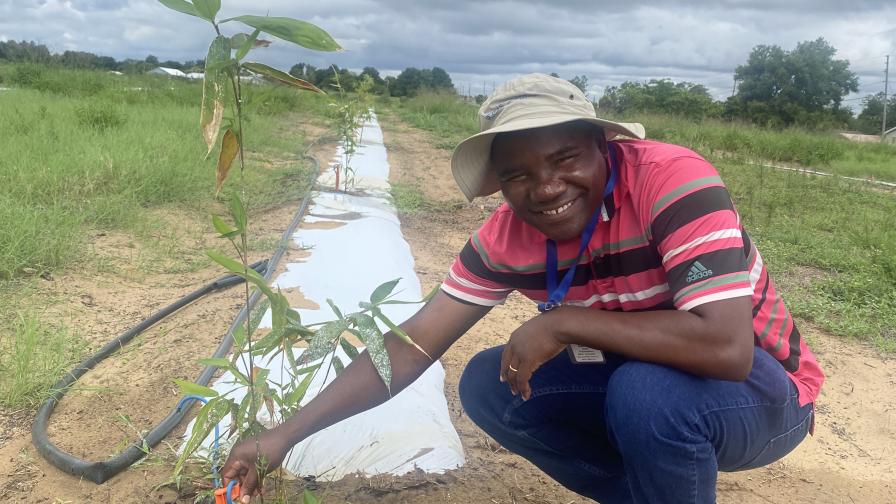
Davie Kadyampakeni, UF/IFAS Associate Professor, tours a bamboo farm in Lake Hamilton, FL.
Photo by Michael Rogers, UF/IFAS Photography
With a global market valued at nearly $67 billion, bamboo may offer an alternative crop for some Florida growers reeling from a devastated citrus crop, says a University of Florida expert. “Bamboo is a good alternative crop to diversify beyond citrus,” says Michael Rogers, Director of the UF/IFAS Citrus Research and Education Center. “The clumping bamboos grow well in Florida, can be grown on existing grove land, and there is demand for the product.”
That’s why some Florida farmers are starting to grow the clumping bamboo, a plant with many uses. People eat bamboo shoots in Asian cuisine. They’re also used for furniture, construction material and textiles, among many things.
There’s also a good economic reason to grow bamboo domestically.
“Being able to source raw bamboo from the U.S. will cut down on import costs and encourage the growth of bamboo markets here,” Rogers says. “There are already operations established for packing and processing of edible bamboo shoots in Florida, and facilities are setting up to be able to process bamboo poles for lumber and other uses. So, there is a market and demand, we just need to be able to supply the raw products to meet this demand.”
RELATED CONTENT: Study Tracks Unexpected Growth Potential for Bamboo Production in Florida
CREC scientists are studying bamboo as one of many possible alternatives to citrus. Growers have planted more than 1,000 acres of clumping bamboo in Florida so far. But some of those plantings have failed because of unintentional errors made when trying to grow the crop, Rogers adds.
Bamboo offers advantages for citrus growers, including:
- It’s easy to transition from one crop to the other. Growers can easily return to citrus if bamboo doesn’t work for them, or when new citrus options become available.
- Row-spacing is similar to commercial citrus groves.
- Once bamboo is established – four or five years after planting — there is a crop to harvest every year.
- There are few pests thus far, but scientists will monitor this.
The main concerns are weed management and proper fertilization and irrigation. Bamboo also is labor-intensive.
“Our biggest concern is how to get the product from the field to the end user if labor continues to be an issue,” Rogers says. “UF/IFAS is working on mechanical harvesters for bamboo to make that practice more economical.”
For more, continue reading at blogs.ifas.ufl.edu.
 Loading ...
Subscribe Today For
