



Caribbean Fruit Fly Poses New Threat for Southern California Farmers
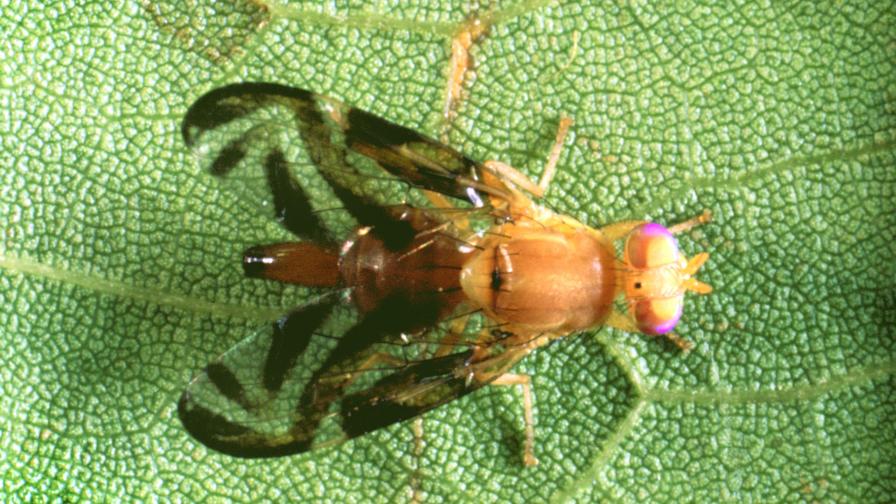
An up-close look at the Caribbean fruit fly.
Photo courtesy of California Department of Food and Agriculture Plant Health and Pest Prevention Services Division
A portion of Los Angeles County has been placed under quarantine for the Caribbean fruit fly (CFF) following the detection of two adult CFFs in and around the City of Montebello. This is the first Caribbean fruit fly quarantine in California in 40 years.
The Caribbean fruit fly is a serious threat to the state’s agriculture and natural resources, with a very wide host range, including avocados, figs, citrus, peaches, pears, and tomatoes. Damage from fruit flies occurs when females lay eggs inside a fruit or vegetable. The eggs hatch into maggots and tunnel through the flesh of the produce, making it unfit for human consumption.
The quarantine area in Los Angeles County measures 75 square miles, bordered on the north by the city of Alhambra; on the south by the city of Downey; on the west by the city of Huntington Park; and on the east by the city of South El Monte. Click here to see the quarantine map.
Following the principles of Integrated Pest Management (IPM), the California Department of Food and Agriculture, working in cooperation with the Los Angeles County Agricultural Commissioner, will utilize a multi-tiered approach to eliminate CFF and prevent its spread to new areas. Agricultural officials will hand remove CFF host material (fruits and vegetables) within 100 meters of detections to remove eggs and larvae from the area.
On properties within 200 meters of detections, staff will also cut host fruit to inspect for any fruit fly larvae that may be present.
Finally, properties within 400 meters of detections will be treated with a naturally derived organic-approved material known as Spinosad, which will help remove any live adult fruit flies and reduce the density of the population.
For more information about the Caribbean fruit fly and the related quarantine in California, visit cdfa.ca.gov.
Subscribe Today For
