


Why Growing Is Better Together at Lipman Family Farms
 October 17, 2025
 As one of North America’s largest field tomato producers, Immokalee, FL-based Lipman Family Farms knows variety development shapes the industry. Their team works closely with seed companies, sharing trial data and grower insights to help breeders identify traits that matter most in the field: flavor, disease resistance, and shelf life.
Breeding From Within
Lipman also breeds its own tomatoes through a dedicated Research and Development department, now in its 21st year. A team of 17, including six PhDs, focuses on creating proprietary varieties that balance consumer appeal with agronomic strength. Their flagship variety, ‘Crimson’, delivers bold red color, flavor, strong walls for slicing, disease resistance, and high lycopene content. Today, about 95% of Lipman’s tomato acreage contains the ‘Crimson’ gene — and ongoing refinements adapt it to shifting climates, new disease pressures, and evolving customer preferences.
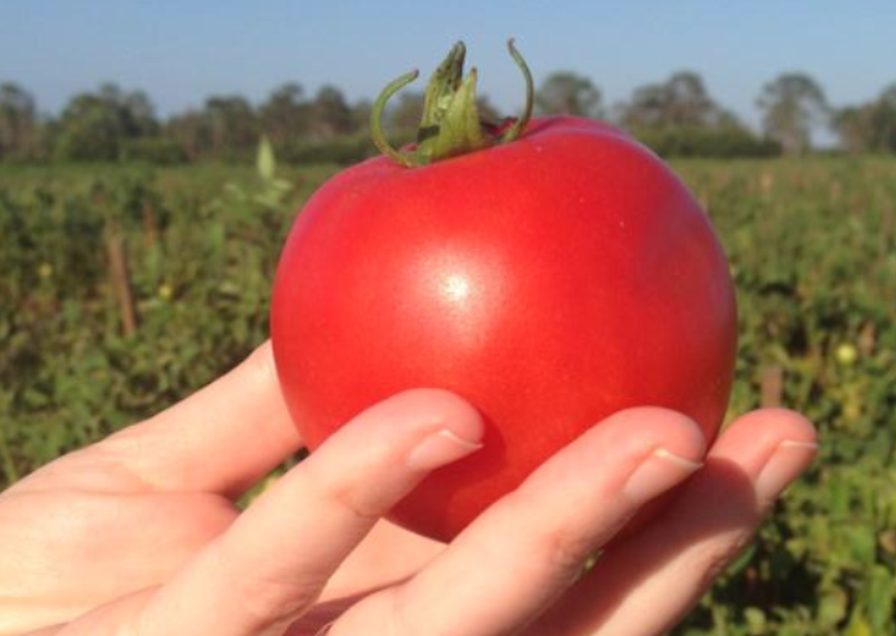
The ‘Crimson’ characteristic gives the tomatoes their rich, deep-red color, raises levels of lycopene, and increases the flavor and shelf life. Photo courtesy of Lipman Family Farms
Favorite Traits in Focus:
- Disease Resistance – Breeding tomatoes that withstand Fusarium and other soilborne threats.
- Flavor and Quality – Prioritizing taste alongside durability.
- Shelf Life – Meeting supply chain demands without sacrificing eating experience.
- Sustainability – Supporting varieties that thrive with fewer inputs.
Data-Driven Decisions
Research and development are guided by Dr. Mark Barineau and Dr. Sam Hutton, an Associate Professor for UF/IFAS, who direct a network of test fields across multiple regions. By measuring yield, fruit quality, and resilience under different conditions, the team generates the performance data that both Lipman’s in-house breeders and seed company partners need to refine genetics.
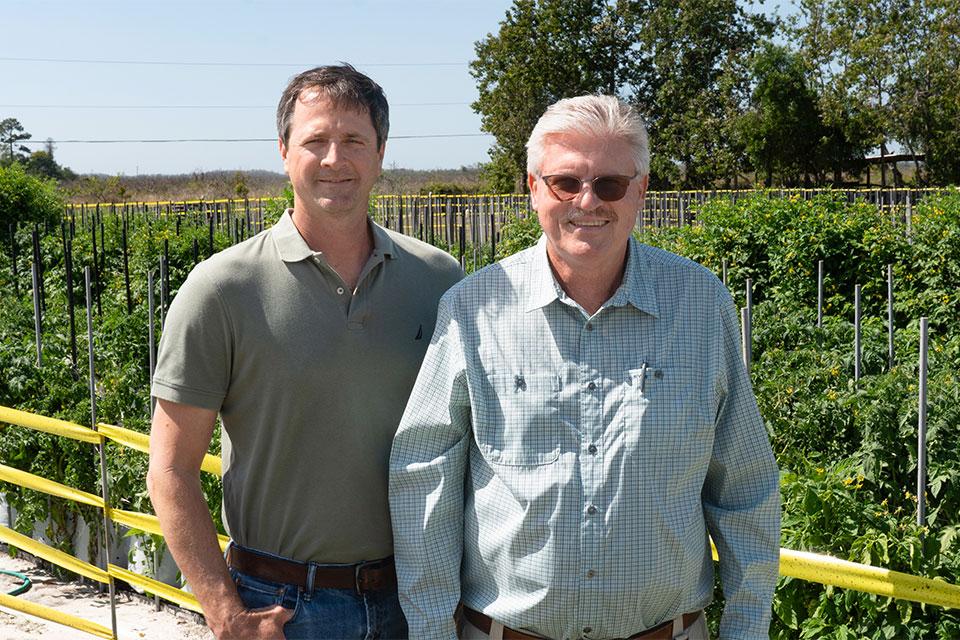
Dr. Sam Hutton of UF/IFAS (left) and Dr. Mark Barineau of Lipman Family Farms.
Photo courtesy of Lipman Family Farms
Beyond Tomatoes
While tomatoes remain the company’s flagship crop, Lipman also works with seed partners on peppers, cucumbers, and other vegetables. Collaboration ensures crop diversity while aligning with Lipman’s sustainability mission: fewer inputs, less waste, and more resilient plants.

Photo courtesy of Lipman Family Farms
Shared Success
For Lipman, seed company partnerships and in-house R&D are not just about developing better genetics. They’re about strengthening the vegetable industry. By opening fields to outside partners, investing in proprietary seed innovation, and pushing for varieties that benefit growers and consumers alike, Lipman Family Farms reinforces its motto: Good from the Ground Up.
Inside Lipman’s Seed Partnerships
How does the company decide which seed varieties to trial?
Lipman prioritizes genetics that address major grower needs such as disease resistance, yield stability, and consumer appeal. Trials include both proprietary varieties developed in-house, and hybrids introduced through seed company partners.
What role does in-house breeding play?
The Research and Development department, now in its 21st year, has grown to a team of 17 including six PhDs. Its work produced Lipman’s proprietary Crimson™ variety, known for bold red color, flavor, strong slicing walls, disease resistance, and high lycopene. Today, about 95% of Lipman tomatoes contain the Crimson gene, with ongoing refinements to adapt to climate change, disease pressures, and consumer preferences.
What makes seed company partnerships valuable?
Collaboration shortens the time it takes to evaluate promising genetics. Lipman provides on-farm testing under commercial conditions, while breeders benefit from data on yield, flavor, and shelf life. Both sides gain insights that help move varieties from trial to market more efficiently.
How does the company balance innovation with risk?
Instead of relying on results from a single environment, Lipman tests varieties across multiple regions. This approach highlights whether a hybrid is resilient enough to scale commercially, reducing the risk of crop or market failures.
What directions in vegetable breeding look most promising?
Lipman sees future gains in varieties that combine sustainability with market traits, such as crops that need fewer inputs yet deliver flavor, consistency, and resilience across regions.
This is the third and final installment in a series of feature articles highlighting influential vegetable growers making an impact.
Subscribe Today For
