



Is It Lights Out for the Notorious Spotted Lanternfly?
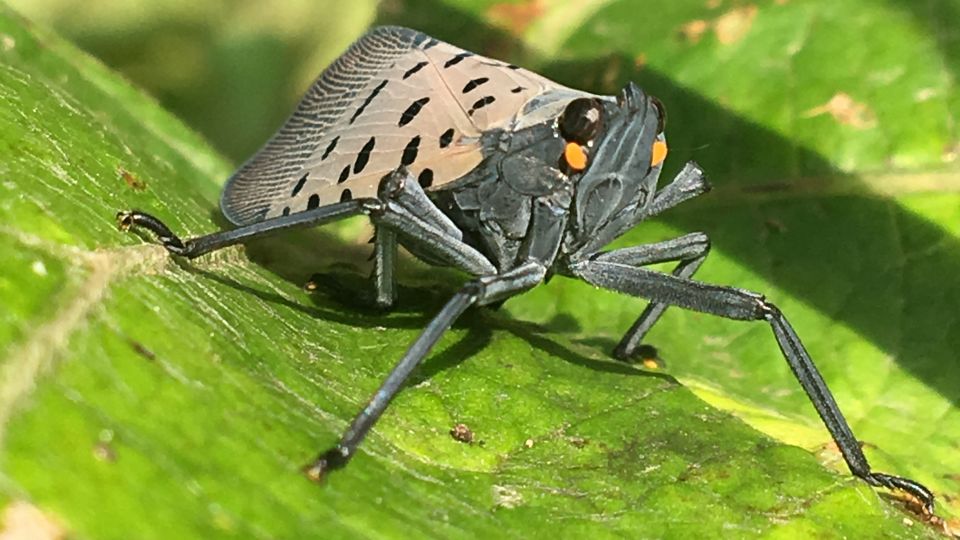
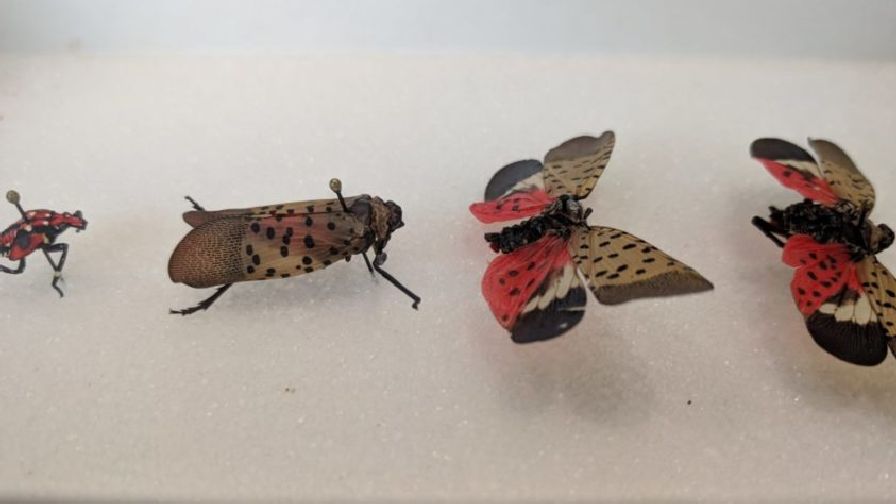
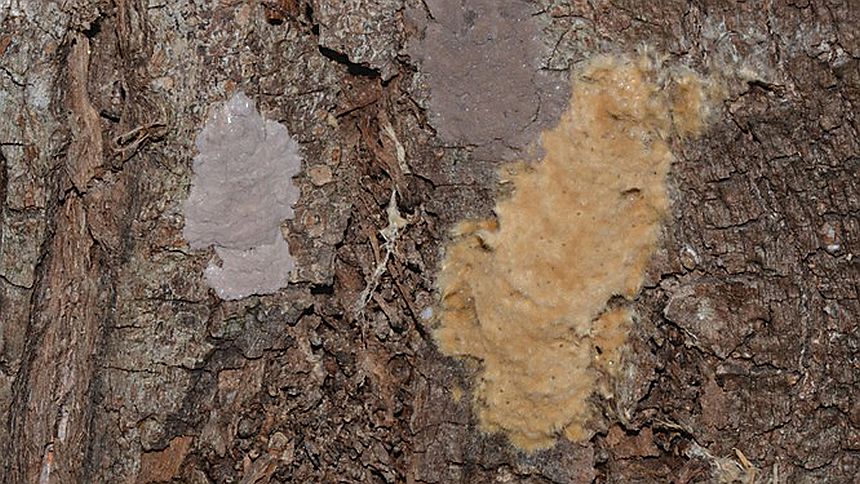
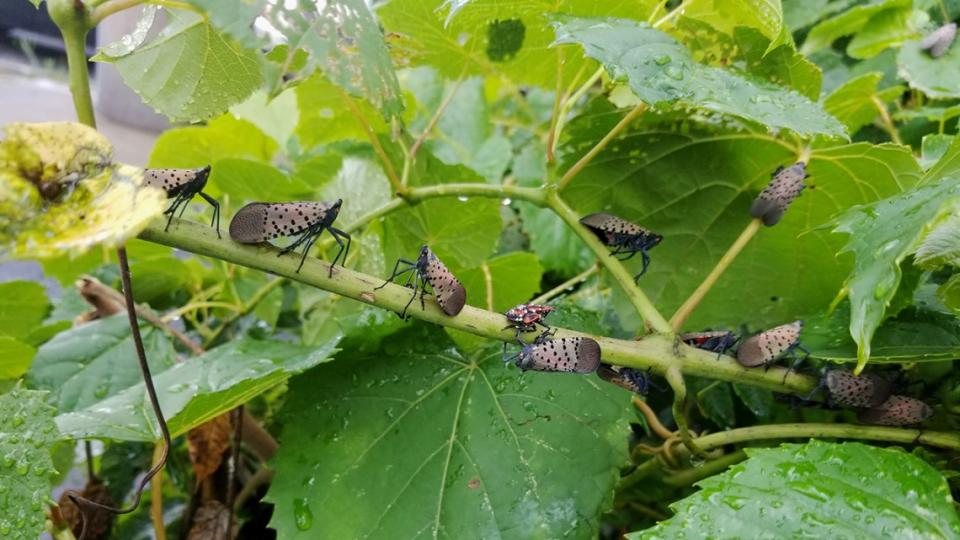
To combat the relentless spread of spotted lanternfly (SLF), the North American Invasive Species Management Association (NAISMA) dedicated a recent webinar to the latest in biocontrol innovation. Hannah Broadley, a biological scientist with USDA APHIS, shared insights into the development of Dryinus sinicus — a nymphal parasitoid being positioned as a primary biocontrol defense mechanism to protect fruit producers from the spotted lanternfly.
View all
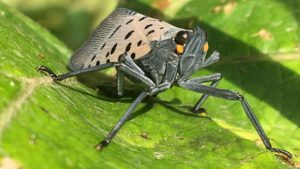
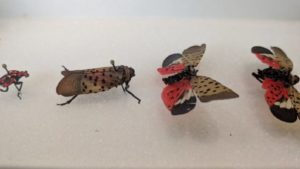
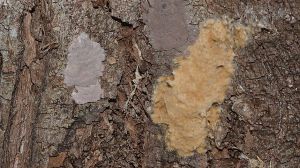
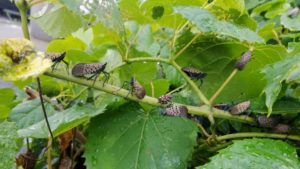
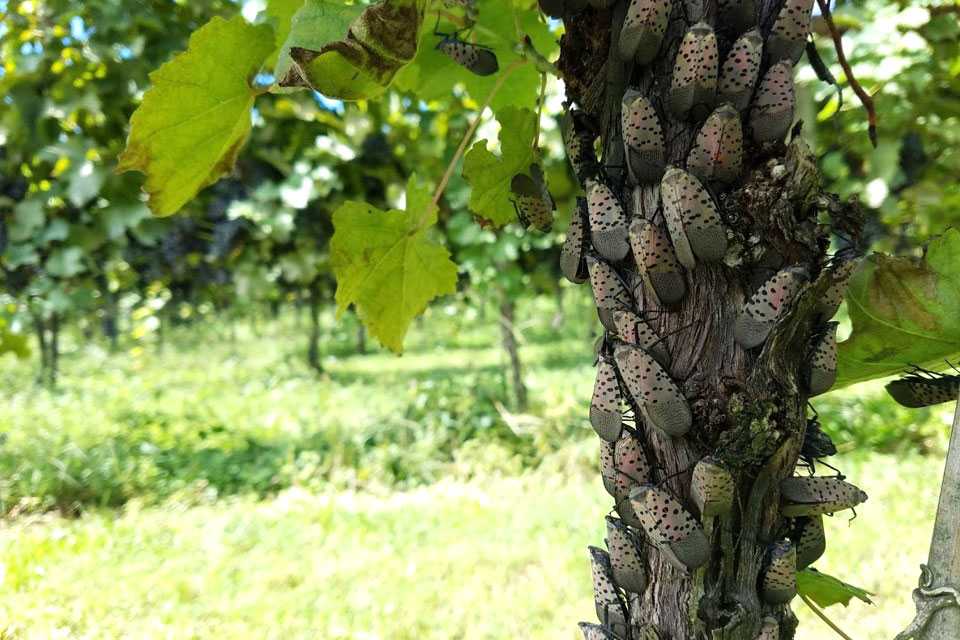
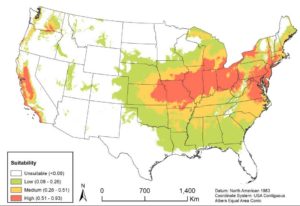
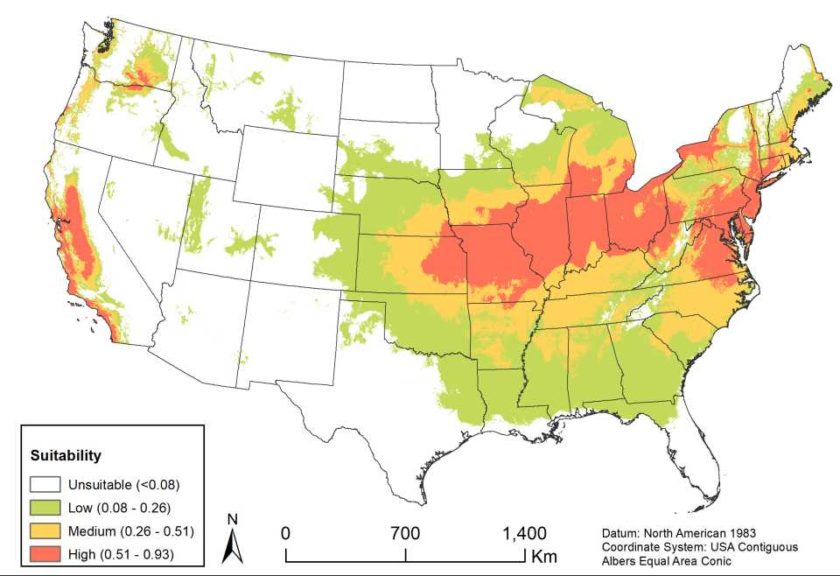
Since 2018 Broadley has spearheaded research in collaboration with federal, state, academic, and international institutions into biological control methods for SLF (Lycorma delicatula) to curb its rapid expansion across the U.S. and its potential impact on agriculture, particularly in California.
“As most people know, tree of heaven is [the spotted lanternfly’s] primary host,” Broadley said. “But there are many other different [host] species, with concern being how grapes are a really good host, and hops are a very good host for it, and that’s very challenging for growers of those species.”
Broadley explained that developing a classical biocontrol agent follows a rigorous, multi-year process that must meet specific criteria to be a viable control solution. In pursuit of a biocontrol for spotted lanternfly, Broadley said early research looked at China’s native parasitoids for potential solutions. Their initial focus was on Anastatus orientalis, an egg parasitoid that was successfully used in South Korea. However, Broadley says that U.S. testing revealed that A. orientalis lacked the necessary host specificity to be a viable candidate, as it readily used native silk moth eggs.
“So, [A. orientalis] was not something that we felt like we could pursue further as a potential biocontrol agent for release in the U.S.,” she says.
GAMECHANGER?
Broadley’s team shifted its focus to the nymphal parasitoid D. sinicus. A native of China, D. sinicus targets the first, second, and third instar nymphs of the spotted lanternfly. Broadley explained that Dryinus sinicus possesses unique “raptoral arms,” forelegs that hold the lanternfly nymph while it lays its eggs inside or under it, eventually killing the lanternfly as the wasp’s larvae develop and emerge.
“When [D. sinicus] lays an egg, that egg is laid under the wing bud, and that will develop into a protective sack called a phylacium,” Broadley said. “It, as far as we know, has one generation per year that aligns with when the spotted lanternfly nymphs are out in the field.”
To ensure the safety of native North American insects, Broadley’s team conducted exhaustive host-specificity testing on 26 different species, including 15 types of plant hoppers, from not only the East Coast but also the Midwest and the West Coast. The results, she said, have been very encouraging.
“In a nutshell, the main takeaway is we got absolutely no parasitism on any of these non-targets,” Broadley said. “We also conducted choice testing where they were given a choice of the non-target species, as well as a spotted lanternfly nymph. We found, again, absolutely no parasitism at all. We found that when the [D. sinicus] wasp had a choice, it had significantly lower host-feeding [rates]. So, it always preferred the spotted lanternfly over these non-targets.”
With host-range testing completed in December, the USDA is moving toward the final regulatory stages. Broadley says a formal petition for the release of D. sinicus is expected to be submitted in early 2026. While the federal review process can take between one and three years, Broadley adds that the research team is already focused on optimizing rearing systems to ensure a robust supply of the parasitoids once approval is granted.
“We’re very happy about this,” she said of her team’s work with D. sinicus. “It’s got to go through the review process, but it looks very positive. We’re very happy that we’re at this stage.”
ADDITIONAL FINDINGS
The webinar included a report by Scott Salom, a Professor of Entomology at Virginia Tech, and his team’s work developing biocontrol agents for tree of heaven. In addition to providing food and shelter to spotted lanternfly populations, tree of heaven is a non-native invader that often outcompetes native vegetation.
Salem’s research identified two biocontrol agents for tree of heaven: the weevil, Eucryptorrhynchus brandti, a subcortical feeding insect specific to the plant, and the fungus Verticillium nonalfalfa. Both show minimal impact on non-target species, leading to potential synergy between the weevil and the fungus as viable biocontrol agents.
Lastly, Dr. Francesca Marini, Research Leader at the Biotechnology and Biological Control Agency (BBCA) in Italy, outlined her work with Aculus taihangensis, a mite from China that is a highly promising biological control agent for tree of heaven. The mite, which is highly adaptable to diverse climatic conditions, causes severe damage to new growth and seedlings but exhibits strong host specificity, harming only the target, making it a sustainable herbicide alternative.
Subscribe Today For