



Ways Pear Growers Are Making Their Orchards Pencil Out
 February 27, 2026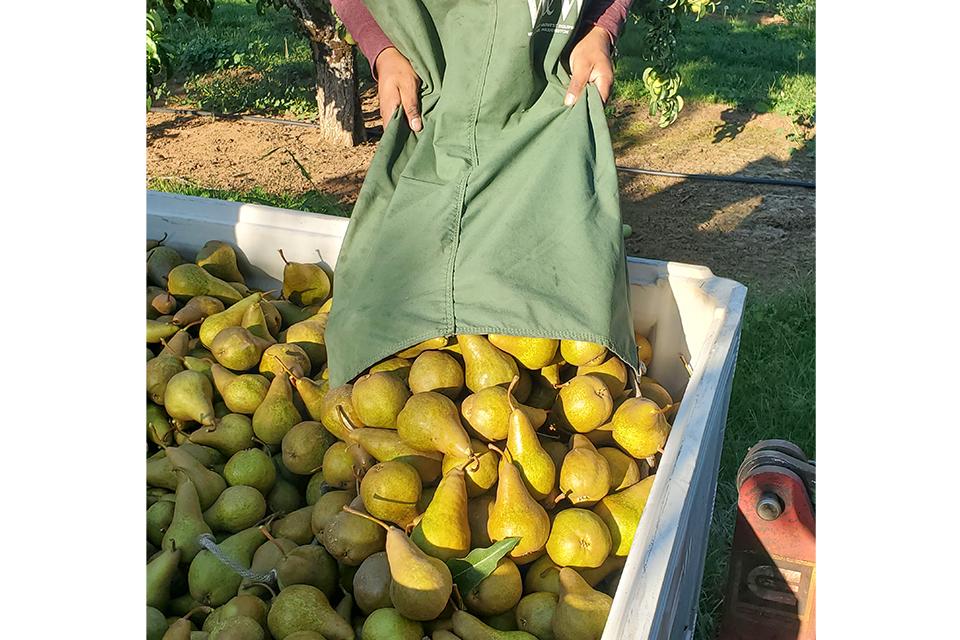
Pear harvest at Tamura Orchards.
Photo courtesy of Tamura Orchards
At the Washington State Tree Fruit Association’s annual meeting, held in conjunction with the Northwest Hort Expo in December, growers from across the region offered a candid look at what it takes to manage orchards in today’s economic and environmental climate. A panel featuring Torey Schmidt, Raw Product/Field Services Manager for Diamond Fruit Growers in the Hood River Valley; Darin Palmer, Owner of Palmer Orchards in the Wenatchee Valley; and longtime grower Melvin Weythman, J&W Orchards in Chelan County, highlighted both the shared challenges fruit growers face and the adaptations underway to keep operations viable.
Despite differences in geography and management style, the panelists agreed on one thing: the margin for error in orchard management has narrowed considerably.
When Orchards Demand Flexibility
Labor shortages topped the list of challenges in 2024. “One of the big issues was labor,” said Weythman. “It just took longer to get everything done. We were able to get things done, but that’s one of the biggest issues.”
Weather-related impacts compounded those pressures. Weythman also dealt with russeting issues in Bartlett pears, likely caused by a combination of rust mite pressure, colder-than-expected weather and possibly spray interactions.
In the Hood River Valley, Schmidt pointed to elevated psylla pressure as a major hurdle. “It was much worse than it’s been in many years,” he said, forcing growers to deploy multiple control tactics, including washing, aggressive crop-load management and earlier thinning decisions. Anticipating a heavy bloom, Schmidt said many growers leaned into chemical thinning to get crop loads under control early and manage alternate bearing.
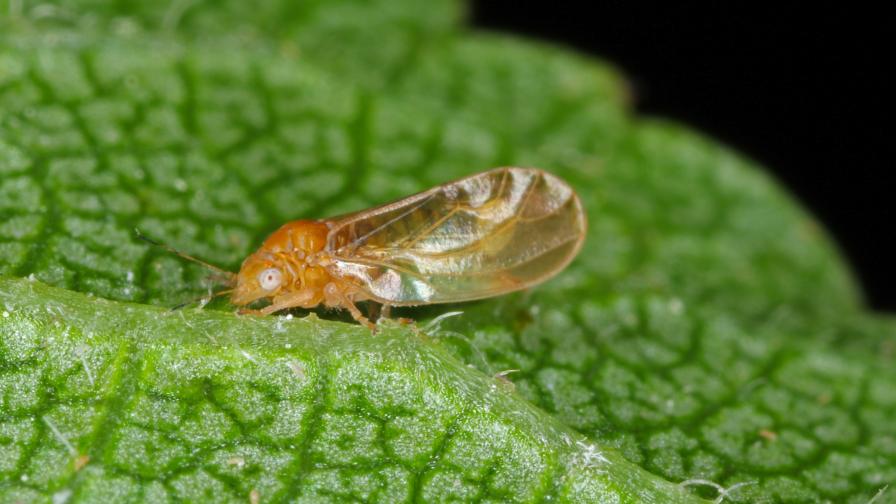
Up-close look at the pear psylla.
Photo: Tomasz – stock.adobe.com
Palmer described lingering impacts from extreme cold events. “We’re still dealing with the cold winter we had a couple years ago that damaged Bartletts and some cherry trees,” he said. Uneven tree vigor and inconsistent fruit sizing have made block-by-block decision-making more complicated than ever.
Labor Constraints, Rising Costs Shape Decisions
When asked how labor constraints, input costs and Free On Board (FOB) returns are influencing management decisions, the panelists didn’t mince words.
“The FOB returns we’re seeing are close to break even, and in many cases probably not breaking even,” said Weythman. “Anything we can do to put less dollars into growing a crop and reduce hand labor is a good goal.”
Chemical thinning emerged as a central strategy. Growers described expanding thinning programs, experimenting with combinations of thinning agents, and refining pruning practices to reduce the need for costly hand labor later in the season. Integrated pest management programs were also highlighted as a way to rein in spray costs without sacrificing control.
“All orchard renovations and new plantings are on hold right now,” Schmidt added. “Some tasks are just becoming hard to justify, so we have to look at every single labor item and figure out what we can limit or avoid.”
Building Efficiency for the Long Term
Asked about the future of orchard management, the tone was realistic but not without hope. “We’re trying to do everything we can just to be around and have a future,” said Weythman. Orchard renewal has happened when finances allowed, but efficiency is the overriding goal as growers wait for supply and demand to realign.
High-density plantings, once viewed as the path forward, are now being reconsidered through the lens of cost. “I don’t know that today I could afford to plant super high-density,” Weythman said. Instead, his focus remains on producing clean, high-quality fruit first, then building yields.
Palmer emphasized that weather volatility has added another layer of uncertainty. “I don’t believe our trees know whether they’re coming or going right now,” he said. “The question is, how do we help them survive?”
Producing Quality Fruit Isn’t Simple
When the conversation turned to quality production, panelists stressed consistency and realism. Schmidt said the industry needs to focus on producing market-preferred sizes and minimizing culls. “Having consistent quality across the entire industry is very important,” he said, noting that packers and marketers depend on predictable fruit.
Weythman offered a more pointed perspective. “They’re asking us for a perfect piece of fruit, and I’ll be doggone if I know how to give it to them,” he said. “We’re dealing with the forces of Mother Nature.”
Palmer echoed that sentiment, emphasizing the labor and care that go into every piece of fruit. “There is a lot of love and effort put into trying to grow good quality fruit. That’s our life,” he said. “This is a labor of love.”
Acreage Trends and Generational Challenges
Looking ahead a decade, most panelists expect some acreage reduction, particularly in traditional pear-growing regions. Economic pressures and generational transitions remain major hurdles. “It’s not economical for a smaller farmer to have their kid come back and take over,” Weythman said.
Still, there are bright spots. Schmidt noted that younger growers are interested in high-density systems and orchard renewal, if the economics improve. “I love the Hood River Valley and that it is all pears,” he said. “I’d hate to see that change.”
As the session wrapped up, the panel’s message was clear: today’s fruit growers are adapting constantly, cutting costs where possible, and holding tight to quality — all in hopes of ensuring orchards remain viable for the next generation.
What Pear Growers Are Changing Right Now
To manage tight labor supplies, rising input costs and narrow margins, growers on the Washington State Tree Fruit Association panel described a clear shift toward efficiency-first orchard management.
Key adjustments include:
- More chemical thinning to reduce hand labor and manage crop load and fruit size earlier in the season
- Refined pruning practices aimed at limiting green fruit pruning and other labor-intensive tasks later
- Expanded IPM programs to maintain control while reducing spray costs
- Delayed orchard renovations and new plantings as growers carefully manage capital spending
- Closer scrutiny of labor tasks, with each operation evaluated as a line item
Across regions and orchard systems, the goal is consistent: maintain fruit quality while controlling costs. Growers emphasized practical, incremental changes that help keep orchards productive and positioned to benefit when market conditions improve.
Subscribe Today For
