



How To Distinguish Weather-Related Crop Injury From Disease
 March 9, 2026
 There has been outrageous weather in parts of our nation during the early months of the year. “Bomb cyclones” were dropping heavy loads of snow and unleashing punishing winds. Historically huge snowstorms paralyzed all transportation and interfered with basic, daily tasks. Cold-paralyzed iguanas were even falling from trees in Florida! These seasonal weather events reminded us that we have no control over larger environmental systems, and that weather events require us to adjust how we live.
Growers are quite aware that their vegetable row crops are likewise subject to often unpredictable and sometimes damaging weather events. The agricultural community is familiar with most types of injury brought about by environmental extremes.
Cold temperatures: Early Spring planted crops are subject to the cold temperatures, frost, snow, and ice that can occur during some years, such as this one. Even if not actually frozen and dead, sensitive vegetable transplants and emerging seedlings can be injured by the cold temperatures and be stunted and delayed in development.
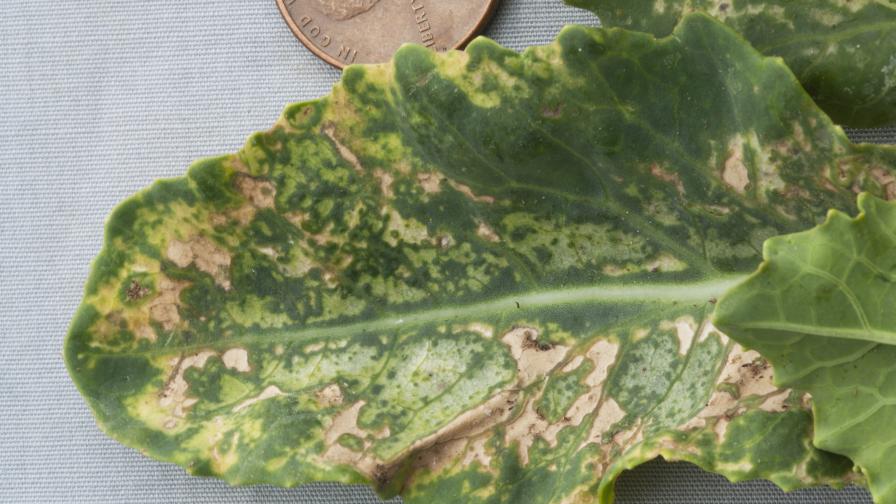
On cauliflower, freezing temperatures cause foliar symptoms that can resemble those caused by bacterial diseases.
Photo: Steven T. Koike, TriCal Diagnostics
Elevated temperatures: On the opposite side of the temperature spectrum are high summer and fall season temperatures that can cause plant stress and loss of product quality. For example, if elevated temperatures are combined with water stress due to irrigation delays, these hot conditions can cause sensitive lettuce and spinach leaves to burn from sun exposure. Fruits of row crops such as tomatoes and peppers can be scalded and burned by intensive sunlight, rendering the fruit unmarketable.
High winds: High velocity winds, of course, directly damage leaves, stems, and flowers. Crop tissues exposed to extreme windstorms become tattered and torn; leaves may later dry up and drop off entirely. Winds can also cause vegetable plants to whip back and forth, resulting in abrasion and wearing down of the crown tissue in contact with the soil. Such “wind-whipping” can hinder further plant growth.
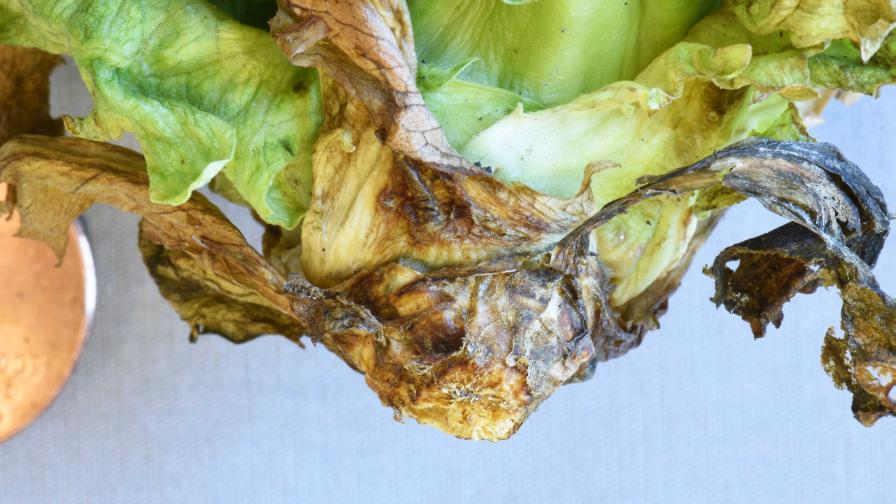
High velocity winds wear away the base of lettuce crowns, which can look like a fungal crown infection.
Photo: Steven T. Koike, TriCal Diagnostics
Rain, fog, high humidity: Rain, of course, is an essential source of water. However, precipitation can become a crop injury factor based on the volume and timing of the storms. High volume, protracted rains result in waterlogged soils and, in extreme cases, flooding. Rain at the wrong time can be devastating to some row crops; in the western U.S., if there is significant rainfall during the early months of strawberry harvest, the fruit may become moldy in the field or have reduced shelf life in the stores.
Even if rain does not directly injure a crop, rain events and prolonged foggy weather create environmental conditions that favor the activity of plant pathogens. Such moisture enables infection and disease development by several microbes, especially the downy mildew group, the late blight pathogen (Phytophthora infestans) of tomato and potato, and many bacterial plant pathogens. Broccoli head rot diseases are great examples of this dynamic; Alternaria fungal pathogens and a complex of bacteria will cause no head rot if there is no moisture on top of the heads.
Diagnosing crop injury caused by weather factors can be straightforward in many situations. However, some cases can be tricky because damage from environmental events can look similar to symptoms caused by pathogenic fungi, bacteria, and viruses. There can be overlap of disease symptoms from pathogens (“biotic” causes) and weather injury (“abiotic” factors). The following are some tips to help us confirm weather injury cases.
Associated with past weather events: Clearly, one would investigate and confirm if a damaging environmental factor recently occurred for the field showing injury. Were depressed or elevated temperatures recorded? Was there significant ice, snow, rain, hail, or fog? How about elevated winds in the region?
Percent of plants affected: Weather events typically touch on and influence all or most of the plants in a field. Given that assumption, what percent of the crop is injured? If only a small number of plants show possible weather-related damage, alternative non-weather factors might be involved.
Distribution in the field: For the field being considered, where do the injury symptoms occur? In most cases, crop injury due to a weather factor would show up on many plants that are randomly but regularly distributed throughout the entire planting. In contrast, if symptoms only occur in one section of the field, only along the edge of the field, or in localized and distinct patches, involvement of weather is less likely.
Field context: What is growing adjacent to and near the field showing injury? If your cauliflower field shows indications of possible freeze damage, does the cauliflower field next door lack such symptoms? If that is the situation, weather related to cold damage may not be involved. Sunburn symptoms may be showing throughout a spinach planting that has endured the previous week’s high temperatures. However, if a symptomless planting of the same spinach cultivar sits across the road, you may be looking at possible chemical damage to your field instead.
Production factors eliminated: Upon checking through production records, have spray applications, cultivation passes, weed management efforts, or other practices been conducted recently? It would be important to make sure none of these steps were involved and possibly contributed to plant injury.
Potential pathogens involved: As mentioned earlier, weather-related injury can sometimes mimic disease symptoms. For example, cold injury on crucifer crops can closely resemble blight symptoms caused by three plant pathogenic bacteria. Wind-whipped lettuce crown injury could be mis-diagnosed as crown rot caused by Botrytis, Sclerotinia, or Rhizoctonia. As part of the problem-solving process, collect representative samples and have a diagnostic lab to investigate whether a pathogen could be involved.
Subscribe Today For
