



Botrytis Resistance a Growing Challenge in Strawberries
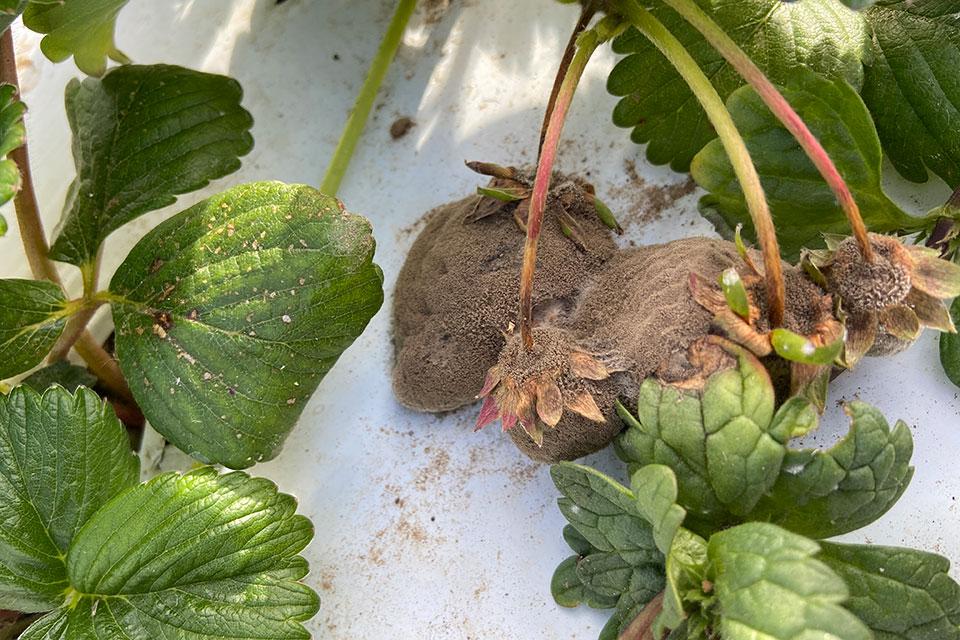
Gray mold/Botrytis blight symptoms on strawberry.
Photo by Kerik Cox
Even with proper application, single-site fungicides may not provide growers with reliable control of gray mold (Botrytis cinerea) due to existing and growing resistance, according to University of Maryland Associate Professor Mengiun Hu and Cornell Cooperative Extension Fruit Specialist Anya Stansell.
Hu’s Botrytis research, to which Cornell contributed, revealed widespread resistance to many common fungicides, particularly those with Fungicide Resistance Action Committee (FRAC) codes 11 (Cabrio, BASF), 9 (Vanguard, Syngenta), 2 (Rovral, FMC), 1 (Topsin M, UPL), and 17 (Elevate, UPL).
Stansell, speaking at a Cornell Winter Fruit Webinar in February, emphasized the rapid evolution of Botrytis and the importance of adopting IPM strategies, including cultural practices, proper fungicide rotation, and forecasting tools to mitigate resistance and protect crops.
“None of these products, except for this little bit of Miravis (FRAC code 7), had 100% control,” she said. “So, there is some resistance to all these single-site fungicides 99% of the time.
“Basically, we can’t trust these products for complete control. And I think that makes sense because, when you think about growers, even the growers with the very best spray programs that I’ve seen, they still have some breakthrough Botrytis infections. It’s a really difficult disease to control in the best of times, and this is part of the noise that we’re seeing. These [fungicides], even when they do get into the flowers, even when they are applied correctly, they’re not working because the fungus itself is capable of surviving despite that exposure.”
Key points made by Stansell in her presentation included:
Widespread single-site fungicide resistance: Hu’s research confirmed significant resistance to many commonly used single-site fungicides in New York strawberry fields. The implication for strawberry growers is that relying solely on these products may lead to control failures, even with proper application. Therefore, growers should prioritize diversifying their disease management strategies and be prepared for potential control failures when using single-site fungicides.
Importance of FRAC code rotation: Rotating fungicides with different FRAC codes is key in combating resistance. To accomplish this, Stansell said a fungicide rotation plan should incorporate multi-site fungicides, such as Captan, and avoid repeated applications of single-site fungicides with the same FRAC code.
Cultural practices as a defense: Improving air circulation, reducing moisture, and implementing proper sanitation practices are essential for minimizing Botrytis infections. Stansell said growers should focus on cultural control methods like proper field clearing, good airflow, and careful picking practices to reduce disease pressure.
Utilize disease forecasting tools: Tools like NEWA can provide strawberry growers with personalized disease risk forecasts, enabling them to optimize spray applications and reduce unnecessary fungicide use. Stansell says integrating disease forecasting into spray programs allows growers to make better-informed decisions about fungicide applications, spraying only when the risk of Botrytis is high.
Bee toxicity: Finally, many effective fungicides — Captan, Cabrio, Topsin M, Frontelis, and Miravis — are toxic to bees. Therefore, Stansell warned growers to consider application timing to account for bee activity during bloom and to select fungicides that minimize harm to pollinators.
“As we move forward and as we start planning our farm budgets, we want strategies that reduce the amount of [fungicide] resistance that you’ll see in the future,” Stansell said. “But also [employ strategies] that will naturally protect your strawberries from Botrytis by using different methods that are more likely to remain effective over time.”
Subscribe Today For
