



How Biocontrol Strategies Benefit Washington Pear and Apple Orchards
Recent research provides a clearer understanding of the geographic distributions of specialized insect predators across the Pacific Northwest’s Wenatchee, Yakima, and Hood River pear- and apple-growing regions. This will allow growers to better predict biocontrol efficacy and tailor their pest management programs, especially for controlling pear psylla and spider mites by targeting specific predators in their orchards.
Rebecca Schmidt-Jeffris, a Research Entomologist with the Agricultural Research Service at the Department of Agriculture and a frequent collaborator with organic Washington state growers, shared these findings at the 2026 Central Washington Tree Fruit Days, an annual multi-day event in Wenatchee, WA.
Among sampling methods, yellow sticky cards captured flying insects — such as the Trechnites insidiosus wasp, the dominant parasitoid of the destructive pear psylla (Cacopsylla pyricola). According to Schmidt-Jeffris, this data revealed an “outsized representation” of Trechnites, revealing this specialist is abundant in areas with high pear psylla pressure, a vital confirmation for regional biocontrol strategies. Additionally, the cards highlighted regional variations in generalist predator populations, such as spider mite destroyer Stethorus punctillum and the predaceous Deraeocoris brevis.
MOLECULAR GUT ANALYSIS
To accurately identify what these insect predators were eating, the team analyzed gut contents at the molecular level. Schmidt-Jeffris said this method provides a clearer picture of the predator complex residing directly on the tree canopy and whether those insects are feeding on pear psylla and spider mites.
Here are some findings:
Earwigs. Despite the modest sample size, Schmidt-Jeffris said 30% tested positive for pear psylla DNA, confirming that the population is engaged in active predation.
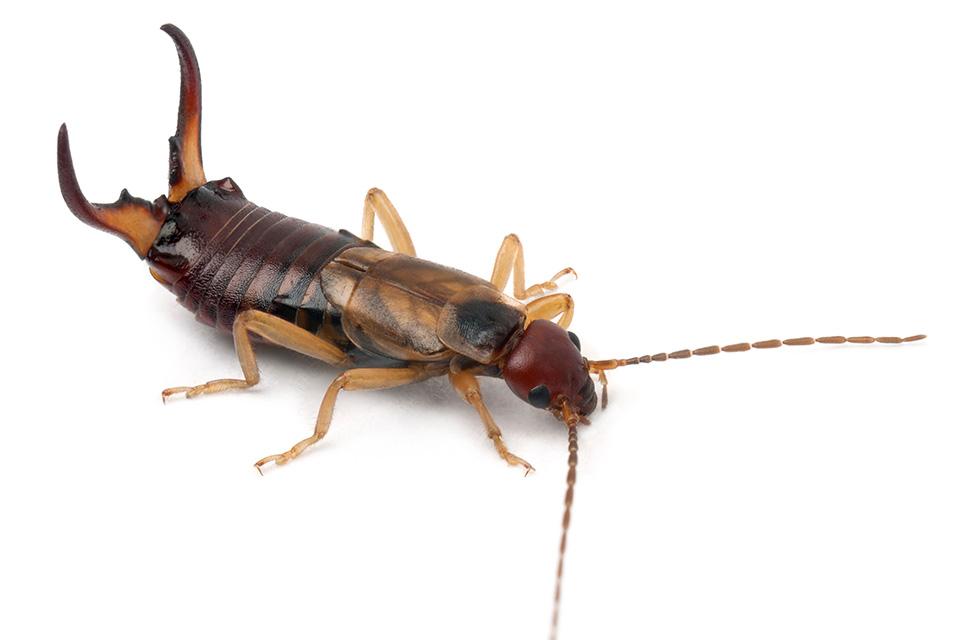
Earwig.
Photo by Eric Isselee, Adobe Photostock
Deraeocoris. The most abundant predator across the three regions, the study found very high percentages for both spider mites and pear psylla. “We’ve got a dual mode of action predator [in Deraeocoris],” Schmidt-Jeffris said. “It’s our orchard rock star.”
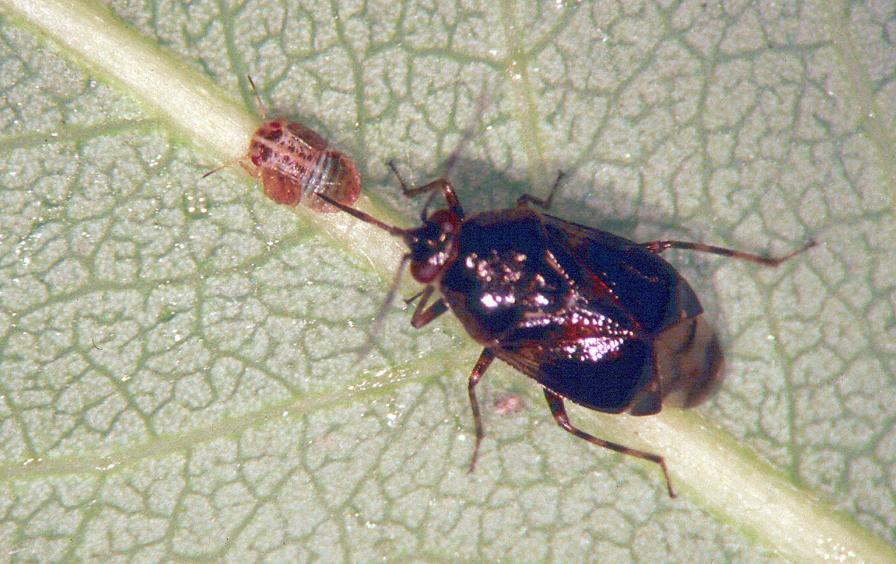
Deraeocoris brevis.
Photo: Bradley Higbee, Paramount Farming
Spiders. The data indicates they are underappreciated predators in orchard environments. However, Schmidt-Jeffris said more work is required to understand their role in pear psylla control.
Campylomma. Considered an important orchard predator, it tends to be less abundant and probably plays more of a supporting role.
Stethorus. As a spider mite specialist, the data did not align with predation expectations. Schmidt-Jeffris theorized that, since Stethorus is a spider mite egg-eater, eggs contain less DNA and are digested quickly. “That means at any given moment there will be less prey DNA in the gut of something that is exclusively eating [prey] eggs,” she added.
Whirligig mites (Anystis). Most abundant in the Yakima Valley, it prefers drier orchards where it is a solid predator of both spider mites and pear psylla. “If you have them [in your pear orchard], count yourself lucky,” Schmidt-Jeffris said. “They seem to eat just about anything that isn’t nailed down.”
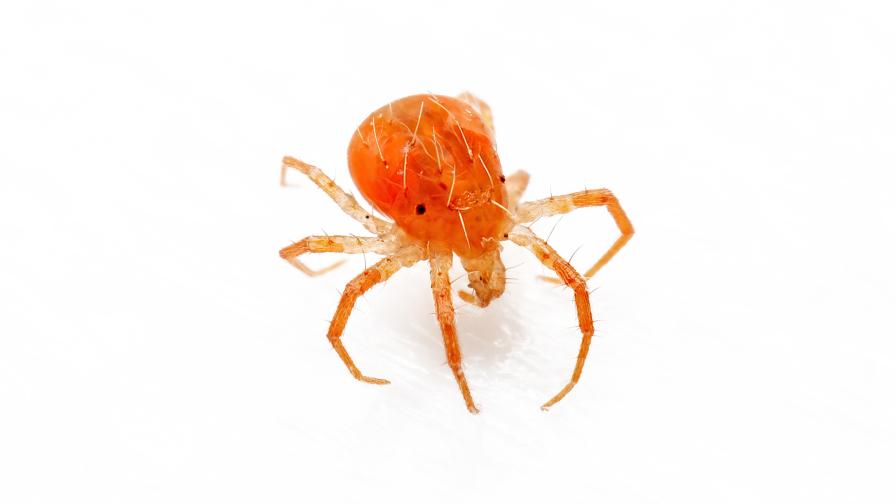
Anystis.
Photo: nechaevkon – stock.adobe.com
Brown Lacewings. Excellent early-season predators. The data revealed a high level of overwintering predation of pear psylla. “Some [brown lacewings] don’t go through true diapause. They just kind of slow down,” Schmidt-Jeffris said. “And if it gets warm, they get hungry. And we all get a little hungry and snacky in the wintertime. So, they go for what’s nearest to them, pear psylla overwintering in orchards.”
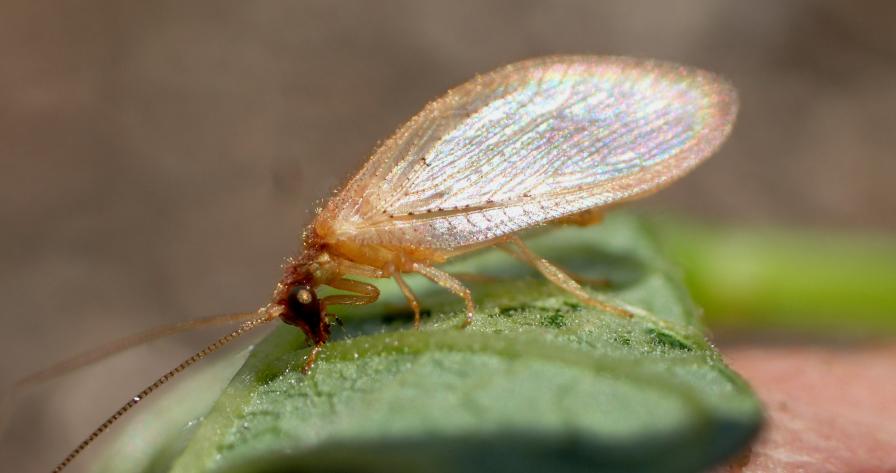
Brown lacewings.
Photo: Whitney Cranshaw, Bugwood.org
POLLEN’S IMPORTANCE
Additionally, the research suggests the importance of ground cover and floral resources, particularly pollen as a supplemental food source, in supporting beneficial predators in orchard environments.
According to Schmidt-Jeffris, the research suggests that the presence of floral resources directly enhances both the reproductive success and the residency time of predatory mites, such as Typhlodromus caudiglans and Zetzellia mali. She explains that field trials tracked the movement of these small organisms from ground cover into the tree canopy, confirming that even flightless mites actively traverse the distance between the orchard floor and the fruit-bearing wood to access food resources.
Furthermore, the data underscores the importance of “soft” orchard management practices. Just as non-mowing or deliberate pollen application in Italian vineyards encourages predatory mite populations, maintaining complex ground covers in the Pacific Northwest provides a continuous food supply for generalist predators. By fostering an environment rich in alternative floral resources, Schmidt-Jeffris said growers can ensure a robust, resident population of biological control agents primed to respond to pest outbreaks.
“Really be thinking about the role of pollen and nectar and how that affects both your ground cover management, what you plant for windbreaks, how often you mow, whether or not you let your grass go to flower, what kinds of grass you choose if you’re thinking about reseeding,” she said. “All those things can be really important choices for attracting and retaining natural enemies from the surrounding environment.”
Subscribe Today For
