



Broccolini Emerging as Fresh Alternative for Vegetable Growers
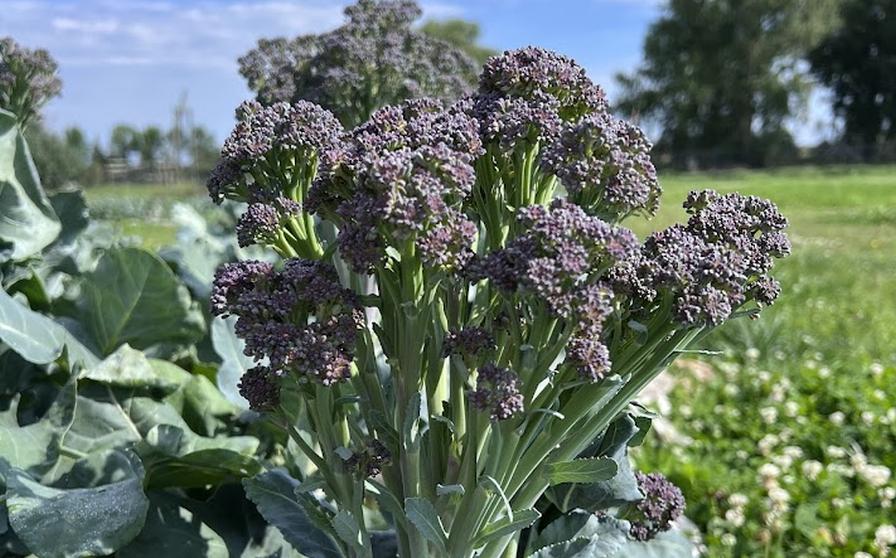
Broccolini ‘Burgundy’ in the field.
Photo: South Dakota State University
A heat wave can quickly cut short a broccoli harvest, but broccolini may give growers another chance. Because the crop is harvested for its side shoots rather than a single head, damaged or bolted shoots can be removed while the plant continues producing new ones. That ability to keep harvesting, combined with growing market interest, is making broccolini an alternative crop worth a closer look.
You Have Options When Heat Hits
Broccolini is emerging as a viable alternative crop in the Midwest as growers respond to changing growing conditions and shifting markets.
A hybrid of European broccoli and Chinese broccoli, or gai lan, it is still relatively unfamiliar to many consumers despite its growing popularity. Also marketed as mini broccoli, sprouting broccoli, baby broccoli, aspabroc, and tender stem broccoli, the crop’s many names reflect the characteristics helping it carve out a place in the market.
Miller Chemical’s Connor Ruen points to broccolini’s long, tender stems and milder, sweeter flavor as consumer advantages. Because more of the stem is eaten, it can also require less preparation and generate less waste.
“Another advantage of broccolini is the ability to continuously harvest throughout the season,” Ruen says.
If a heat wave causes traditional broccoli to bolt, the crop can become woody and bitter, leaving growers with little marketable product. Broccolini, however, offers more flexibility because bolted shoots can be removed, and new, harvestable shoots can emerge within several days.
“Unlike European broccoli, broccolini is grown for its side shoots rather than the apical floret. This allows producers to grow the plants for longer periods of time and have more opportunities to harvest in contrast to one harvest in the case of European broccoli,” Ruen says.
More Harvests, More Considerations
For growers interested in adding broccolini to their operation, starting small can help determine which varieties perform best before dedicating significant acreage to the crop. Growers can choose among varieties with different colors and textures while learning what performs well in their fields and appeals to their customers.

Connor Ruen
“Do a trial run before you commit to an entire field. Broccolini is a hybrid crop which means there are many different textures and colors to choose from. Try a few varieties to see what you and your customers might like,” Ruen says.
Broccolini’s ability to produce multiple harvests also comes with a tradeoff: additional labor. Growers may need to make more passes through the field than they would with traditional broccoli. Fertility is another consideration, as the longer production period could mean plants need additional nutrients to continue producing shoots, although Ruen notes that formal research on those requirements is not yet available.
“Since broccolini can be harvested more than once, harvest will require more labor or ‘touches’ in comparison to broccoli. This can be one drawback that comes with continuous harvest crops but due to the improved flavor and utility, many find it worth it,” Ruen says.
Turning a Specialty Crop into a Market Opportunity
Broccolini is not likely to replace traditional broccoli, but it can give growers another way to diversify their crop mix and reduce some of the risk that comes with relying on established crops. Its higher labor requirements may need a premium price to justify the additional harvest passes. Its tender stems, mild flavor, and reduced waste can help support that premium in the right market.
“I believe that European broccoli will always have its place in the produce aisle and in the farmers market, but I think broccolini is another crop that can be used to diversify vegetable farms and spread some of the potential risk that many growers already take on,” Ruen says.
Demand may also be building as broccolini becomes more familiar to consumers. Its increasing presence on restaurant menus, combined with varieties offering different colors and textures, gives growers opportunities to find a niche that fits their market.
“I have continued to see broccolini or some iteration of it on menus more and more as growers have increased interest in adding it to their rotation,” Ruen says.
Subscribe Today For
