


Joel Viereck Selected as This Year’s Grower Achievement Award Winner
 October 2, 2026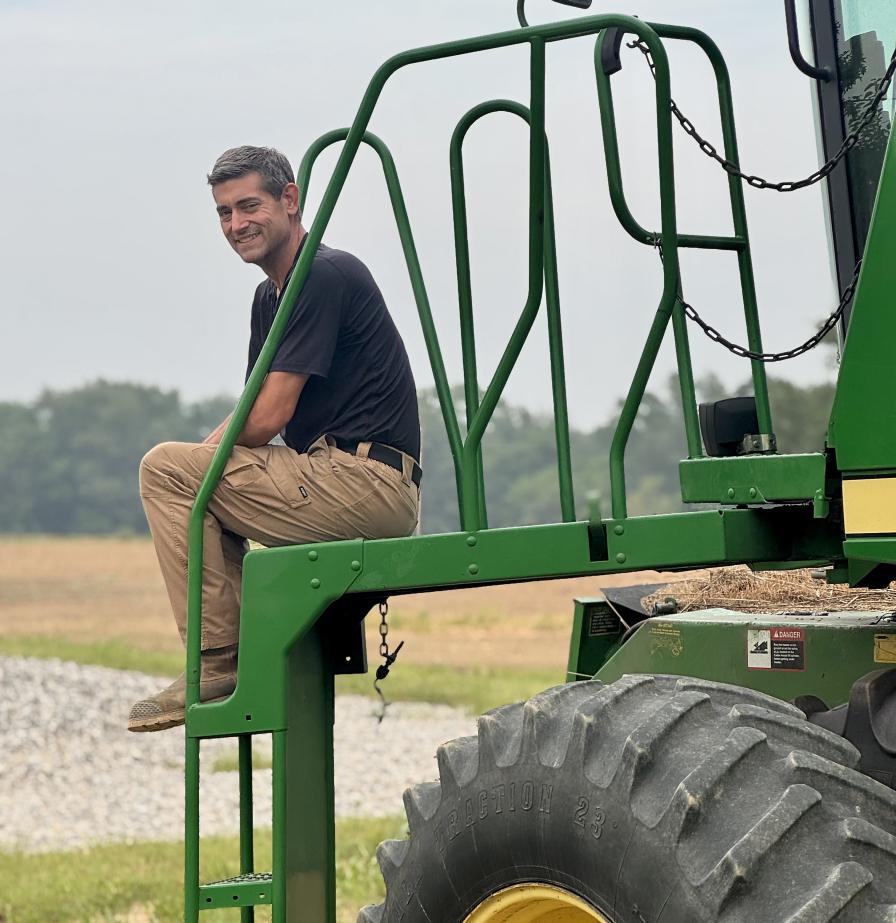
Congratulations to Joel Viereck of Viereck Farms being selected the 2026 Grower Achievement Award winner.
Photo: Viereck Farms
Joel Viereck was trying to explain something that seemed obvious to a farmer. U.S. Sen. Cory Booker was visiting Eastern Fresh Growers in New Jersey, and Viereck had been looking for an opportunity to get the senator’s ear about pressures facing U.S. tomato growers. So Viereck started talking.
Look at this farm, he told Booker. It’s one of the larger operations in New Jersey. But compared with some of the farms it competes against around the country, it’s small.
Then Viereck saw something change.
“It looked like it clicked with him,” he recalls.
Booker listened. It was the first time Viereck had directly asked a legislator for help with a problem affecting his farm and other growers. Booker’s office followed up quickly, and Viereck saw that speaking up could actually produce a response. He came away realizing that sometimes what decision-makers need from growers isn’t another set of numbers. It’s someone who can show them what those numbers look like on a farm.
“I was optimistic,” Viereck says. “I was like, all right, I can do something. I can make a difference.”
The lesson wasn’t that he could make a difference, Viereck says. Growers could — if they got legislators’ attention and spoke candidly.
“Just be honest,” he says.
That first conversation with Booker showed Viereck what could happen when a grower spoke directly with someone in a position to help. Three years later, the same willingness to engage would take him to the White House, where he spoke during an agricultural event with President Donald Trump.
That instinct — see a problem, get involved and figure out what you can do about it — has shaped Viereck Farms, too. And it is one reason fellow growers selected Joel Viereck as American Vegetable Grower’s 2026 Grower Achievement Award winner.
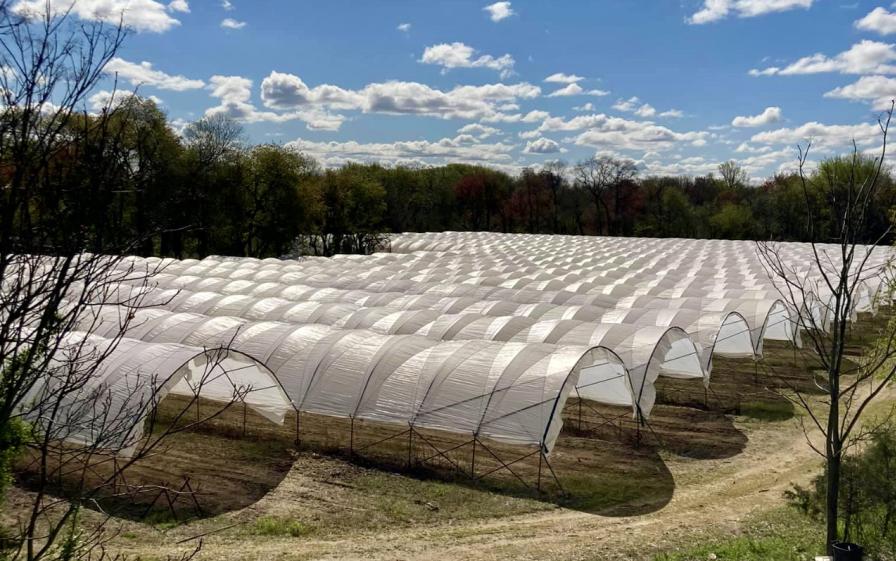
High tunnels started as a three-quarter-acre experiment at Viereck Farms. It grew from there — and then some.
Photo: Viereck Farms
Learn From What Fails
“One thing in farming, I always say, it’s not just one little thing. It’s everything at once,” Viereck says.
Today, Viereck Farms encompasses nearly 800 acres of vegetables and grains in southern New Jersey, with more than 40 acres of protected tomato production.
None of it began with tomatoes.
Around 2009, the family bought about three-quarters of an acre of used high tunnels to extend its strawberry season. It didn’t work.
Excessive heat stressed the plants, caused flower abortion, and brought pest problems. Then the family left the plastic on too long, and snow collapsed part of the structure.
The following year, they had tomato transplants left after planting the field crop. They put them in what remained of the tunnel.
That half-acre changed the farm.
Field tomatoes at Viereck Farms typically produce about 400 to 500 marketable 25-pound boxes per acre. Under cover, Viereck says production averages 1,700 to 1,800 boxes, with the best year reaching about 2,200. Harvest also starts roughly two weeks earlier and can continue three weeks later.
A half-acre became 4 acres, then 8, then 20 and eventually more than 40 acres.
There were more failures along the way. Viereck tried early sweet corn under cover, hoping to capture an early premium while rotating away from tomatoes. Pollination was so poor that nearly the entire crop was lost.
“Technology cannot repeal biology,” Viereck says.
The larger lesson was knowing the difference between a failed idea and asking for a useful tool to do the wrong job.
“We did not decide the tunnels had failed; we recognized that we had asked them to do the wrong job,” he says.
Viereck still experiments, but experience has made him more disciplined about when to scale.
“Failure is expensive in vegetable production,” he says. “It becomes more expensive when pride prevents you from learning from it.”
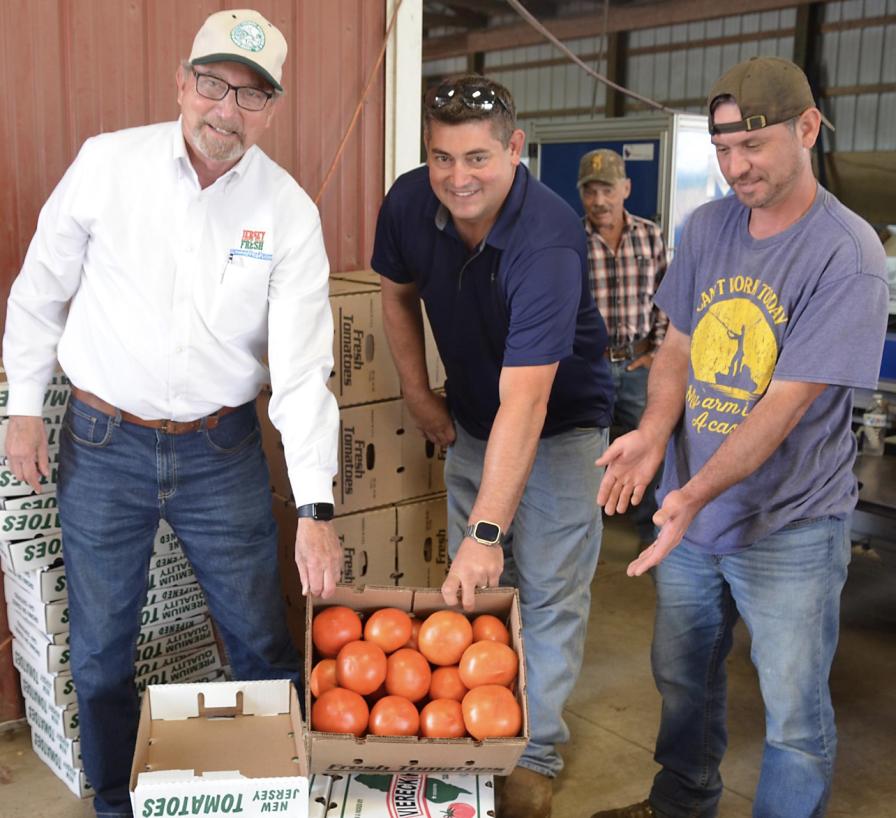
At Viereck Farms, tomatoes are a signature crop.
Photo: Viereck Farms
When Success Creates the Next Problem
Producing more has value only if the rest of the operation can keep up, and that has meant looking beyond what happens in the field or tunnel.
Viereck Farms starts its own transplants and carries the crop through harvest, packing, cooling, traceability and shipment. Years ago, the farm invested in optical sorting technology to produce a more uniform tomato pack.
For an operation its size, Viereck says, the investment was a significant step. It also reflects how he thinks about technology: A new tool has to solve an actual problem.
“Producing more has value only if we can harvest it, preserve its quality and sell it,” he says.
Some problems, though, can’t be solved with another tunnel, a better packing line or a different production practice.
Viereck can work on quality. He can extend the season, improve packout and lean into the regional identity of Jersey Fresh. He can’t control every force determining what that crop will be worth.
That realization pulled him farther from the farm.
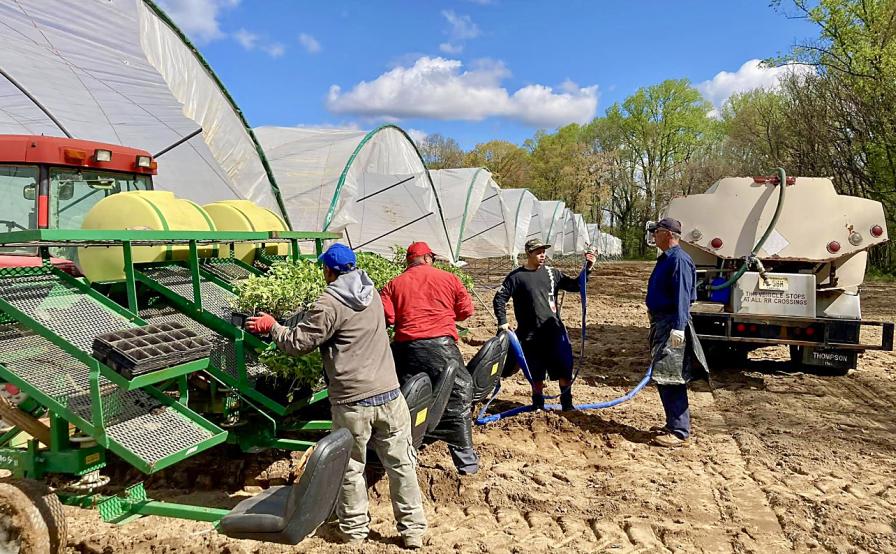
Today at Viereck Farms, tomatoes grow under more than 40 acres of high tunnels across the 800-acre operation.
Photo: Viereck Farms
Open Your Mouth, Get Involved
Viereck didn’t set out to become an industry advocate. He became an alternate representing his county at a Vegetable Growers Association of New Jersey meeting.
“I opened my mouth,” he says.
As he puts it, one thing led to the next. He became vice president and eventually president.
The organization was struggling. Viereck, who has an accounting degree, began going through the numbers, asking questions, and working with the other officers to restructure operations. Their first convention under the new leadership finished with money left over for the first time in years.
Viereck is quick to credit the people who worked alongside him and those who continued building the organization after he moved into other industry roles. But the experience also introduced him to advocacy.
“I was kind of new to it, and I was like a bull in the China shop,” he says. “I was just running with it as much as I could.”
The more growers he met, the more he saw common problems crossing commodities and state lines.
When he later ran for the Farm Credit East board, Viereck attended every in-person business session during a two-week period, spending eight days away from home.
His strategy: Find the farmers complaining the most.
“I was going to go up and introduce myself, because that was the most outspoken person,” he says.
Viereck estimates he had 100 to 150 conversations — not simply to ask for votes, but to learn what was bothering growers. The commodities have changed. Many of the complaints didn’t: labor, weather, input costscosts, and markets.
“You’re not in this alone,” Viereck says.
That listening now travels with him into rooms far removed from a New Jersey vegetable farm.
“When I enter those rooms, I bring the perspective of someone who still plants, sprays, harvests, worries about the weather and understands what it takes to make payroll,” he says.
In May, Viereck was among growers who participated in a U.S. International Trade Commission proceeding involving fresh tomatoes from Mexico. The Commission subsequently determined that circumstances did not warrant revoking the existing antidumping order.
For Viereck, though, the larger lesson goes back to that first conversation with Booker: Growers have to be willing to explain what is happening on their farms to people who don’t experience it themselves.
Who Makes It Possible
Viereck and his wife, Brianna, have three children: Charlotte, 8; David, 5; and Maggie, 3. Brianna works full time as a nuclear medicine technologist while carrying much of the load at home when industry responsibilities take Joel away.

Joel Viereck surrounded and supported by his family. Photo: Viereck Farms
On the farm, his father, David; uncle Larry; cousin Mike; and other family members take on additional responsibilities when he is gone. Viereck is quick to point out that the opportunities carrying his name depend on the family keeping the operation moving at home.
“People may see me speaking for agriculture, but they do not see her adjusting a demanding schedule and keeping everything together at home so I can be there,” Viereck says of Brianna. “She does not merely support what I do; she makes much of it possible.”
When American Vegetable Grower interviewed Viereck in early September, his 99-year-old grandfather was still talking with him about how farming used to be and what he believed it should be. He died less than two weeks later.
At the other end of those generations is 5-year-old David.
“He thinks farming is driving a combine around,” Viereck says. “He doesn’t really understand all the other stuff that goes into it yet. I mean, he’s 5, so I don’t want to ruin that.”
Viereck isn’t assuming David — or either of his daughters — will become the fifth generation on the farm.
“Whether they choose to farm will be their decision,” he says, “but I want that choice to exist.”
That is also how Viereck explains the time he spends away from homehome, speaking up about an industry he worries is changing quickly. He wants farming to remain viable enough that another generation gets to choose.
“Somebody’s gotta speak up,” he says.
AT A GLANCE: Viereck Farms
Location: Woolwich Township, NJ
Owners/Operators: Viereck family
Generation: Fourth
Farm Size: Nearly 800 acres
Protected Production: More than 40 acres
Crops: Tomatoes and other vegetables; grains
Markets: Retailers, wholesalers and farm markets throughout the region
Family: Wife Brianna; children Charlotte, David and Maggie
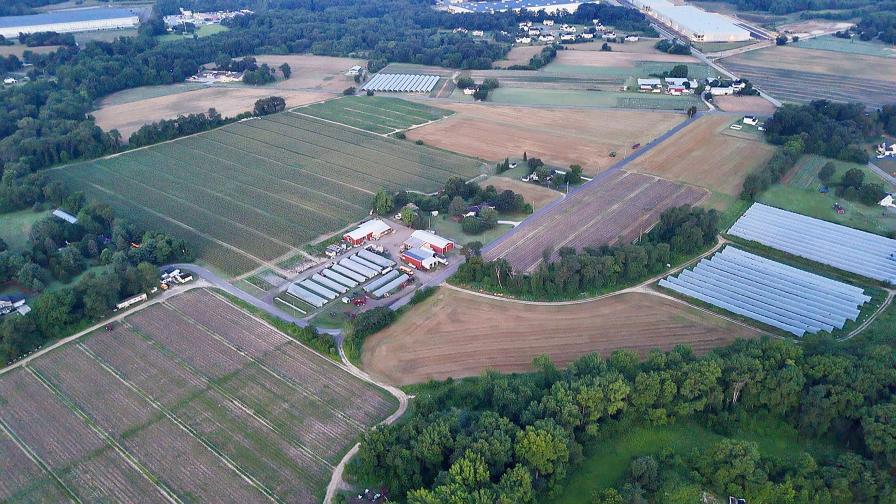
Bird’s eye view of Viereck Farms.
Photo: Viereck Farms
How Joel Viereck Ended Up at the White House
Joel Viereck’s expectations were modest when he applied to attend an agricultural event at the White House.
“How cool would that be to go sit on the South Lawn and watch the president give a speech?” he recalls. “That would have been enough for me.”
Then the White House called while his dogs barked, his kids made noise, and his daughter was getting ready for church. After a second interview a few days later, he got another surprise: Would he be willing to speak alongside President Donald Trump?
“Sure, yeah, why not?” Viereck recalls answering.

A big moment for Joel Viereck at the White House. Photo: Viereck Farms
The surprises continued when Viereck and his wife, Brianna, reached Washington. After arriving at the White House, he was taken inside to meet with Agriculture Secretary Brooke Rollins. Then Trump joined them.
“We didn’t know we were going to get to see or talk to him or anything,” Viereck says.
The group took photos and talked, and Viereck asked Trump and Rollins whether they thought they had enough time to accomplish what they hoped to do for farmers.
And the final surprise? Hearing a familiar message from the podium.
During his public remarks that day, Trump said farmers tell him they want a “level playing field” — exactly the kind of concern Viereck had come to Washington to raise.
 About the Grower Achievement Award
Each year, growers and other industry members nominate innovative vegetable growers who contribute beyond their own farms. Past winners select the new recipient, making this a true industry award.
Subscribe Today For
