



From Grapes to Almonds: Ways One Grower Is Finding Firmer Ground
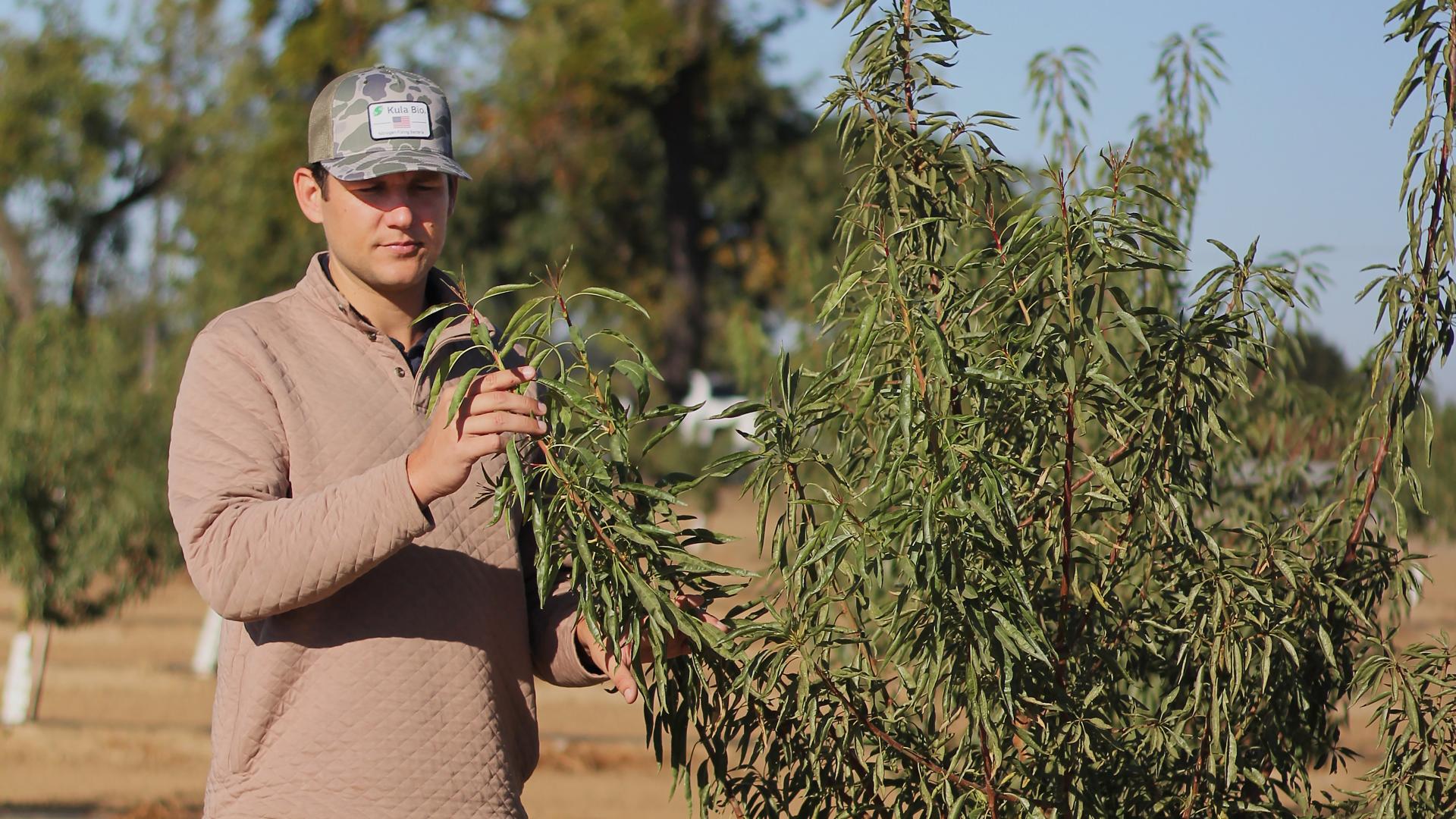
Blake Wilbur of Proplant Transplanting inspects one of his almond trees.
Photo: Crystal Nay
Blake Wilbur, assistant farm manager at Proplant Transplanting and Western sales manager at Kula Bio, learned farming from the bottom up. This fourth-gen grower started by following transplanters, furrow irrigating, and being a part of harvest crews. That hands-on experience provided the understanding of a family business built around custom transplanting.
Proplant aimed to be as vertically integrated as possible. From selling seed to popping transplants, to getting them into the ground. The territory stretched most of the Central Valley, some 230 miles or so from Bakersfield to Tracy. The family also farmed some of its own ground in walnuts and tomatoes and cherries. When wine grapes were still having their moment in the sun, they planted hundreds of acres of wine grapes.
But then, “We kind of saw the writing on the wall,” Wilbur said.
Something had to change.
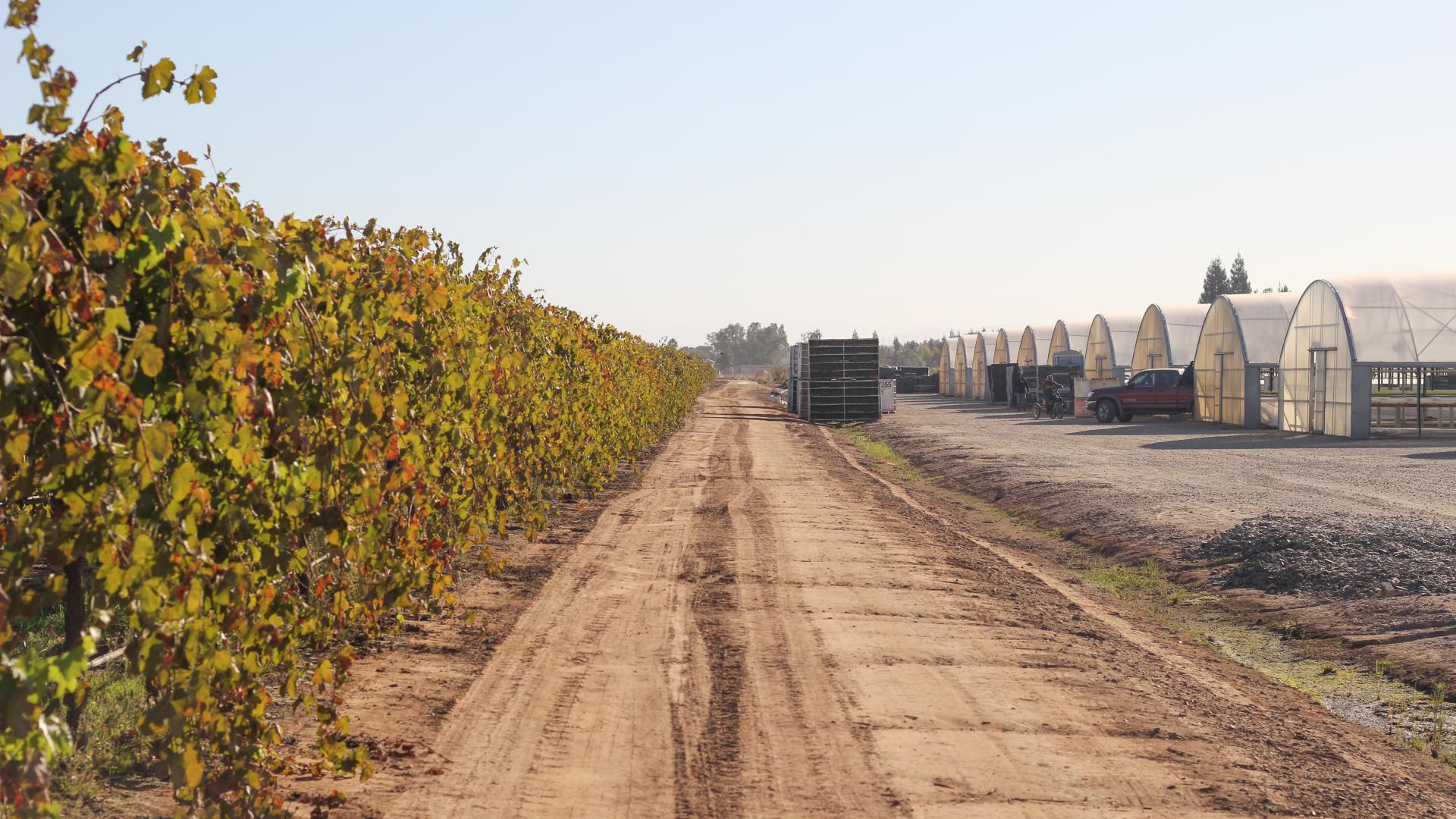
Proplant stays diversified. It maintains the greenhouse and will transition the wine grapes to almonds.
Photo: Crystal Nay
The Writing on the Wall
Proplant watched crops lose their footing. The reasons varied.
California’s Sustainable Groundwater Management Act (SGMA) made some transplanting customers move into water recycling programs or land fallowing to have enough water for the remaining crops. SGMA is a law to bring critically over-drafted basins back into long-term sustainability by 2040, and other priority basins by 2042.
Wine consumption dropped. According to the International Organisation of Vine and Wine, worldwide consumption fell 2.7% from 2024 to 2025, continuing a steady decline of 14% from 2018. Volume in the U.S. declined 4% from 2024-2025, with over a 12% decline since 2018, according to the 2026 BMO Wine Market Report.
“We’ve been ripping out a few blocks of wine grapes just because we want to be able to keep farming and paying the bills,” Wilbur said.
Volatility added concern. The transplanting stretch in the valley shrunk by nearly 100 miles. Walnuts lost their market foothold. Cherries were unpredictable. A cannery can pull a tomato contract from one year to the next, and wine grape buyers hold similar power.
“We figured we might as well take the risk early,” said Wilbur.
And then the family planted to almond.
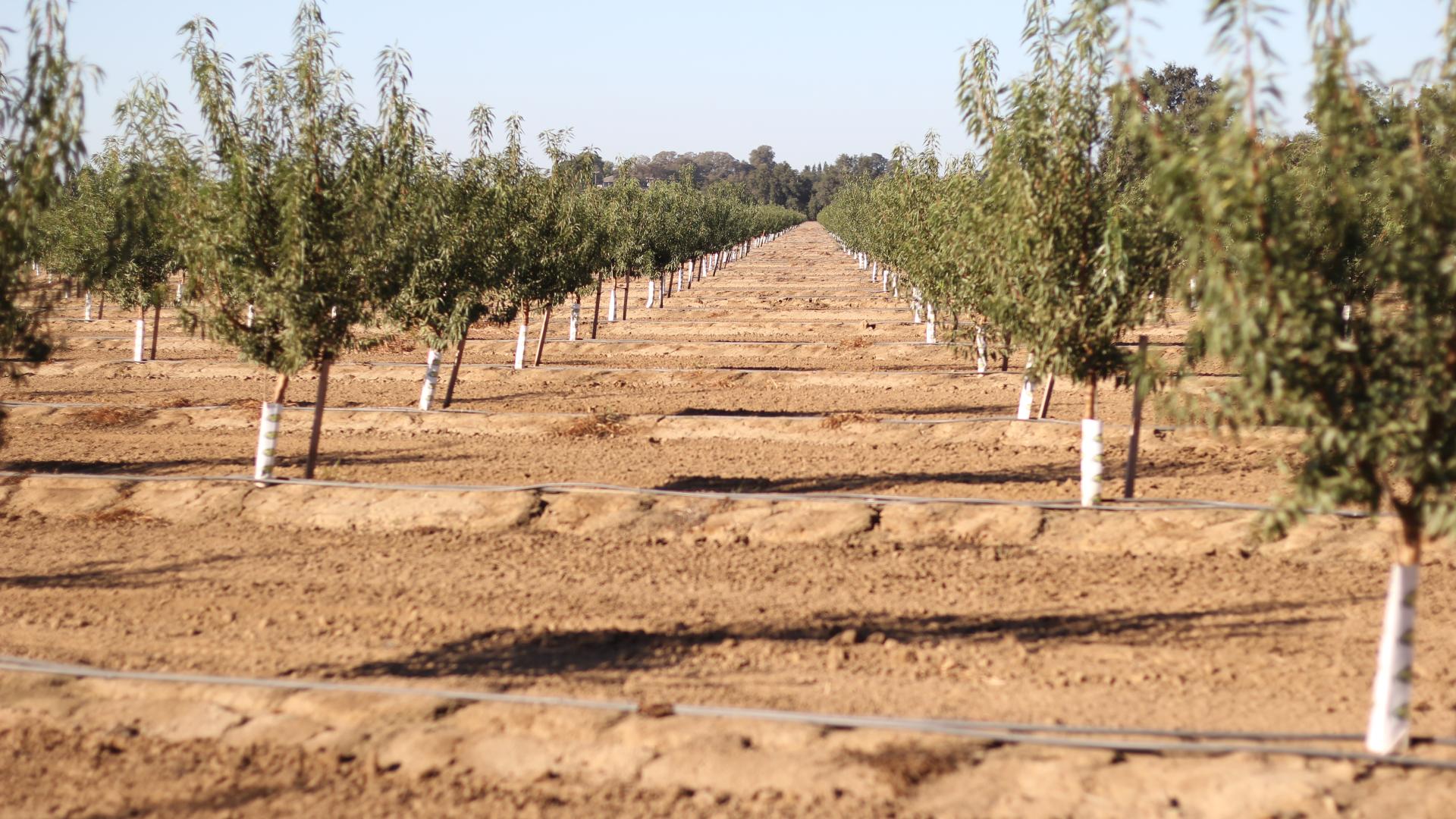
Young ‘Independence’ almond orchard.
Photo: Crystal Nay
Starting Small
The first almonds went in on 30 acres of previous cherry ground. Timing mattered, and Proplant could get a crop on a third leaf almond, as opposed to six to eight years for pistachio, another option.
Almonds haven’t been without their challenges in the last several years. In 2022, prices fell to their lowest levels since the early 2000s, $1.10 per pound, in inflation-adjusted terms, according to USDA Economic Research Service. In 2026, prices are seeing a decade high hovering around $3.50, depending on variety. However, the cost to farm has also jumped dramatically.
But for Wilbur and Proplant family, almonds look like the more stable market, particularly as one of the earlier growers in their region.
Now in their sixth year, they farm about 500 acres of ‘Independence’ and ‘Shasta’. Both are high-yielding, self-fertile varieties that help cut down pollination costs. In this case,to half a hive per acre.
Aside from expected change in water and nutrient inputs, labor also shifted. In addition to salaried workers, Proplant has used labor contractors for crews over 200 during peak season. Instead of dramatic ebbs and flows, workers can move from transplanting to the orchards. Using their time more effectively helps avoid paying for unnecessary extra labor.
The small changes add up, and switching crops doesn’t mean switching everything at once. The farm continues to lean into almonds for the remaining few hundred acres of wine grapes, and is still considering pistachios. The custom work across an array of crops carries the operation through the lulls.
“We’re not getting rich growing almonds,” Wilbur said, “but trying to recoup what we’ve lost as far as growing wine grapes.”
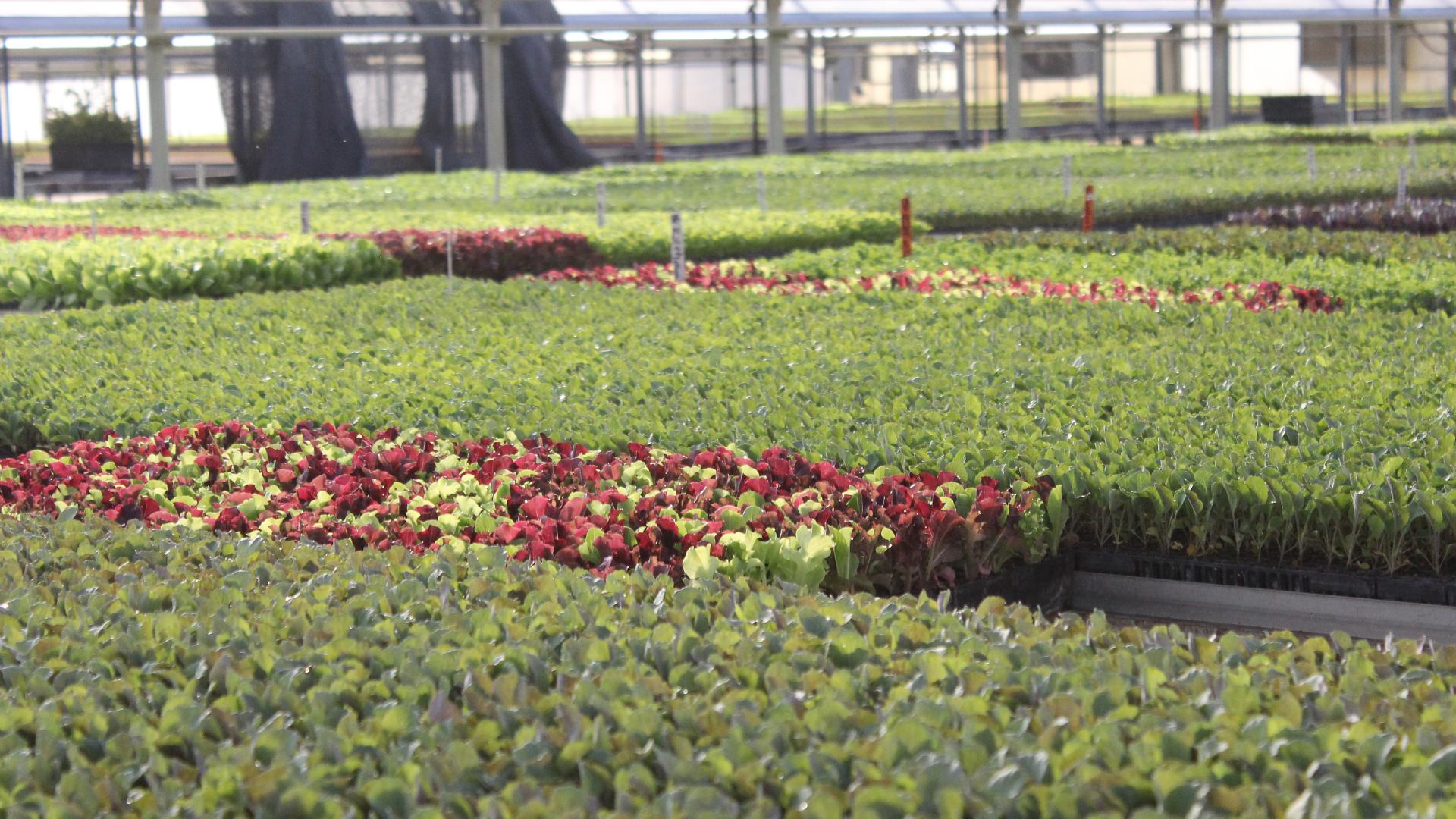
Inside the Proplant nursery.
Photo: Crystal Nay
Doing the Homework
The thinking is simple: not all crops or markets will be great at the same time. Proplant isn’t the first to close the book on one long-term decision to start a new one, including diversification. Many permanent crop growers across the state are doing the same, and Wilbur’s advice remains very practical: know your crop, know where it’s going in terms of processing, and secure a long-term contract.
“Some farmers out there will just plant something without knowing the historical side of things. Not growing the right variety in the right place,” Wilbur said.
Planting the wrong variety means spending heavily on inputs without the yield to justify them.
“Risk and reward isn’t what it used to be,” Wilbur said. “Too much risk nowadays.”
Subscribe Today For
