



Are Popular Weight Loss Meds a Headwind or Tailwind for Specialty Crops?
 November 25, 2026
There’s a quiet revolution happening in food. The rise of weight loss drugs (GLP-1s) is quickly reshaping consumers’ relationship with what they eat. According to Gallup, 11% of Americans are on a GLP-1. For perspective, that’s more than the percentage of Americans who pay for an AI subscription, with only 4.5% paying for a Claude, Gemini, or ChatGPT subscription, according to Andreessen Horowitz.
Two factors have catapulted adoption: They work, and they’re getting cheaper.
In the words of Eli Lilly CEO David Ricks, “The more we lower the price, the more users we get. That’s the path we’re on.”
HOW THEY’RE CHANGING THE CONSUMER
Although we’re still learning about how these drugs change habits, emerging research points to two changes: people eating less and eating differently.
First, users substantially reduce their overall caloric intake. Survey results from an issue of Food Quality and Preference show GLP-1 users reduce their caloric intake by 720 to 990 calories per day. Household spending data tell a similar story, with aggregate spending dropping after GLP-1 use.
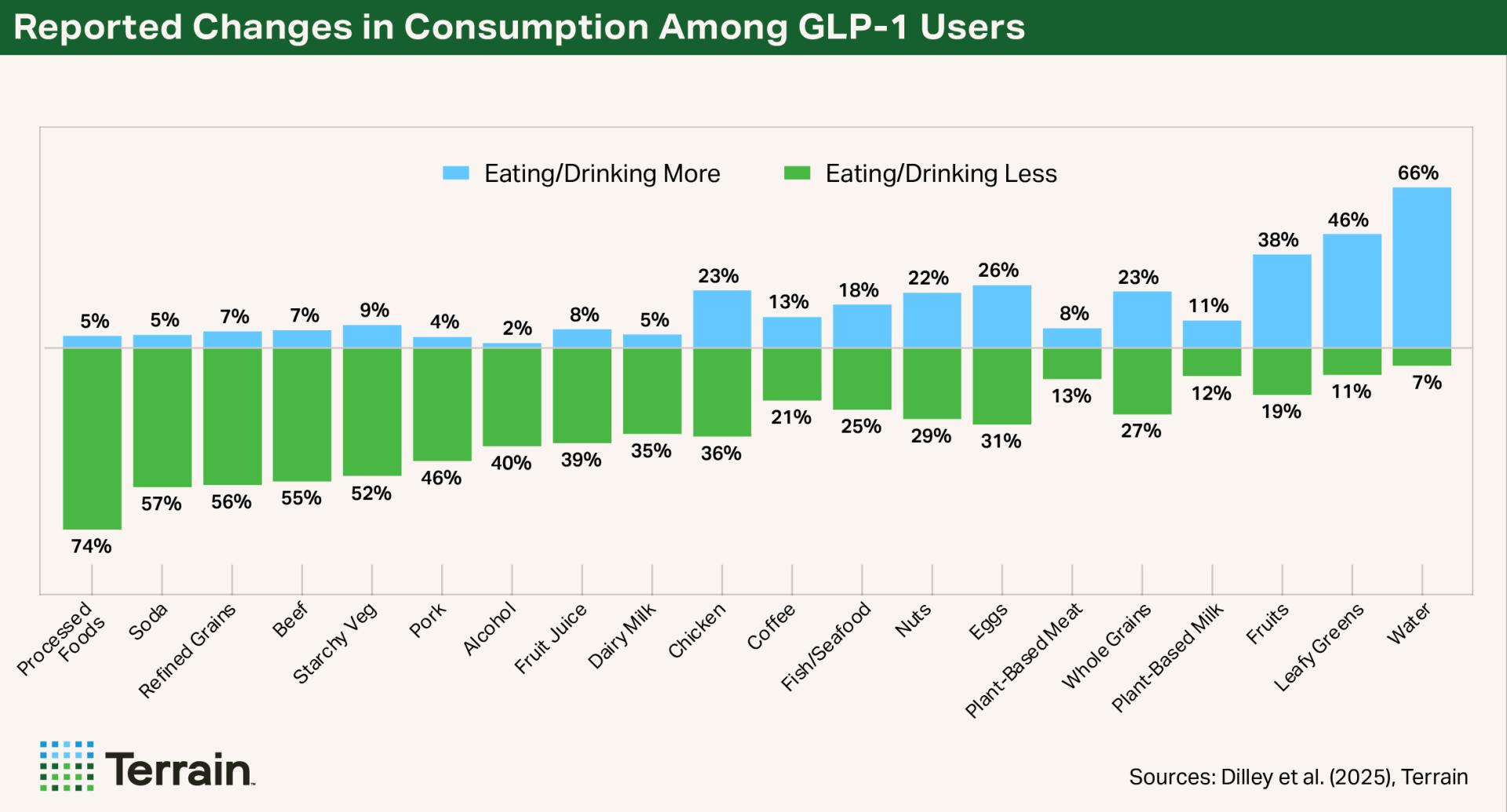
Second, the composition of calories changes. The same study found more GLP-1 users increased their intake of fruit, leafy greens, and water than reduced it, while the opposite was true for processed foods, refined grains, alcohol, and most other categories.
WHAT THEY COULD MEAN FOR SPECIALTY CROP FARMERS
GLP-1s pose risks and opportunities across agriculture, but few parts of the industry illustrate that divide better than specialty crops.
Some specialty crops are likely to face demand headwinds. Wine is an obvious example, as alcohol consumption tends to decrease among GLP-1 users. Tomatoes for tomato paste could be another challenged crop given how many ultimately find their way into starchy dishes like pastas, pizzas, and ketchup. For specialty crop producers growing food that GLP-1 users are consuming less of, figuring out a way to adapt will be crucial, such as finding different outlets or eating experiences for your crops.
For other specialty crops, GLP-1s could be beneficial for demand. It’s striking, for instance, that some specialty crops experience either small decreases or even gains among GLP-1 users. Fresh fruits and leafy greens could experience more tailwinds than headwinds.
Specialty crop producers should be watching these shifts closely and building them into long-term planning. Whether this is a minor or a major change remains to be seen. Either way, it’s something producers need to consider.
For more analysis on the influence of weight loss drugs on agriculture, visit TerrainAg.com.