



What Produce Shopping Data Reveals About Growth Opportunities for Controlled Environment Ag
 November 24, 2026
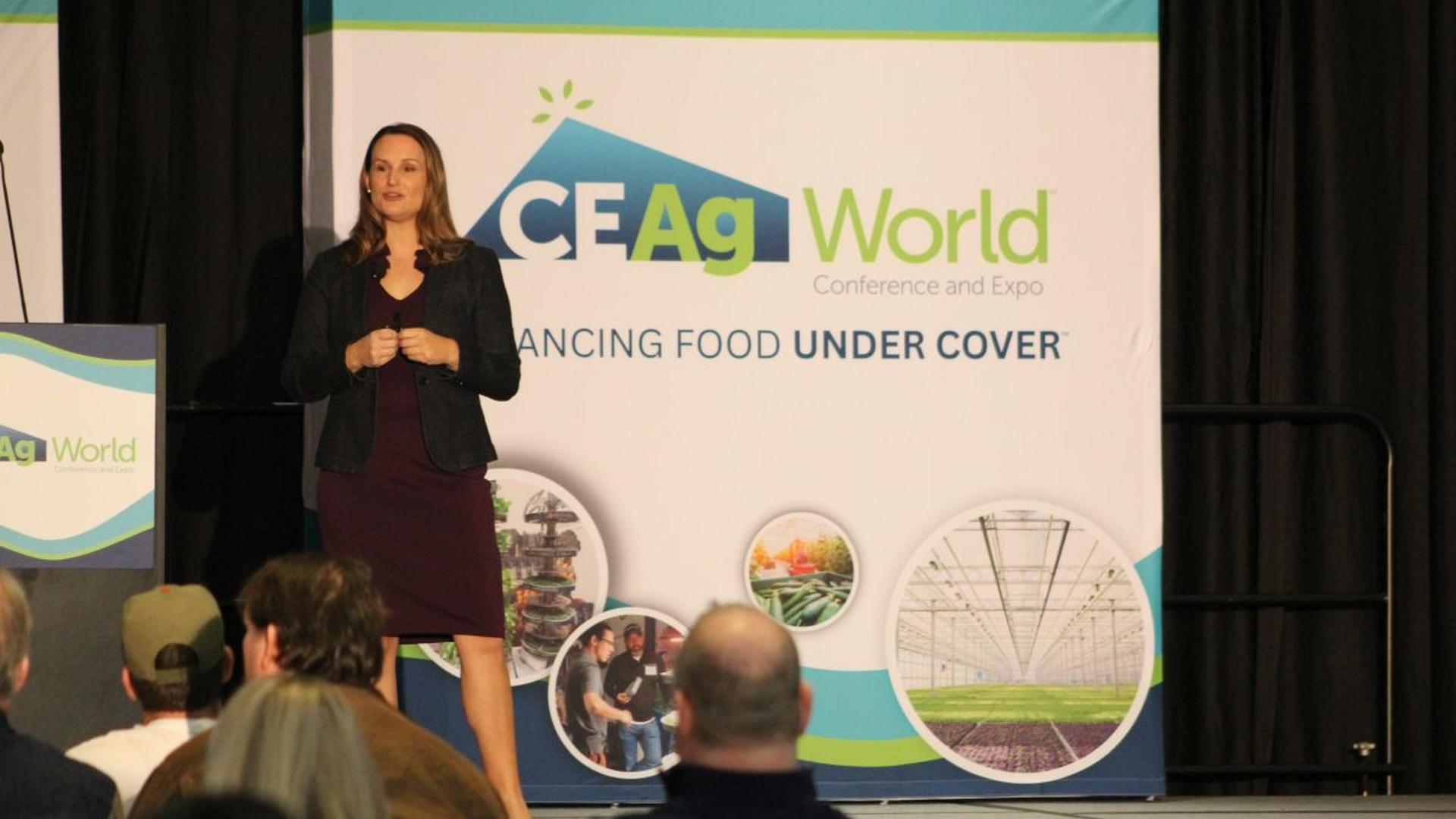
2026 CEAg World Conference and Expo Keynote Speaker Jonna Parker of Circana talks produce shopping behaviors and how they equate to opportunities for growers.
Photo: Kristin Zeit

Based on significant research around consumer produce shopping behaviors, controlled environment agriculture (CEA) growers have a compelling story to tell—but shoppers need more help understanding why it matters. Jonna Parker, VP of Fresh Foods for market intelligence firm Circana, explained this during the opening keynote presentation at the 2026 CEAg World Conference & Expo, titled “Follow the Consumer: Finding Opportunity in a Changing Produce Market.” Parker drew on retail sales data, household purchasing patterns, and consumer surveys to show where growers can build demand and where assumptions about their customers may be limiting growth.
Consumers are navigating economic uncertainty with increasingly deliberate choices, Parker said, but price alone doesn’t determine what makes it into their baskets. Quality, convenience, relevance, and the experience a product delivers also shape purchasing decisions.
“We need to make sure that they have a reason to put that food in their basket,” Parker said.
Crops commonly grown in CEA have an advantage: Shoppers buy them frequently. Across growing methods, Circana’s data showed leafy greens buyers made 14.9 purchase trips annually for the category; tomato buyers made 14.7. That creates repeated opportunities to build loyalty, provided growers understand what brings those customers back.
“Frequency is our superpower,” Parker said.
Make Trust Part of the Purchase
Parker spent some time analyzing the summer’s Cyclospora outbreak and its resulting widespread demand disruption. More than 40 fresh produce subcategories experienced sustained sales declines, with effects extending to companion products such as dressings and toppings. In October data through the 25th, greens and salads unit sales at tracked retail outlets remained 13.3% below the previous year.
Some of the shoppers pulling back had previously been among produce’s most consistent customers, she said. Rebuilding their confidence requires explaining how products are grown and what an operation does to manage risk. “Don’t wait for someone else to tell your trust and safety story,” Parker said.
There are signs that consumers are receptive. In an August survey, 3% of respondents who were more concerned about food safety or had heard about recent recalls or safety concerns volunteered that they were buying more greenhouse-grown produce. They supplied that answer without being prompted with a greenhouse option.
Sustainability offers another opening: 86% of surveyed shoppers said sustainability considerations were extremely or somewhat important when choosing fresh produce. But growers need to make those benefits visible and understandable at the shelf, on packaging, and on foodservice menus.
The message also needs to fit the audience. Circana’s research points toward social-first transparency for Gen Z and millennials, while older shoppers rely more heavily on news coverage and official sources for reassurance during food safety events.
For more, continue reading at CEAgWorld.com.
Subscribe Today For
