



Stink Bug Explosion in Mid-Atlantic
 November 4, 2010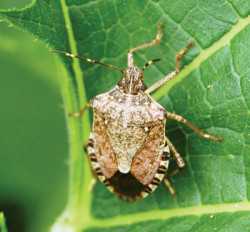
In the Mid-Atlantic region of the U.S., the brown marmorated stink bug has been causing trouble. A rise in population was noted last year, and this year there has been an explosion of the pest.
According to Gerald E. Brust, IPM vegetable specialist at the University of Maryland, the current outbreak in Maryland and the surrounding states can partially be blamed on the heavy snow fall this year that was very unusual for the East Coast.
“The snow cover this year kept temperatures around freezing and not 10 below,” he explains. “We had snow in December, it warmed up, and then we had ‘Snowmageddon.’ Snow cover stayed until March. Those were good conditions for the stink bug to survive the winter.”
On top of that, Brust says the drought with incredible heat in the summer forced stink bugs off their usual hosts — weeds — to look for food. The increased populations of the brown marmorated stink bugs, which were typically a pest for homeowners, are now a problem for growers, too, as the pest feeds on everything from apples to zucchini.
Based on population levels in fields and the amount of damage to fruit, tomatoes and peppers appear to be a couple of its favorites, he explains. The damage varies and can be up to 50% of tomatoes and peppers in some fields, rendering the fruit unmarketable.
Damage Control
Stink bugs have sucking mouthparts and when they stick their mouthparts in the fruit, they inject their saliva, which turns the fruit into a liquid form. “This particular species of stink bug probably has an enzyme in its saliva that causes more damage to fruit compared with other species of stink bugs,” explains Brust. “Typically, you can see a pinpoint prick where it injects its saliva. With this species, you see much more damage around the feeding area.”
To keep this pest in check, Brust says pyrethroids and Lannate (methomyl, DuPont) are the only products that seem to be working.
USDA Action Plan
Because of the issues growers and homeowners are having with stink bugs and at the urging of USDA, fact finding hearings were held in Washington, DC. “The USDA has been out in front of this issue looking into brown marmorated stink bug management, but it is Congress who can appropriate funds for additional needed research,” he says.
Brust says entomologists’ main problem is that they don’t have a good handle on what makes this bug tick. “We are not even sure about how many generations it has in Maryland in one season. It is thought to have only one in Pennsylvania, but it had two this summer in Maryland, which only may have been because of the unusually hot weather — very confusing.”
Brust disagrees with many of his colleagues who think the stink bug problem will be as bad or worse in 2011. He predicts that infestations won’t be as severe because the same weather conditions won’t be present again in the coming year.
“Most entomologists think it will be as bad or worse because of the increase in populations,” explains Brust. “They think [stink bugs] will spread to other states and be at high populations, as well. The pest will spread, but I don’t think we will see these populations again next year — I hope,” he says
with a laugh.
Subscribe Today For
