



Florida Growers Pumped For Pomegranates
 September 1, 2011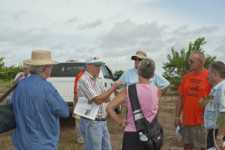
Scores of growers across multiple industry segments turned out for the pomegranate and muscadine field day held earlier this week at the Water Conserv II facility in Winter Garden. Hosted by UF/IFAS and presented by Bill Castle, professor emeritus, the program focused on five basic areas of interest: 1. The best cultivars for Florida; 2. Pest and disease pressures; 3. Nursery and canopy training practices; 4. Nutrition needs; and 5. Plant availability.
Lately, thanks to emerging research results, there has been buzz around what is being considered a potential new cash crop for Florida. Castle started a project in 2009 to explore the opportunities of dooryard and commercial nursery production of the fruit in the Sunshine State. He and Jim Baldwin, a senior biologist at the Citrus Research and Education Center (CREC) in Lake Alfred, are examining nutrition and irrigation requirements, pest, weed and disease threats, maintenance needs, and genetic differences among more than 80 types of pomegranates in two locations in Central Florida — CREC and at Water Conserv II.
During the field day, a list of nearly 40 pomegranate cultivars was discussed highlighting differences in fruit size and distribution. From that list, high-yield standouts (30 or more fruit per plant) included Surh-anor, Salavatski, Sakerdze, Afganski, Grenada, Angel Red, and Azadi. Attendees had a chance to see the trees and their fruit up close as they walked the test plots. In addition, a sampling session at the end of the program gave a taste of what’s available.
Like most of the crops here in Florida, pest and disease pose challenges to pomegranates. According to Castle, samples of suspect fruit and leaves have been routinely submitted over the summer to the UF/IFAS Plant Disease Clinic in Gainesville. After analysis, the fungus, Botryosphaeria spp., which can cause stem cankers and dieback diseases of woody fruits and ornamentals, turned out to be the cause in a number of fruit rot samples. Castle said, right now, this fungus can present a problematic barrier to entry here in Florida. “Once we have that and a few other little problems licked, there is no doubt they will grower, flower, and fruit in most of our environments here in Florida,” Castle said.
For more information about the Florida pomegranate project, visit http://www.crec.ifas.ufl.edu/extension/pomegranates/.
Subscribe Today For
