



Beagle Brigade: Sniffing Out Invasive Pests
 December 1, 2008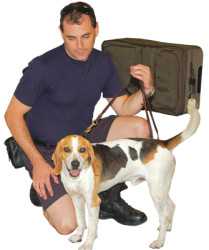
It has been said that Florida sticks out like a sore thumb, so it is little wonder that invasive pests and disease find their way to the state’s lovely shores. In recent years, the tiny psyllid found its way to Florida bringing with it citrus greening, which now threatens the state’s citrus industry.
On the outskirts of Orlando, small foot soldiers with big sniffers train to be the first line of defense against potential invasive threats entering our country at airports, borders, and ports. They are called the Beagle Brigade.
Every year about 50 beagles and a few larger breeds are trained along with their human handlers at USDA’s National Detector Dog Training Center. The dogs and their handlers go through roughly four months of training to hone the dogs’ ability to sniff out meats, fruits, and vegetables from foreign lands that could be harboring invasive pests and disease. The handlers are trained as well to work seamlessly with the beagles as they sniff luggage at airports or cargo at seaports.
The beagles are trained to alert on beef, pork, citrus, mango, and apple. When they smell these scents, they calmly sit down alerting the handlers to check the luggage or cargo for suspect contraband.
According to center director Michael Smith, the beagles will learn more scents of meats and produce over their careers.
“We train the dogs on those five basic scents, because those food items have been associated with invasive pests and disease,” he says. “Then the dogs will begin to generalize and can get up to more than 50 different food items that they can detect.”
Branch chief Lisa Beckett says it’s all about the rewards for the beagles. The dogs are fed a well-balanced diet, but they never get tired of the treats.
“The first few times they smell something new and get rewarded by their handlers, they learn this scent equals a treat,” she says.
Why Beagles?
According to Smith, beagles are a good fit for detection because of their food drive, personality, and they are not as threatening to people as larger breeds.
“The beagles have a high food drive and are very sociable and outgoing,” he says. “We use their high food drive to mold their behavior.”
Because of the great expense and time to train the beagles and handlers, Beckett says new dogs are screened to make sure they are ready to join the Beagle Brigade.
“We do temperament testing and medical testing of the dogs before we bring them out,” she says. “We want to be sure the dogs are trainable and fit for the program. Because of this, the percentage of dogs that don’t work out is very small.”
All In A Day’s Work
More than 90% percent of the beagles come from shelters and they generally join the brigade at between the ages of one and three. Their careers average about five years and there is a mandatory retirement age of nine.
A beagle works an average of six to eight flights per day with its human handler. When working a flight, the dog and the canine officer roam the gates where international passengers arrive. Each piece of luggage is sniffed.
Next year, the training center will be moved to a new facility just outside of Atlanta. The staff and beagles have outgrown their Orlando location.
As their jackets read, the beagles are “Protecting American Agriculture” in their mission to sniff out food, which could be harboring pests and diseases. That surely deserves a treat and a rub behind the ear.
Subscribe Today For
