



Emerging Vegetable Plant Diseases on the Rise
As new plant diseases continue to emerge and pose serious threats to vegetable crops, it’s more important than ever for growers to stay vigilant and adapt their disease management strategies. Experts are sharing timely insights into these evolving pathogens and offering proactive solutions to help safeguard yields and protect crop health.
Emerging Vegetable Plant Diseases
Whitefly-transmitted virus: Small sap-sucking insects that feed on the undersides of leaves causing severe damage to crop by stunting growth, yellowing leaves, and reducing yield quality and quantity across the southeastern parts of the U.S. It affects cucurbits, tomatoes, and peppers.
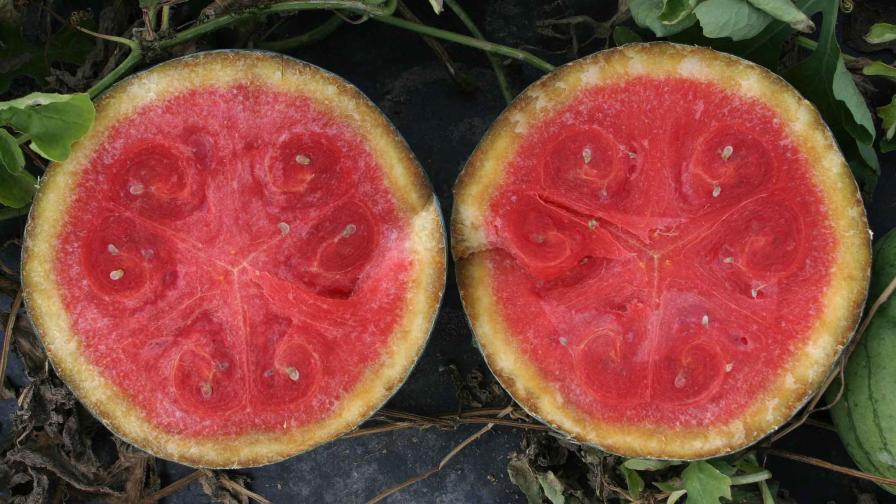
Researchers discovered that watermelon vine decline was caused by a whitefly-transmitted virus, which they called squash vein yellowing virus.
Photo by Dr. Scott Adkins
Treatment includes “IPM-based strategies that combine disease avoidance (timing of planting, vector exclusion using protective netting), pesticides application, and natural enemies,” says Olufemi J. Alabi, Ph.D., Professor & Extension Specialist at Texas A&M University.
Tar spot: A fungal disease that’s causing black tar-like lesions on corn leaves and reducing photosynthesis. It thrives in warm, humid conditions and has becoming increasing concern for growers across the Midwest.

Photo by Kiersten Wise
“We still see an appreciable amount of bacterial leaf streak and some Goss’s bacterial wilt and blight, too. None of these are expected to directly impact ear/grain quality but could potentially lead to smaller kernels and ears,” says Tamra Jackson-Ziems, Extension Specialist and Professor, Department of Plant Pathology at the University of Nebraska-Lincoln.
Though tar spot in corn is a later season disease, treatment isn’t recommended for the bacterial disease. “Choosing less susceptible sweet corn varieties for common smut can help reduced the incidence of disease, as well as preventing wounding to the plant, and especially ears,” says Jackson-Ziems.
Tomato spotted wilt virus: Transmitted primarily by thrips, causing stunted growth, necrotic spots, and ring patterns on leaves. It affects a wide range of crops, including tomatoes and peppers.
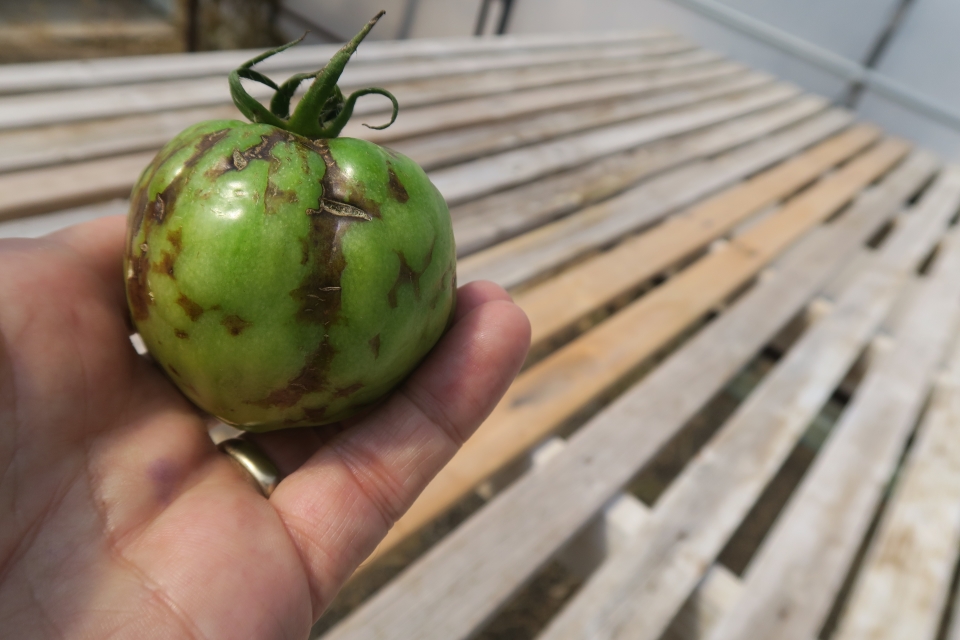
Tomato infected with tomato spotted wilt virus. Photo by Daniel Egel
“We have seen host resistance fail on multiple farms, but only in one county in North Carolina. And the losses in some cases have been up to 80% crop loss. We are actively monitoring these variants, and our researchers are working to identify alternative sources of resistance in tomato,” Inga Meadows, Extension Plant Pathologist – Vegetables & Herbaceous Ornamentals at NC State University.
Suggested treatment includes following up with an entomologist. But also, a combination of insecticides and reflective mulches can help in confusing the thrips ability to locate the plants.
Phytophthora root rot: Soilborne disease caused by water molds, which attack plant roots leading to wilting, root decay, and plant death. It thrives poorly drained, waterlogged soils and impacts pepper and cucumbers, and pumpkin in the western North Carolina and part of the Pacific Northwest.

Summer squash showing symptoms of Phytophthora. Photo: G.J. Holmes
“Highly resistant varieties should be used in fields with a history of Phytophthora. There are varieties with intermediate resistance, but these should only be used if little to no Phytophthora is expected. Fumigation does reduce Phytophthora, but not all growers want to fumigate,” says Meadows. “For all crops, rotate away from fields with a history of Phytophthora for several years, if possible. Improve drainage, if possible. Fungicides applied at transplant and at 2-3 weeks after plant will help. None of these practices eliminate the disease, but they help.”
Gray leaf spot: A fungal disease affecting heirloom tomatoes, causing small, greyish-brown lesions on leaves. As these disease progresses, it weakens the plant’s ability to photosynthesize. This pathogen is incredibly aggressive in North Carolina. “This disease has re-emerged when consumers started preferring heirloom tomatoes, which have no resistance,” Meadows says.
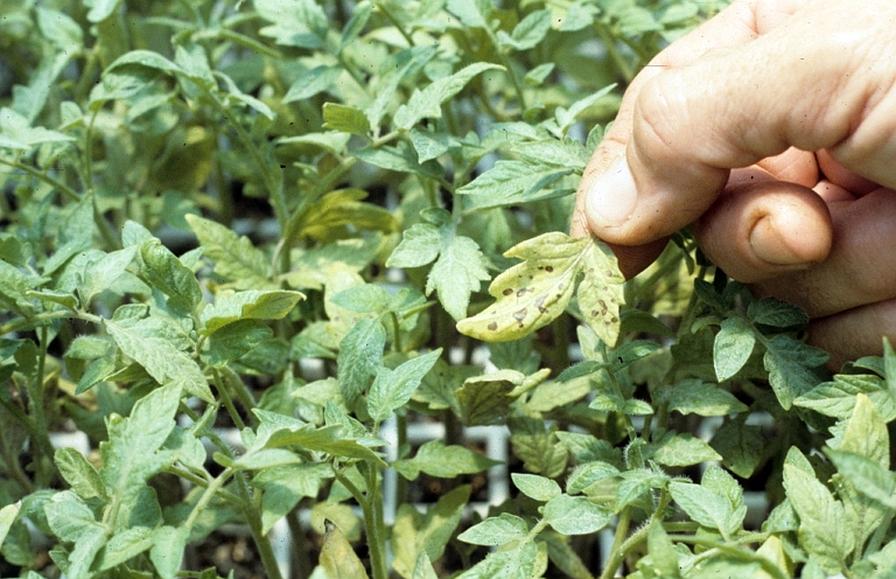
Gray leaf spot symptoms on tomato.
Photo: Florida Division of Plant Industry
This disease is easily managed with selecting resistant varieties, particularly in the late season when this disease is most prevalent. A fungicide program can also easily help to manage this disease.
From recognizing early warning signs to integrating resistant varieties and updated control methods, staying ahead of these plant diseases is critical. By taking a strategic, science-based approach, growers can better prepare for the seasons ahead and minimize the risk of devastating loses.
Subscribe Today For
