



New Research Brings Good News for Strawberry Growers Under Siege From Pests
Florida strawberry fields are alive with activity this time of year. But while growers hit peak production, two notorious pests are just as busy: the twospotted spider mite and the chilli thrips. These pests can overwhelm plants in tandem, draining vigor, deforming fruit, and leaving farmers staring down the possibility of losing more than half their crop. Fortunately, new USDA-funded, UF/IFAS research has uncovered good news for strawberry growers as they try to prevent the bugs from damaging their crop.
Growers usually use sprays to try to control the pests, but both bugs are growing increasingly resistant to most common pesticides, says Sriyanka Lahiri, a UF/IFAS Assistant Professor of entomology.
“Farmers urgently need information regarding feasible solutions such as predators that can eat both these pests,” Lahiri says.
The predatory mite known as Neoseiulus californicus feeds on both the twospotted spider mite and chilli thrips, according to the new study.
If strawberry growers release this predatory mite, it will reduce their need to use pesticides to control the mite and the thrips, Lahiri adds.
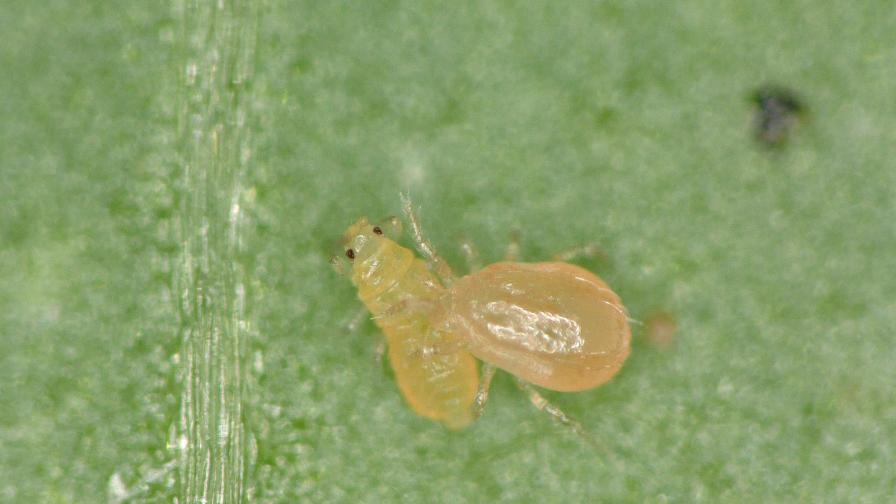
The predatory mite Neoseiulus californicus feeds on a chilli thrips.
Photo by Allan Busuulwa, UF/IFAS
“More specifically, this study will empower Extension agents and crop consultants with scientific backgrounds to recommend the release of this specific predatory mite species,” she says. “There are several predatory mite species commercially available, but we have limited information about their host range. As a result, it often becomes overwhelming for growers to decide which predatory species to release in their fields.”
For more, continue reading at blogs.ifas.ufl.edu.
Subscribe Today For
