



Mind Resistance Management for Better Insecticide Performance in Vegetable Crops
 February 18, 2025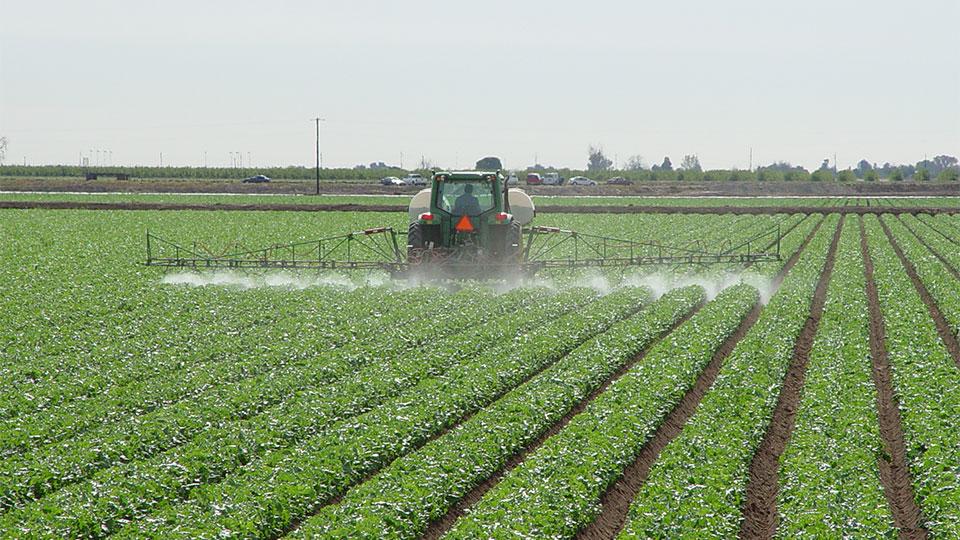
Pesticide resistance management starts in the field. If you’re seeing pests persist after application, it doesn’t necessarily follow you have pesticide resistance issues. First check to see if the problem stems from improper sprayer calibration, incorrect rate applied, or operator failure.
Photo by John C. Palumbo
Insecticides plan an essential role in satisfying market demands for cosmetically clean and insect-free produce. Fortunately, vegetable growers have access to numerous insecticides that provide reliable control of key insect pests such as Lepidopterous larvae, aphids, thrips, and whiteflies. This is a result of the agrochemical industry developing and marketing over 20 new classes of insecticide chemistry with unique modes of actions over the past three decades.
Not only are these products highly effective against chewing and sucking pests but they are significantly safer than their chemical predecessors.
Developing new insecticide chemistries has slowed considerably in recent years, however. Older products are slowly being phased out of the marketplace (i.e., chlorpyrifos) and recent label changes to neonicotinoids will likely limit their uses on many important crops.
With the threat of reduced availably of insecticide products in the future, it is now more important as ever to ensure that currently available insecticides remain effective as long as possible. Sustaining their effectiveness will require growers to use these products responsibly and conscientiously prevent insect pests from developing insecticide resistance.
History has shown us that insect populations will ultimately develop resistance to insecticides if they are not used properly. For example, the diamondback moth has developed resistance to every known class of insecticide chemistry, due to product misuse in the field and greenhouse.
Insecticide resistance develops when insect populations are repeatedly exposed to an insecticide with the same mode of action (MoA) over multiple, successive generations and the surviving resistant individuals multiply with each new generation. Before long, these resistant individuals outnumber the susceptible ones, and the product no longer controls the pest population.
Is It Pesticide Resistance, Or…?
How do you know when an insect pest population has become resistant to a particular insecticide product?
The first sign is the repeated failure of the product to achieve the expected level of control. This does not have to be a complete control failure. If the level of control is significantly less than you normally achieve, then the pest may be resistant to the product. This applies to both foliar spray and soil applied insecticides.
However, failure to control the pest following an application does not necessarily equate to resistance.
Other application factors such as improper sprayer calibration, incorrect rate applied, or operator failure can also lead to less than expected insect control. These should be considered first before suspecting resistance.
If control failures continue to occur, then you should contact your local Extension specialist and agrichemical agrichemical representative to examine the problem. Simple field efficacy trials and assays can be conducted with the insecticide product to get an initial indication of resistance. Laboratory bioassays conducted on the suspected pest population can confirm resistance.
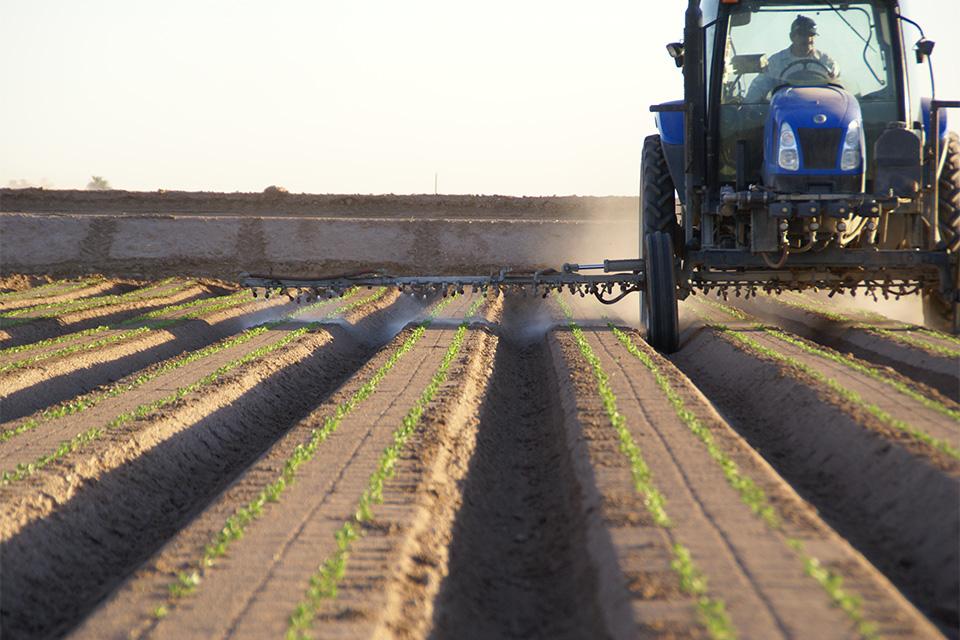
Do not apply any product below labeled rates as this may result in poor product performance, unacceptable insect damage, and an increased risk of resistance.
Photo by John C. Palumbo
Ways to Avoid Pesticide Resistance
Once an insect population becomes resistant, it may take years, if ever, before the insecticide regains full effectiveness against the pest. Thus, prevention of insecticide resistance is the key to sustaining insecticide performance.
This involves producing vegetable crops using IPM, utilizing as many insect control tactics as possible. When insecticides are required, they should be applied following a sound Insecticide Resistance Management (IRM) program.
IRM can vary by insect pest, growing location, and insecticide availability, but all programs follow several general strategies for preventing resistance.
- First, insecticides should only be applied when necessary. It is essential to use a combination of all available IPM tools to prevent pests from damaging the crop. If commonly used cultural (i.e., crop rotation), physical (i.e., row covers) and biological control (i.e., natural enemies) practices fail to adequately protect the crop, an insecticide application is usually necessary.
- To achieve optimal control, the decision to apply insecticides should be based on locally developed economic thresholds. Growers should use selective insecticides whenever possible to preserve natural enemies following the application.
- Always consult the product insecticide label before making an application. Only apply recommended products at rates known to control the pest according to the “directions for use” on the label. Do not apply any product below labeled rates as this may result in poor product performance, unacceptable insect damage, and an increased risk of resistance.
- The IRM strategy that is considered most essential for preventing insecticide resistance is avoiding consecutive applications of products with the same MoA in the same field. In other words, never treat successive generations of the pest population with the same MoA. Experience has shown us that repeated use of a product over multiple, successive generations is the quickest way to create a resistant insect population.
- How does a grower avoid exposing successive pest generations to the same MOA? Rotation is the key. This is achieved by consciously rotating insecticide products with a different MoA each time you spray. Thus, each successive pest generation is exposed to a completely different MoA and the risk of selecting for resistance is greatly reduced. This also involves carefully scouting the pest population after each application to determine when a new generation has developed.
- For this approach to be successful, growers must have access to several insecticides with unique MoA to rotate with. Fortunately, in most vegetable crops, growers do. When choosing an insecticide to rotate, the MoA is identified on the front of every product label using the IRAC group numbering system. Additional information on insecticide MoA and IRM can be found at the Insecticide Resistance Action Committee website (irac-online.org).
Subscribe Today For
