What Fagerberg Produce Is Doing To Keep Its Onions Weed Free
 March 5, 2025
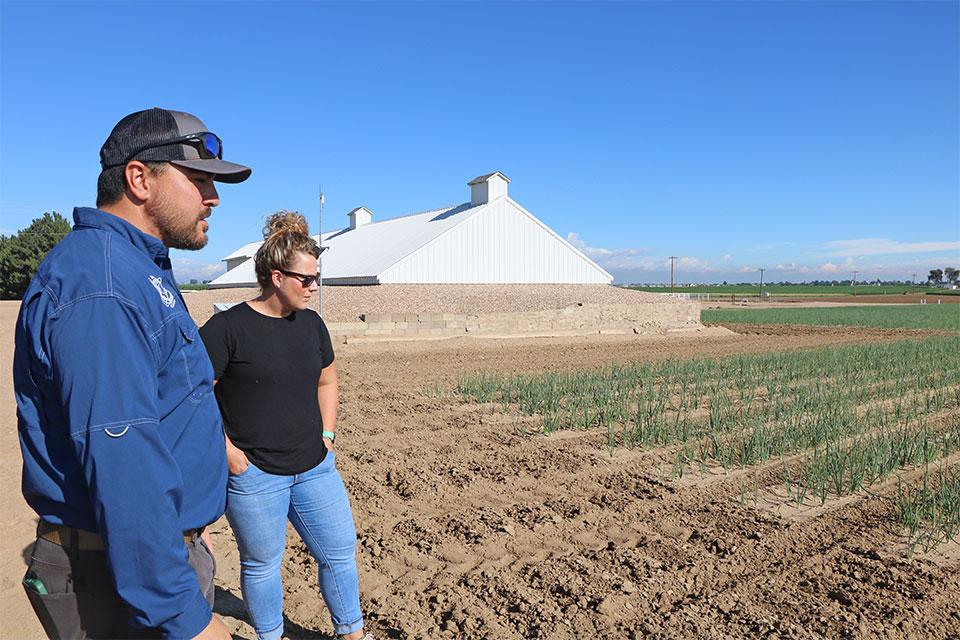
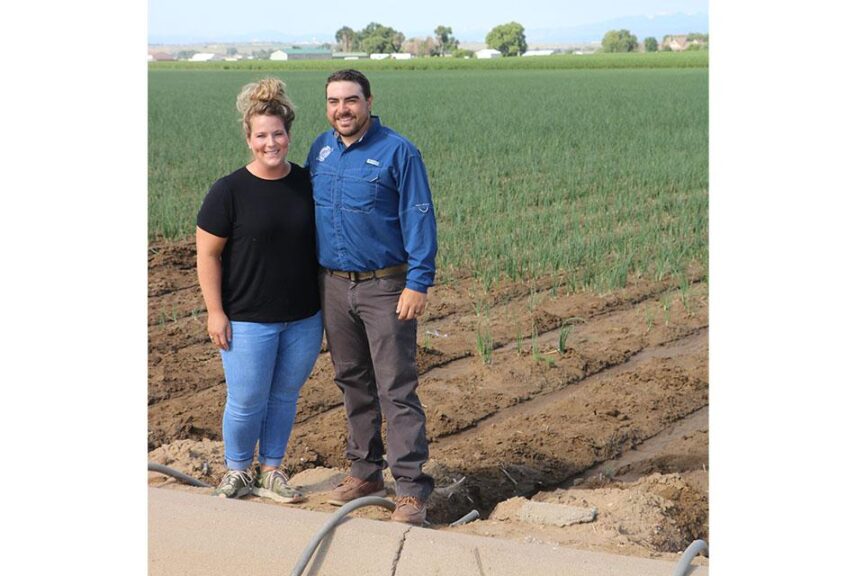
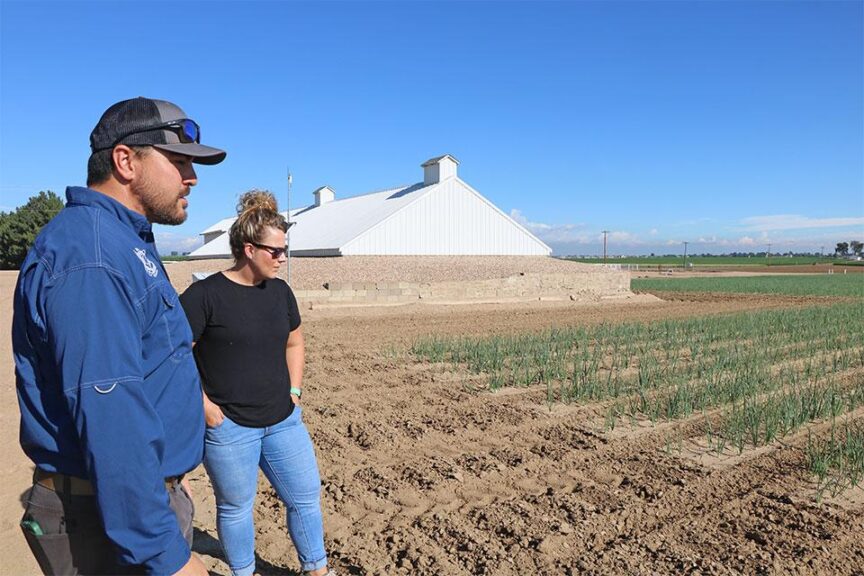
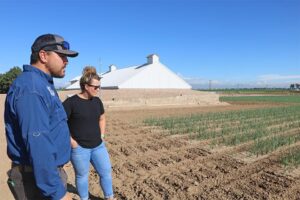
 The first time you drive past Fagerberg Produce’s onions fields in Eaton, CO, you might feel disoriented. It’s a subtle thing. You may miss why it feels different. Then you see it. Or rather, you don’t see them. Not a weed to be seen, field after field. Several factors play into the farm being able to stay on top of weed infestations, says Brian King, Fagerberg Produce Farm Manager.
View all
How It Stays Weed Free
Depleted seed bank. Weed seeds can lay dormant in soil for years. But Lynn Fagerberg has placed a high priority on weeds for even longer than the most tenacious seeds.
“Because it is such a high priority over the last 20 years, we’ve done a lot to deplete the weed seed bank,” King says. “The minute we see something, someone goes and pulls it or someone goes and sprays it.”
Cover crops. The farm also relies on cover crops to keep weeds in check. The two cover crops of choice are wheat and alfalfa. Fagerberg keeps its alfalfa in place longer than most who use it as a cover crop.
“I have a field right now that’s going on year six and still producing pretty high tonnage,” King says.
The cover crop offers a couple advantages beyond crowding out weeds. Fagerberg is primarily an onion farm and does not have a slate of other crops to rotate into their fields. As a root crop, a field needs good recovery time after a production cycle.
The operation also sells both cover crops to local dairies, which are a big player in the area’s ag industry.
A reliable spray schedule. Because the weed seed bank is so low, herbicides have a chance to work effectively without needing to schedule extra passes too often. And King is careful to shuffle active ingredients from treatment to treatment. That keeps weeds from developing resistances.
“I think you start hitting the plants with those too often with too big of guns, if you will. It really has a detrimental effect over the course of a season,” he says.
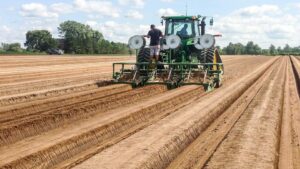
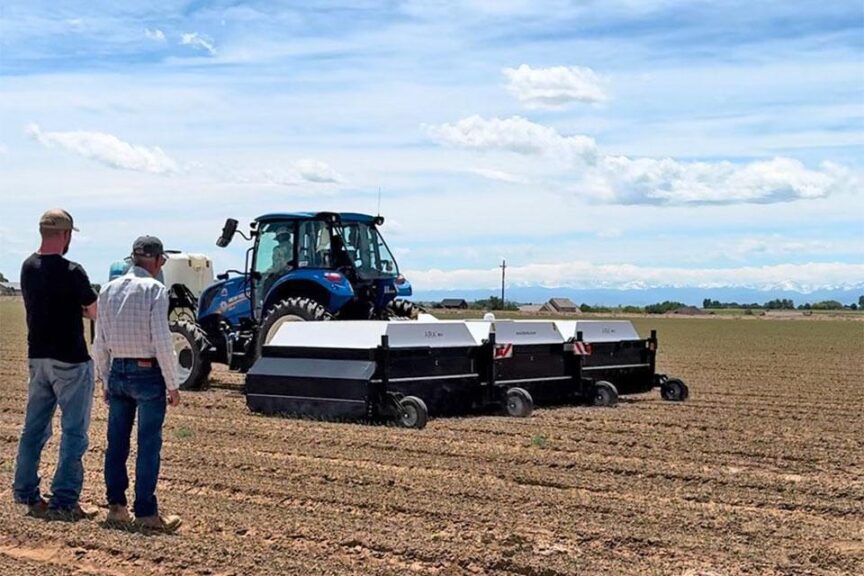
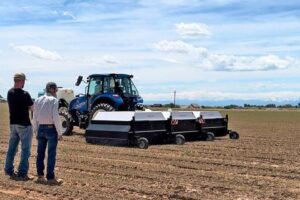
Mechanical methods. Fagerberg keeps current with available technology, especially in cultivation. It is watching new developments closely.
Organic weed control. Fagerberg grows primarily conventional crops but is slowly expanding into organic corn production. Herbicide options are almost nonexistent. So cover crops and mechanical cultivation fill the gap.
And hand labor is a major player here. “I think we’re going to have six guys dedicated. All they’ll do is just walk through the organic field,” King says. “If we get much bigger than what we are now, a Carbon Robotics type product [a laser weeder] will be our only option.”
Planning Ahead
A couple of major developments this past year will challenge the Fagerberg crew this year.
First is EPA banning Dacthal. The pre-emergent was Fagerberg’s main early season herbicide.
“The other herbicides aren’t going to work for us here as a pre-emerge because our soil temp is too cool at the times those would need to go out,” King says.
That means this season Fagerberg doesn’t have an available pre-emergent.
“Moving forward, it’s going to be really interesting to see our true weed pressure without a pre-emerge,” he says.
Another problem, not unique to Fagerberg is availability of labor. For years, Fagerberg has been proactively planning for potential labor shortages and considering new technologies. They believe that by staying ahead with the right infrastructure and innovations, they can minimize disruptions in our production, even in the face of labor challenges.
In King’s view, the major advances in ag tech couldn’t come at a better time. He is bringing in a sprayer from Ecorobotix.
“It’s an ultra-high precision — like sub-millimeter — accuracy sprayer. So we can use post emerge chemicals a lot earlier on the crop than we could in the past,” he says.
King always keeps a close eye on new emerging technologies including technologies like Carbon Robotics and their new versions released a few weeks ago.
“They have lighter, faster, more economical models coming out,” he says. “This technology has tons of potential to positively impact the produce sector.”
Sustainability Efforts
Like most farms across the U.S., Fagerberg Produce has been looking for ways to be more sustainable in their efforts. The cover crops are just one factor in that effort.
Over the past couple of years, it began converting its tractor fleet to Fendt tractors. In King’s real-world experience, he’s seen a 22% improved efficiency just by switching tractors.
“That’s huge when you’re burning as much diesel as we burn every day,” he says.
Fagerberg Produce has been able to reduce its spraying over time and anticipates what will happen even faster with the new technology its buying.
“Before, we were on a spray schedule. We sprayed just because that was the supplier-driven schedule,” King says. “That’s drastically reduced now.”
He’s also weighing a new practice to support soil health.
Since the farm struggles with Fusarium, it has an intensive fumigation program. King is weighing using biologicals after a fumigation. His idea is to allow good microbes to populate in the window after fumigation drives out harmful bacteria and viruses.
He’ll run trials this year to see how well it works.
“We haven’t had the golden ticket yet,” he says.
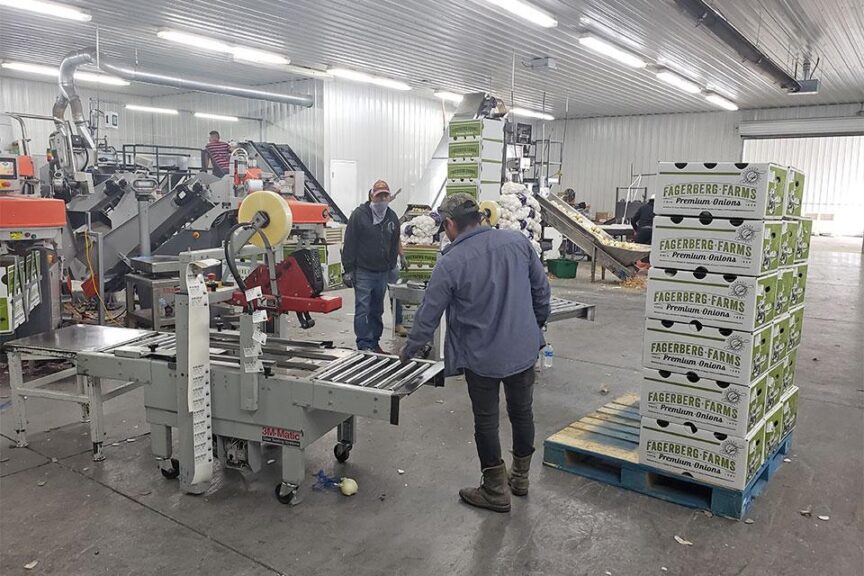
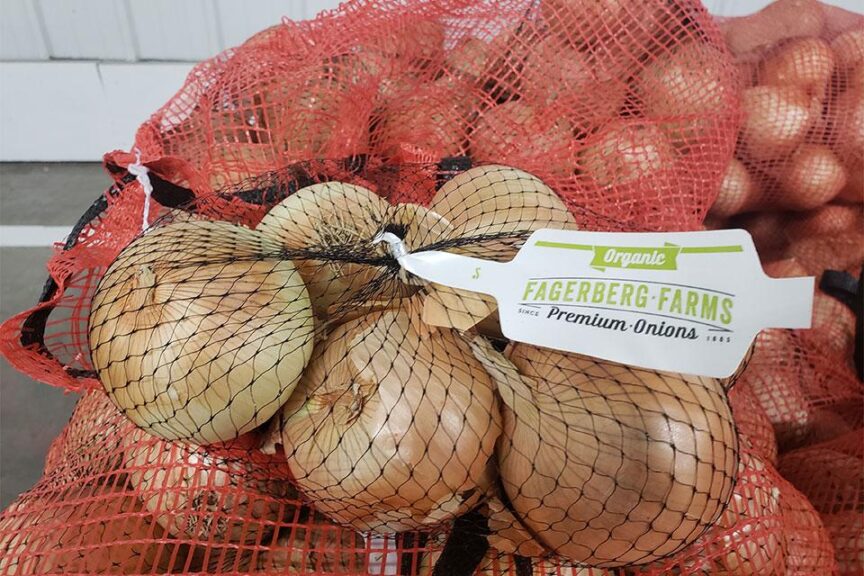
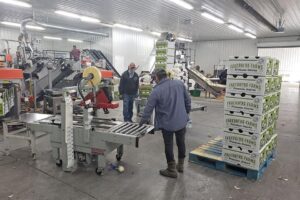
Another area where Fagerberg Produce is able to make big strides is in its packaging. Its packing house handles such a big volume, any improvement has an impact.
Customers are starting to ask for it, says Emily King, Compliance Manager. King oversees food and worker safety in the packing operation, ensuring compliance with customer requirements and managing the operation’s regulatory efforts. She and Brian are husband and wife.
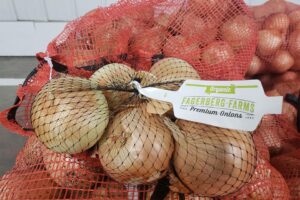
“We are seeing a push for sustainable packing,” she says. We’re being asked for compostable labels, netting, and onion bags.”
American Vegetable Grower’s GROW STRONGER initiative brings you positive stories from progressive growers filled with innovative solutions to help you grow a stronger future.
That last request is an ongoing quest for the Fagerberg crew.
One of the questions they face is how far do they push their choices when there isn’t a perfect solution? Customers that are more specialty retail tend to value sustainability and are usually willing to pay for more expensive options.
“The question is, is that a big enough chunk of your business to move all packaging to that? Will the other retailers follow and appreciate that as much?” she asks.
While having dedicated runs on the labeling machinery seems like an option, it could create a logistical nightmare.
“It’s really easy to get confused in-house when you tell someone to go grab XYZ label. If they grab the wrong one, you need to then separate it,” she says.
In the end, she says the Fagerberg operation is likely to invest in more sustainable packaging options where they can move forward.
“Worldwide sustainability goals are not going away. So, I think that makes it a little easier to make big changes and decisions. Especially if you have a long-standing history of working with those retailers.”
At a Glance: Fagerberg Farms and Fagerberg Produce
- Owners: The Fagerberg Family
- Founded: 1885
- Size: 2,500 acres
- Location: Eaton, CO
- Crops: Onions, Corn, Wheat, Alfalfa
- Customers: Retail Grocery
Subscribe Today For