



Hot Take: Why Blueberry Pollination Is Under Extra Pressure
 September 30, 2025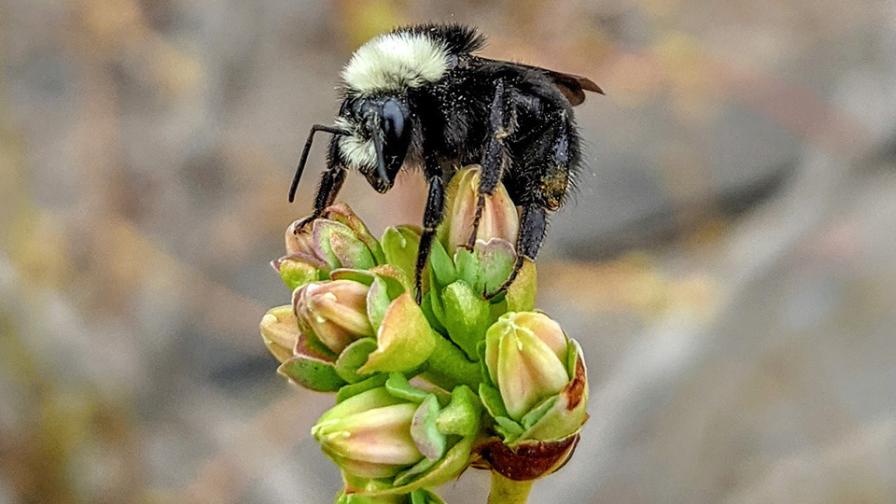
Blueberry pollination can be impacted by a number of factors, including climate change.
Photo by Lisa DeVetter
Climate change is turning up the heat in blueberry fields, with rising temperatures causing both direct and indirect damage to this favorite summer-time fruit. The recognizable signs of heat damage include wilted and scorched leaves due to poor hydration status and high leaf temperatures. Fruits can also be directly damaged due to extreme heat, with spotting, shriveling or wrinkling, and poor coloration observed in both green and blue fruits when temperatures exceed critical thresholds.
Less obvious but equally concerning are the indirect effects: reduced photosynthesis outside optimal temperature ranges, which leads to stunted growth, lower yields, and diminished fruit quality.
Heat waves are also a “buzzkill” for blueberry pollination, with recent research showing that both plants and insect pollinators are at risk as springtime temperatures rise.
On the plant side, high temperatures can damage floral structures essential for pollination. At Michigan State University, former graduate student Jenna Walters found that blueberry pollen germination dropped significantly when exposed to temperatures between 86°F and 104°F. Even brief exposure to extreme heat — such as 100°F for just four hours—caused irreversible damage, rendering pollen nonviable even after returning to optimal conditions. The downstream effect of damaged pollen is reduced fruit set, berry development, and yields because most commercial cultivars of blueberry require pollination with viable pollen.
Heat also accelerates bloom progression — sometimes too much. Typically, blueberry bloom unfolds gradually over several weeks in mild spring weather. But under high temperatures, bloom can be compressed into just a few days. This sudden surge of flowers can overwhelm pollinators like honey bees, diluting their efforts and resulting in insufficient pollination.
TOXIC DIET
Emerging research also highlights how heat stress affects the nutritional quality of pollen, with serious consequences for bee health. Blueberry pollen exposed to 100°F for four hours during tight bud and bud swell stages showed reduced starch and protein content, respectively. Amino acid levels also dropped in pollen when plants were heat-stressed at the bud swell stage. These changes aren’t just biochemical — they’re lethal. Orchard mason bees (Osmia lignaria) were seven times more likely to die when fed heat-stressed pollen compared to bees fed non heat-stressed pollen. Honey bees, which provide the bulk of pollination services for blueberries and other crops, may also be affected by reduced pollen and nectar quality resulting from extreme heat.
This body of research to date underscores a critical point: heat stress isn’t just a grower’s problem — it’s a pollinator’s problem, too. To protect both plants and their pollinators, we need to understand the mechanisms of heat damage and develop effective mitigation strategies.
EVAPORATIVE COOLING
One promising mitigation approach is overhead cooling using microsprinklers. Also known as evaporative cooling, this method lowers canopy temperatures by promoting evaporative cooling of water and convection. Collaborative research by Michigan State University, Washington State University, and USDA-ARS shows that running overhead sprinklers during bloom can reduce air temperatures by up to 10°F. Current recommendations suggest activating overhead cooling when air temperatures reach 90°F or higher during bloom.
However, more research is needed to understand how this cooling method affects bee activity and disease prevalence, especially since wetter environments may favor certain pathogens. Balancing plant protection with pollinator health will be key to refining this strategy.
As climate change continues to challenge blueberry production, it’s essential to deepen our understanding of heat stress impacts and both refine and expand mitigation strategies. Ongoing research across institutions is helping growers, scientists, and the outreach community work together to ensure that both plants and the insects they depend on can thrive — even when the forecast calls for heat.
REFERENCES:
Walters, J. and Isaacs, R., 2023. Pollen germination and tube growth in northern highbush blueberry are inhibited by extreme heat. HortScience, 58(6), pp.635-642.
Walters, J., Barlass, M., Fisher, R. and Isaacs, R., 2024. Extreme heat exposure of host plants indirectly reduces solitary bee fecundity and survival. Proceedings B, 291(2025), p.20240714.
Walters, J., Fisher, R., Sharkey, T.D., Isaacs, R. and Santiago, J.P., 2025. Extreme heat affects blueberry pollen nutrition, bee health, and plant reproduction. Scientific reports, 15(1), p.6249.
Subscribe Today For
