



How To Speed up Establishment of Your Blueberry Bushes
 October 24, 2025
 Blueberry bushes can take up to seven years to reach full maturity in amended soils, particularly in states like Ohio. This timeline assumes the plants survive early challenges, such as high soil pH, poor drainage, water with high alkalinity, and other environmental stressors. At The Ohio State University, I am evaluating a novel approach aimed at reducing this lengthy establishment period. The method, known as the Pots in Raised Beds with Drip Irrigation Production Method (PRBDIPM), combines elements of container production, raised bed cultivation, and efficient fertilization and irrigation practices. PRBDIPM is designed to accelerate the growth and development of blueberry plants, promoting quicker establishment and improved long-term success.
Container Blueberry Production: Growing blueberries in containers is becoming an increasingly popular method in states such as California, Florida, and Oregon. When combined with drip irrigation, container-grown blueberry bushes tend to grow much faster than those planted in the ground. However, one barrier to widespread adoption in colder regions is the risk of root damage during winter months if the containers are not properly insulated.
Raised Beds Cultivation: Growers have long used raised beds to improve poor soil drainage. Constructing raised beds can also significantly reduce the impact of Phytophthora root rot.
Pots in Raised Beds: PRBDIPM combines the benefits of container blueberry production with raised bed cultivation. Blueberry bushes grown in containers reach full maturity in four to five years, compared to seven years using traditional methods. Additionally, the raised bed soil insulates the roots from chilly winter temperatures, eliminating the need for growers to move or protect the plants during colder months.
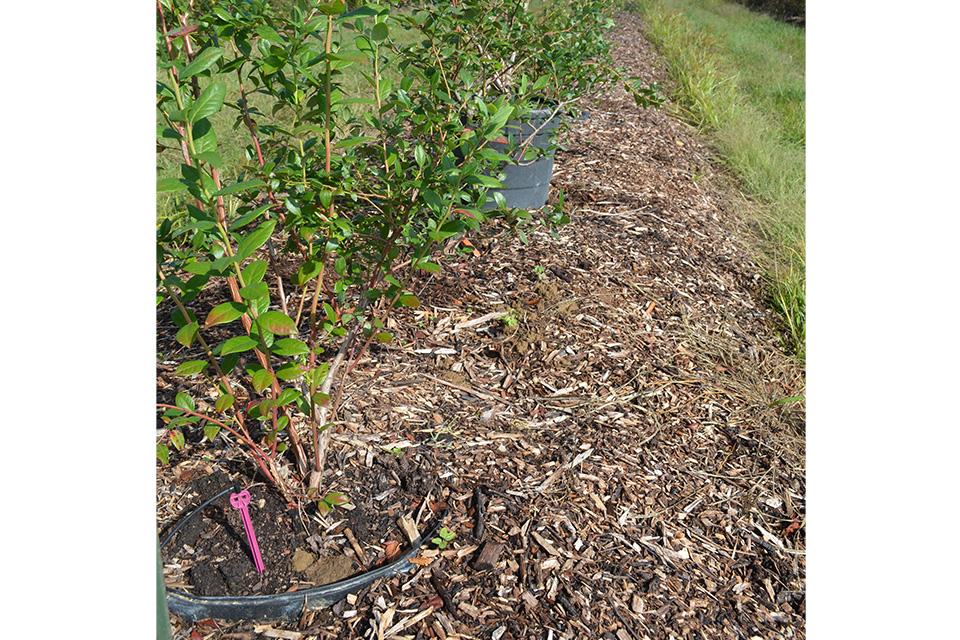
Figure 1: Blueberry in 10-gallon containers sun in the raised beds with a blueberry in 10-gallon containers placed above ground for illustration.
Photo courtesy of Gary Gao
Specific Steps to Implement PRBDIPM:
- Build beds raised 12 inches high. Amend the soil with peat moss and other organic matter to improve soil structure.
- Augar planting holes that are twice as wide as the 10-gallon pots to accommodate pots.
- Pot blueberry bushes in trade 10-gallon squat or flat plastic pots for better root growth. We used 75% peat moss and 25% aged pine fines. Growers are encouraged to check with their vendors for the best options.
- Sink the pots in the planting holes, cover the top of containers with an inch of amended soil, and mulch the beds with 4 inches of aged wood chips.
- Fertigate with the plants with Jack’s Professional 21-7-7 Acid Special at 3 pounds per 100 gallons or 1 pound per 32 gallons and dilute sulfuric acid to lower solution pH to 4.5 based on water alkalinity level.
Growers typically purchase 1-year-old bushes for new plantings. In our study, we used bushes in 1-, 2-, and 3-gallon containers, which were then repotted into 10-gallon containers. I also purchased one bush already in a 10-gallon container to serve as a benchmark. Based on our preliminary observations, more established bushes in 2- or 3-gallon containers appear to be more drought-resistant during the summer months. Growers will need to weigh whether the additional cost of larger bushes is justified by the potential benefits.
Is Jack’s Professional 21-7-7 Acid Special the best fertilizer for blueberry bushes? Due to limited funding, our study is small in scale. We chose Jack’s Professional 21-7-7 Acid Special because it is specifically formulated for blueberry plants and contains both macro- and micronutrients. One major drawback, however, is its high cost. On the positive side, this greenhouse-grade fertilizer can be easily applied through drip irrigation.
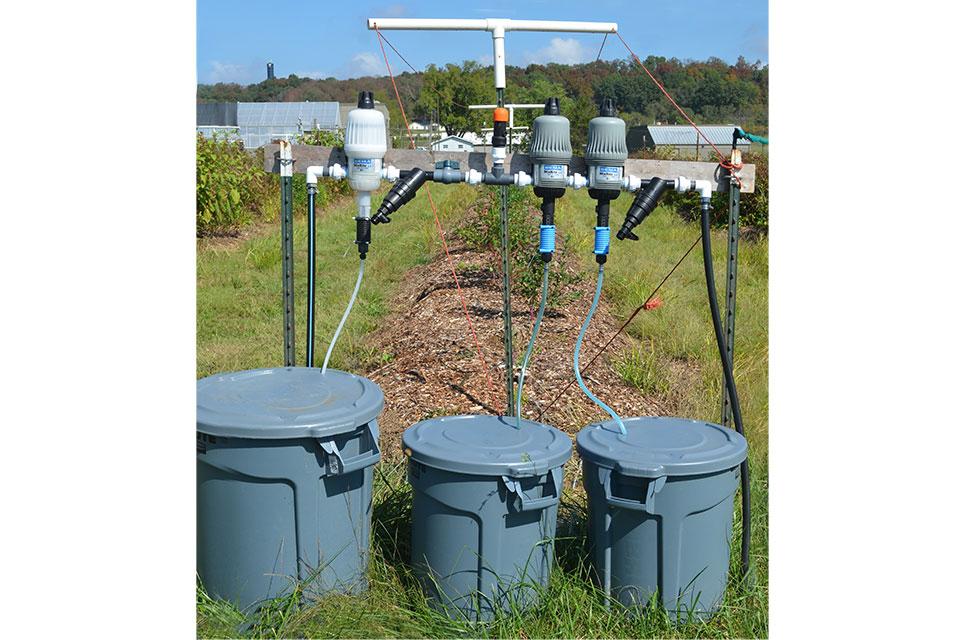
Figure 2: Blueberry injectors system used in our study, the white injector is for sulfuric acid while the blue injector is either for Jack’s Professional 21-7-7 Acid Special or Jack’s Classic 17-6-6 Acid Special.
Photo courtesy of Gary Gao
Are 10-gallon containers the best choice? It is hard to say for sure. Blueberry bushes can thrive in 10-gallon containers for 10 years or more. However, it is unclear whether the plants will need to be repotted into larger containers after that time. Growers must decide whether to start with larger containers to avoid repotting later. When choosing containers of the same volume, it is important to remember that flat or squat pots are preferable to tall, narrow ones.
PRBDIPM can still benefit from many modifications. I look forward to your comments and suggestions!
I would like to thank the financial support of Ohio Vegetable and Small Fruit Research Development Program and Ohio Produce Growers and Marketers Association for their financial support of this project.
Subscribe Today For
