
Wild Winter Not Enough To Keep Good Spirits Down at Miles Berry Farm
 March 3, 2026
 Some stories have two parts — a bad part and a good part, preferably in that order. Who doesn’t love a feel-good ending, no matter how one gets there? At Miles Berry Farm, in southeastern Georgia, the fate of its 2026 growing season was still very much in doubt as of press time in mid-February. And that was not necessarily a bad thing: The prognosis could have been far worse — see Florida — after a topsy-turvy beginning.
View all
EARLY WARM SPELL
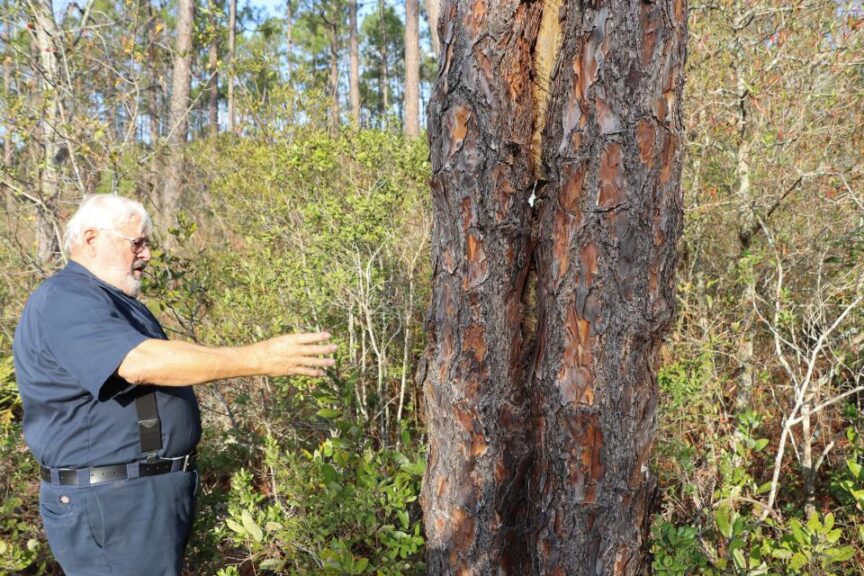
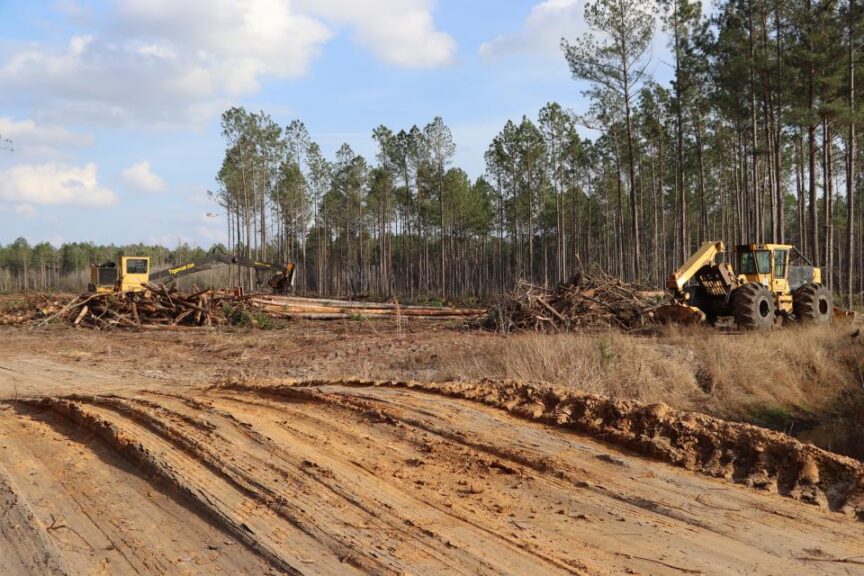
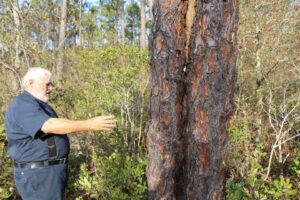
The New Year started impressively for the Miles family down in Baxley, GA — a city that, once upon a time, with all its pine trees, was known as the Turpentine Capital of the World.
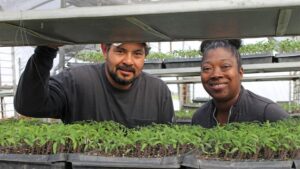
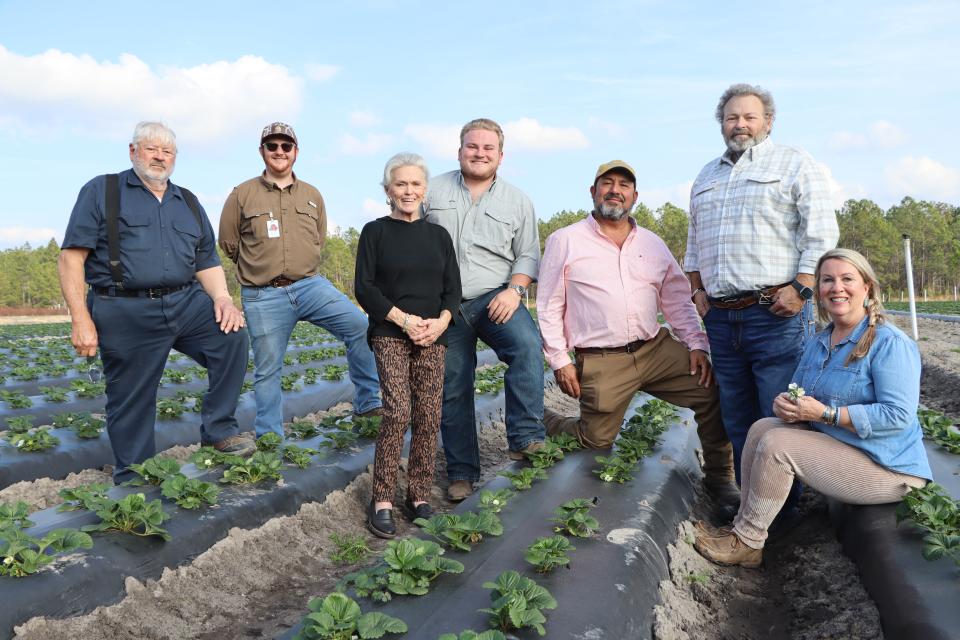
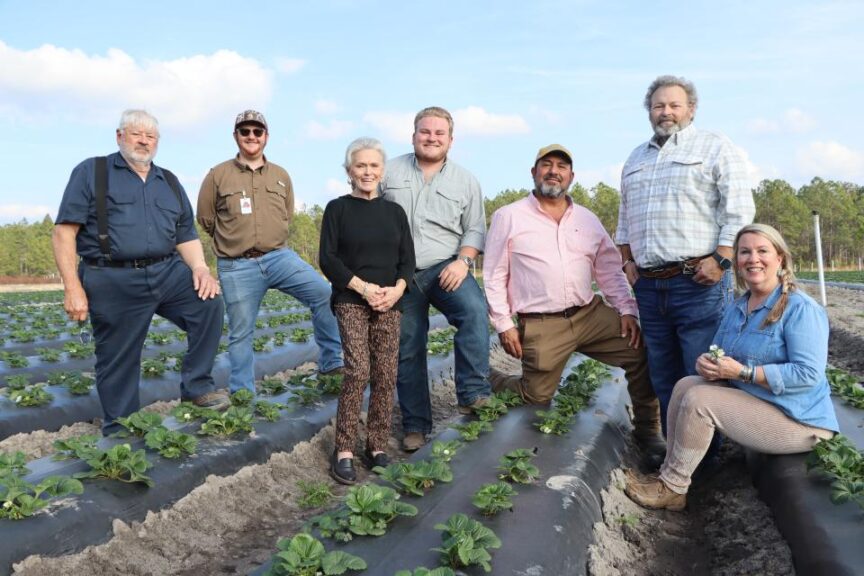
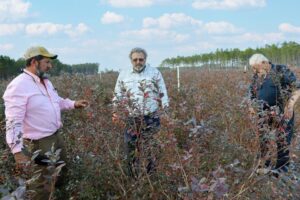
On Jan. 7 owner Allen Miles and wife Dorothy, along with Farm Manager Sergio Diaz, led a tour of their operation that was organized by the North American Strawberry Growers Association. NASGA was in the neighborhood in light of its annual meeting being held in conjunction with the Southeast Regional Fruit and Vegetable Conference 90 miles away in Savannah, GA.
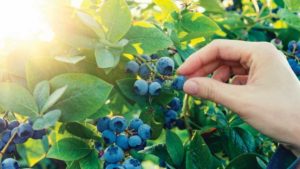
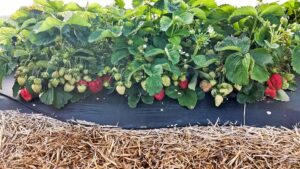
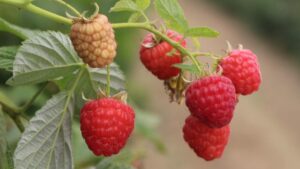
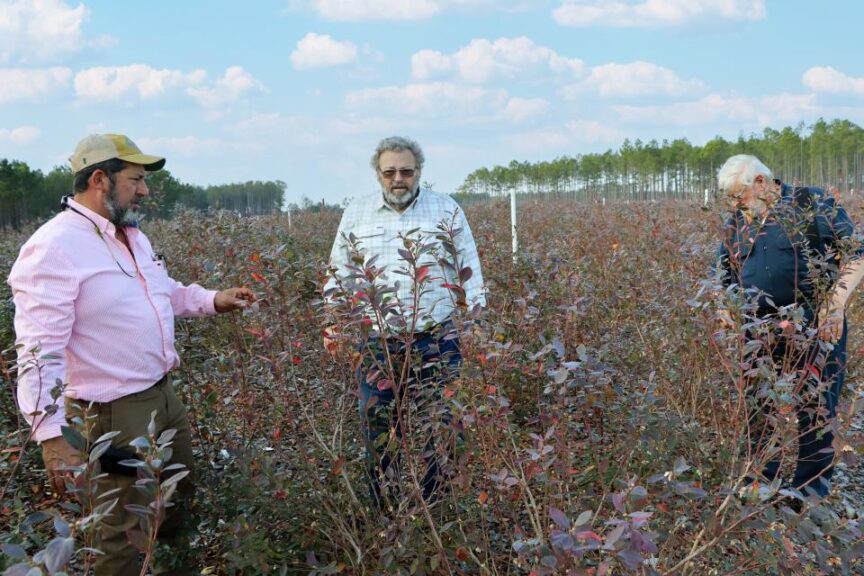
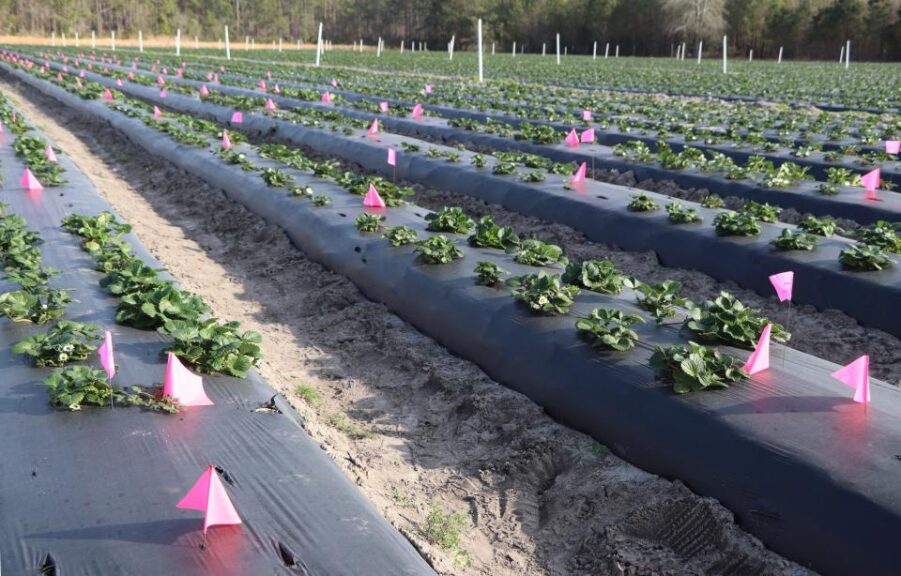
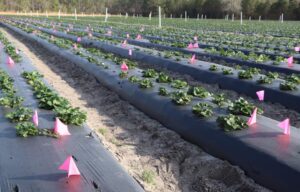
The contingent — around 80 people; many from above the Mason-Dixon Line — could not have been happier with the event, particularly the weather. (The photographs that accompany this story were taken that day.) The sun was out and the temperature hit 73˚ F — great for walking up and down rows in the middle of winter; potentially not so great for the 400 acres of organic strawberries and blueberries that comprise those rows.
“Yes and no,” Allen says. “We were not as far along (with bloom) as we have been in the past. So, we were in a good position” for a freeze at that time.
Three days later, with the temperature up to 81˚, the Miles family spent a memorable day in Savannah at the SE Regional event. The Georgia Fruit and Vegetable Growers Association gave Dorothy Miles the 2025 Dan Bremer Service Award, its highest recognition for extraordinary service to Georgia’s fruit and vegetable industry.
“That was a very big surprise,” says Dorothy, who, in 2024, was a key plaintiff in Georgia Fruit and Vegetable Growers Association and Miles Berry Farm v. U.S. Department of Labor, a landmark case to strengthen advocacy for agricultural growers. “I thought the farm was getting it. I didn’t know it was me named on it. It was very overwhelming.”
“She was the one who pushed it, so she was the one who needed to get it,” Allen adds.
FUN WHILE IT LASTED
Two days later the weather turned precarious for Miles Berry Farm and pretty much every fruit operation in the Southeast. Over a 23-day stretch (Jan. 12 to Feb. 2), the low temperature in Baxley hit 28˚ or less 13 times, including 17˚ at Miles Berry Farm on Jan. 16, Allen Miles says. At that point, even the farm’s freeze prevention protocols were rendered useless.
“We had 20 mph wind one night. It was too cold and too much wind. We couldn’t run water because the wind speed was so high, so we ended up doing nothing. We stayed home,” Allen says. “That actually was better off because if you’d ran water and not had enough water, instead when it got colder inside the ice than it is ambient temperature, it’s possible it could have killed the plant itself.
If another freeze were to occur beyond mid-February, Allen admits “we’re in bad shape — strawberries and blueberries (but) mostly blueberries.”
The strawberry plants quickly recovered from the initial freeze but with concessions. “We’ve probably lost a two- to three-week window of harvest,” Allen says.
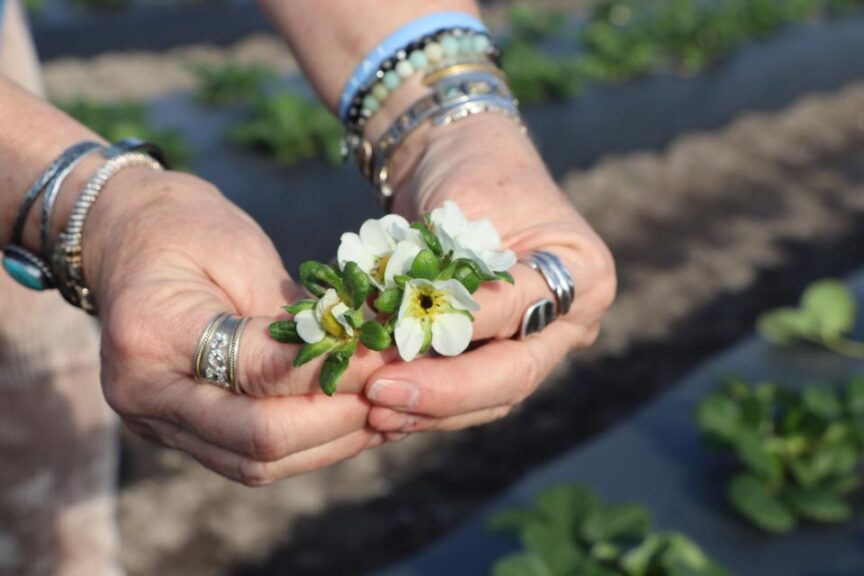
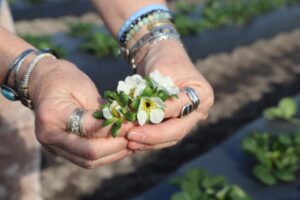
“Do you remember when you were at the strawberry field (on Jan. 7), and you saw all the blooms and the baby strawberries?” Dorothy asks. “All of those died with this freeze, and it put the strawberries back to ground zero of having to produce the energy to bloom and make more fruit. We’re back to where the plant was brand new. We’re in the process now of picking all that off by hand; all that labor to throw all that away because it won’t produce a strawberry. The plant has to start blooming again.”
If only that were the case with blueberries.
WAIT-AND-SEE MODE
Allen estimates he lost 10% to 15% of his Sentinel crop and between 5% to 7% of his total blueberry crop. “We just planted (Sentinel) three years ago. This is the first freeze it’s been through,” he notes.
On Jan. 7 some of the farm’s high-bush blueberry varieties were already at stage 2 or 3 of blossom. When the freeze hit, they were up to stages 3, 4, and 5.
“The 5’s would be damaged a little bit. The 4’s and the 3’s kind of went through it OK,” Allen says. “We’re thankful for what we have left. It’ll be another two or three weeks (early March) before we can assess any damage on the buds and the petals still on the bush that went through the freeze; whether or not there is going to be any internal damage on the fruit bud itself.”
How will their story end this summer? The Miles family remains optimistic.
“Oh yes, it can be a real good season for us,” Allen says. “I’m still positive about everything.”
“That’s one thing about a farm,” Dorothy adds. “We’ll just put those boots on and lace them up a little tighter and head back out.”
Subscribe Today For