



Pest Of The Month: Brown Marmorated Stink Bug
 May 25, 2011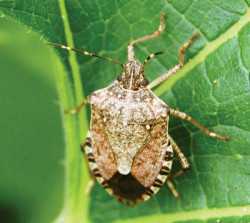
In the past, says Shelby Fleischer, professor of entomology at Penn State University, stink bug tended to cause sporadic, late-season problems. Natural enemies could cause high mortality rates, with tiny wasps and various predators potentially killing 50% to 90% of the eggs or nymphs, and growers had access to chemical controls. Everything has changed because of the invasive BMSB, which is native to Asia. Unlike other stink bug species, currently less than 10% of BMSB eggs are parasitized.
Identification And Life Cycle
Growers can identify BMSB with its dark bands on the membranous part of the front wings, and brown mottled patterns on the abdomen, he explains. Another identifying feature is white bands on the insect’s antenna or white bands or rings on legs.
Fleischer says all of these stink bugs overwinter as adults, come out in the spring, and lay eggs in clusters. BMSB goes through five nymphal life stages before becoming an adult. The eggs are light yellow to yellow-red, attached to the undersides of leaves in 20 to 30 eggs per cluster. Nymphs have red eyes.
Legs, head, and thorax are black, but the color of the abdomen changes as they molt. In the mid-Atlantic region, stink bugs typically damage fruiting vegetables, such as peppers and tomatoes, with their piercing mouthparts. These pests, says Fleischer, “inject digestive enzymes into the fruit or plant terminals, which helps digest the tissue of the plant, and allows them to imbibe the resulting plant material.” Damage symptoms also may develop postharvest.
Making matters worse, BMSB may have more than one generation per season. Fleischer says the densities of BMSB are not like anything he’s ever seen before and the pest is on the move, having been identifed in other parts of the country.
Control Strategies
To control this pest, Fleischer suggests that growers scout fields, paying attention to field edges, where stink bugs will first appear when migrating. Pyrethroids, carbamates, an organophosphate, and premixes are registered for use on fruiting vegetables, says Fleischer. His concern, however, now goes beyond fruiting vegetables. Although several stink bug species feed on many hosts, mid-Atlantic problems tended to be limited to fruiting vegetables. That all changed with BMSB, which caused significant damage on sweet corn, lima beans, and other crops, including fruit.
“Growers need to be prepared to put on some cover sprays and do repeat applications because we are not confident of good residual activity,” explains Fleischer. “Stink bugs are good flyers. They can feed and then move on to additional plants in the field, or the next field. Also, continued immigration from surrounding areas puts crops at risk.”
Efficacy trials are now being conducted in labs to come up with rankings for various insecticides on different crops. A BMSB Working Group is coordinating efforts at achieving effective and sustainable management programs.
Subscribe Today For
