



A new nematicide gives growers flexibility to manage damaging nematodes. - Growing Produce
  • Crops
    • Back
    • Vegetables
      • Back
      • Cucurbits
      • Leafy Vegetables
      • Potatoes
      • Sweet Corn
      • Tomatoes
      • More Vegetables
      • Grower Achievement Award
    • Fruits
      • Back
      • Apples & Pears
      • Berries
      • Grapes
      • Stone Fruit
      • Apple Grower of the Year
    • Nuts
    • Citrus
      • Back
      • Oranges
      • Grapefruit & Specialty
      • Insect & Disease Update
      • Varieties & Rootstocks
      • Citrus Achievement Award
  • Brands
    • Back
    • American Fruit Grower
    • American Vegetable Grower
    • Western Fruit Grower
  • Events
    • Back
    • Webinars
    • Bio Solutions Conference
    • Fruit and Vegetable Grower Connect
    • Greenhouse Connect
    • CEAg World Conference and Expo
  • Topics
  • Resource Center
  • Subscribe Now
  • Mobile Social Icons
  • Crops
    • Vegetables
    • Fruits
    • Nuts
    • Citrus
    • Back
    • Subscribe
    Back All Vegetables >

    • All Vegetables
    • Cucurbits
    • Leafy Vegetables
    • Potatoes
    • Sweet Corn
    • Tomatoes
    • More Vegetables
    • Grower Achievement Award
    Back All Fruits >

    • All Fruits
    • Apples & Pears
    • Berries
    • Grapes
    • Stone Fruit
    • Apple Grower of the Year
    Back All Citrus >

    • All Citrus
    • Oranges
    • Grapefruit & Specialty
    • Insect & Disease Update
    • Varieties & Rootstocks
    • Citrus Achievement Award
  • Brands
    • Back
  • Events
    • Back
  • Resource Center
  • Subscribe
  • Advertise
  • Subscribe
  • Advertise
  • Subscribe
Muhammad Abdullah, Folio3 Agtech

Muhammad Abdullah, Folio3 Agtech

The Hidden Margin Leak Between Projected and Actual Harvest Dates

Thomas Skernivitz

Thomas Skernivitz

Biofertilizers 101: What Fruit Growers Need To Know

Anthony P. Keinath

Anthony P. Keinath

Powdery Mildew: A Crop Protection Problem That Needs Attention

Carol Miller

Carol Miller

Video: Why Viral Resistance Is the Next Big Hurdle in Melon Breeding

SPECIAL REPORT DOWNLOAD: Your Guide To Pesticide Resistance
Corteva Sponsor Content

Presented By Corteva Agriscience

A new nematicide gives growers flexibility to manage damaging nematodes.
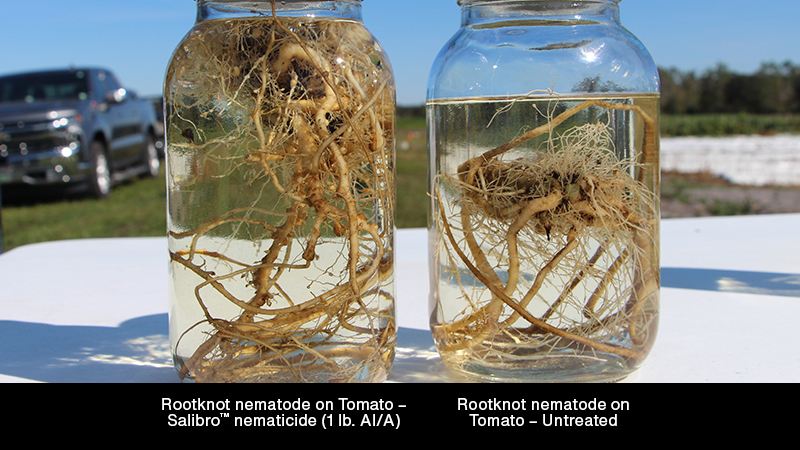
Flexibility is key when working toward a successful crop. Having the option of flexibility when applying a nematicide helps keep nutrients available to the plant during the entire growing process. The introduction of Salibro™ nematicide with Reklemel™ active from Corteva Agriscience provides growers more flexibility when determining how to manage damaging nematodes.

“One way Salibro nematicide provides flexibility to growers is in the biology of the product itself,” says Natalie Holt, nematicides product marketing manager, Corteva Agriscience. “Salibro nematicide is a true nematicide that mixes well with water, helping it move through the soil. It is the first sulfonamide nematicide on the market.”

The active ingredient in Salibro nematicide, Reklemel active, received a Reduced Risk designation from the U.S. Environmental Protection Agency due to the ability of this product to selectively target plant-parasitic nematodes. This enables lower use rates than older nematicides and enables highly favorable environmental and toxicological profiles compared with other products in the category.

High-value crop growers typically fumigate to control various disease and nematode issues. Salibro nematicide can be added to the fumigation program, or it can be an alternative to fumigation in certain situations.

Timing flexibility is another key benefit growers will find in Salibro nematicide. Salibro nematicide can be applied pre-plant, at-plant or post-plant. One example of a nematode program for fruiting vegetables may include Salibro nematicide applied at plant, then Vydate® L insecticide/nematicide applied during the growing season to ensure full-season control.

“In addition to timing flexibility, Salibro nematicide can be applied through numerous application methods,” Holt says. “Salibro nematicide can be incorporated preplant broadcast followed by soil incorporation, in furrow or via micro-sprinkler and drip chemigation. Salibro nematicide is a key component to an integrated nematode control program.”

Finally, Salibro nematicide provides residual protection, demonstrating favorable soil mobility that keeps it in the root zone for extended residual protection from plant-parasitic nematodes. It will not impact nontarget and beneficial organisms, including bacteria, fungi and free-living nematodes.

For more information on how to control plant-parasitic nematodes with Salibro nematicide, visit Corteva.us/Salibro.

™ ® Trademarks of Corteva Agriscience and its affiliated companies. Vydate® L is a Restricted Use Pesticide. Reklemel™ is a registered active ingredient. Salibro™ and Vydate L are not registered for sale or use in all states. Contact your state pesticide regulatory agency to determine if a product is registered for sale or use in your state. Always read and follow label directions. ©2024 Corteva. 018856 (01/24)

More from this sponsor

Florida Fruiting Vegetable Crop Growers Welcome Major Nematicide Advancement

Florida Fruiting Vegetable Crop Growers Welcome Major Nematicide Advancement

Sponsor Corteva Agriscience

Controlling nematode populations, including the root-knot species, just got easier for fruiting vegetable growers in Florida and many other states with the registration of Salibro® nematicide with Reklemel from Corteva Agriscience. Get superior control and extended residual protection from Corteva Agriscience.

Effective Nematode Control Starts With Sampling, Species Identification

Effective Nematode Control Starts With Sampling, Species Identification

Sponsor Corteva Agriscience

You cannot control plant-parasitic nematodes in your fruiting vegetables without knowing the species and population levels of nematodes in your field. Soil sampling should be a priority and Salibro® nematicide with Reklemel™ active should be your crop protection solution.

Impacts of La Nina, Changing Weather Patterns May Increase Nematode Populations

Impacts of La Nina, Changing Weather Patterns May Increase Nematode Populations

Sponsor Corteva Agriscience

Every few years, powerful trade winds and warming tropical ocean waters spawn thunderstorms associated with global weather phenomenon El Nino. On the opposite side of the cycle is another weather phenomenon called La Nina, which increases the chances of drier and warmer winters.

Latest Stories

Cool Cucumber Varieties You Will Want To Grow Now

Posted by Carol Miller|June 3, 2026

Why the U.S. Apple Industry Is at a Crossroads

By Melinda Taschetta-Millane|June 2, 2026

The Hidden Margin Leak Between Projected and Actual Harvest Dates

By Muhammad Abdullah, Folio3 Agtech|June 2, 2026

New Round of USDA Aid for Specialty Crops Good News for California Walnuts

By California Walnut Commission|June 1, 2026

GrowingProduce GrowingProduce The leader in profits, production and education for produce

© 2026 Meister Media Worldwide

  • About
  • Contact
  • Advertise
  • Subscribe Now
  • Terms of Use
  • Privacy Policy
  • Reprint Permissions
  • Meister Media Worldwide
  • Meister Custom Business Solutions