



Apple Thinning Checklist and Tips - Growing Produce
  • Crops
    • Back
    • Vegetables
      • Back
      • Cucurbits
      • Leafy Vegetables
      • Potatoes
      • Sweet Corn
      • Tomatoes
      • More Vegetables
      • Grower Achievement Award
    • Fruits
      • Back
      • Apples & Pears
      • Berries
      • Grapes
      • Stone Fruit
      • Apple Grower of the Year
    • Nuts
    • Citrus
      • Back
      • Oranges
      • Grapefruit & Specialty
      • Insect & Disease Update
      • Varieties & Rootstocks
      • Citrus Achievement Award
  • Brands
    • Back
    • American Fruit Grower
    • American Vegetable Grower
    • Western Fruit Grower
  • Events
    • Back
    • Webinars
    • Bio Solutions Conference
    • Fruit and Vegetable Grower Connect
    • Greenhouse Connect
    • CEAg World Conference and Expo
  • Topics
  • Resource Center
  • Subscribe Now
  • Mobile Social Icons
  • Crops
    • Vegetables
    • Fruits
    • Nuts
    • Citrus
    • Back
    • Subscribe
    Back All Vegetables >

    • All Vegetables
    • Cucurbits
    • Leafy Vegetables
    • Potatoes
    • Sweet Corn
    • Tomatoes
    • More Vegetables
    • Grower Achievement Award
    Back All Fruits >

    • All Fruits
    • Apples & Pears
    • Berries
    • Grapes
    • Stone Fruit
    • Apple Grower of the Year
    Back All Citrus >

    • All Citrus
    • Oranges
    • Grapefruit & Specialty
    • Insect & Disease Update
    • Varieties & Rootstocks
    • Citrus Achievement Award
  • Brands
    • Back
  • Events
    • Back
  • Resource Center
  • Subscribe
  • Advertise
  • Subscribe
  • Advertise
  • Subscribe
Dan Cook, Tessenderlo Kerley

Dan Cook, Tessenderlo Kerley

How To Manage Soil Salinity in Your Fruit and Nut Orchards

Muhammad Abdullah, Folio3 Agtech

Muhammad Abdullah, Folio3 Agtech

The Hidden Margin Leak Between Projected and Actual Harvest Dates

Thomas Skernivitz

Thomas Skernivitz

Biofertilizers 101: What Fruit Growers Need To Know

Anthony P. Keinath

Anthony P. Keinath

Powdery Mildew: A Crop Protection Problem That Needs Attention

SPECIAL REPORT DOWNLOAD: Your Guide To Pesticide Resistance
Sponsor Content

Presented By Valent

Apple Thinning Checklist and Tips
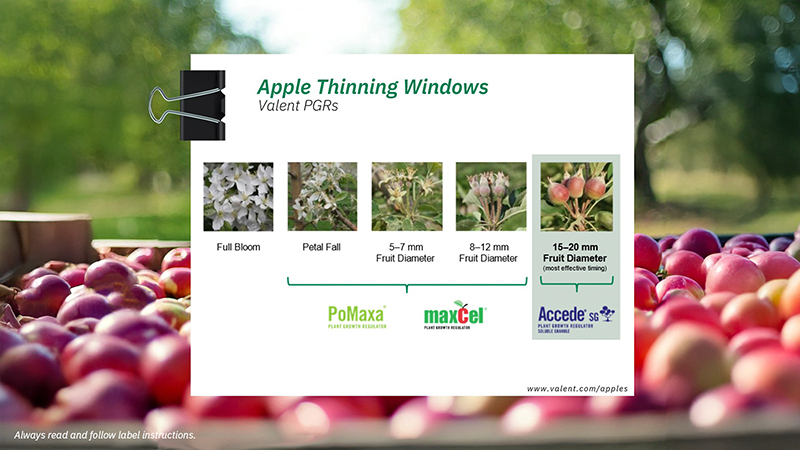
There are many factors that impact optimal fruit load each season, but having a checklist is a great first step at planning for success. Below are a few pre-season reminders from the Valent team to help you get ready.

Pre-Season Thinning Checklist

✓ First, have an idea of how much fruit you’d like to drop. What are your yield and size goals?

  • What has worked well in the past…or not?
  • Start with your end goal in mind and plan for your optimal packout

✓ How were the crop load and overall conditions last season? A light crop last season may be more difficult to thin this season.

✓ How does return bloom look this season? Assess quality and quantity.

✓ Did you experience any winter injury? Drought or stressful weather last season? Were there any events that may have damaged buds?

Additional Apple Thinning Tips:

  • Assess and review bee activity and weather during bloom
  • The south and west sides of trees tend to have heavier fruit set—be mindful of looking at the whole tree away from the row ends to determine your thinning needs
  • Have calipers to measure the diameter of fruitlets. Knowing the exact diameter helps ensure proper application timing.
  • Frosts and freezes eliminate fruit. Monitor the weather and watch temperatures and cloud cover carefully.
  • Temperatures above 60°F can help certain PGRs thin apples better
  • Multiple days of cloud cover can send a tree into carbon deficit and make thinning easier
  • If you are trying something new, be sure to leave an untreated check to evaluate the thinning effects

To learn more about Valent’s apple solutions, click here.

Always read and follow label instructions.

More from this sponsor

Getting the Most Out of Pyganic®: Best Practices for Organic Pest Control

Getting the Most Out of Pyganic®: Best Practices for Organic Pest Control

Sponsor Valent

Organic growers face challenges regarding insect management. However, Pyganic® Crop Protection 1.4II / 5.0II delivers proven control of the hardest-to-control pests, including aphids, thrips, spotted winged drosophila, and navel orangeworm. Click to learn how to optimize your organic pest control.

Start Early, Stay Persistent on Apple Scab Management

Start Early, Stay Persistent on Apple Scab Management

Sponsor Valent

Apple growers know the headache of managing scab each season. Prevention is key to staying ahead, and now is the time to prepare your plan for next season. Excalia® Fungicide helps growers start clean by controlling early-season primary infections and minimizing secondary spread.

Latest Stories

Education Key for Growers as Adjuvants Move Into the Spotlight

By Eric Sfiligoj|June 10, 2026

Predicted El Niño Has Florida Strawberry Growers on High Alert

By UF/IFAS News|June 9, 2026

New Learning Opportunity for Precision Spraying in Orchards

Posted by Growing Produce Staff|June 9, 2026

Innovative Team Effort Powers Smart Orchard Initiative Into the Future

By Melinda Taschetta-Millane|June 9, 2026

GrowingProduce GrowingProduce The leader in profits, production and education for produce

© 2026 Meister Media Worldwide

  • About
  • Contact
  • Advertise
  • Subscribe Now
  • Terms of Use
  • Privacy Policy
  • Reprint Permissions
  • Meister Media Worldwide
  • Meister Custom Business Solutions