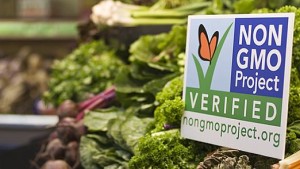
USDA’s new labeling and disclosure standards come as part of the National Bioengineered Food Disclosure Law.
Bejo Seeds Senior Tomato Breeder Doug Heath says modern plant breeding techniques give breeders the tools they need to solve growers’ challenges.
Perhaps the greatest threat to our industry is a public that values instinctual opinion over careful research and the findings of experts who have dedicated years to their field of study.
National Institute of Food and Agriculture allocates funding to help evaluate genetically modified organisms.
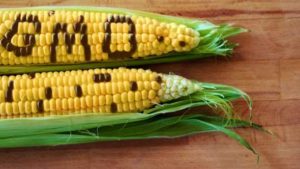
Industry experts respond to questions on GMO sweet corn, squash, and potatoes.
USDA moves Okanagan Specialty Fruits’ variety to nonregulated status; public comment period is forthcoming.
The law is praised by major grower groups because it avoids a patchwork of state laws and provides clarity going forward.
Food prices and greenhouse gas emissions would rise, according to paper by Purdue University agricultural economist.
Disproving the myths associated with the technology and highlighting lesser-known truths may help improve public reception.
A plant breeding expert details the scientific procedures required to bring GMO crops to market.
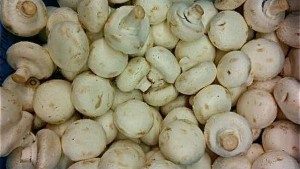
A common white button mushroom modified with the gene-editing tool CRISPR-Cas9 has been engineered to resist browning.
Huanglongbing is ravaging Florida’s iconic oranges and California’s are at risk; we should not just stand by and watch the U.S. citrus industry dry up.

In what has become a heated debate, let’s discuss the science behind GMO apples.
Organization calls on Congress for unified standards to bridge several pending labeling proposals.
Industry leaders share their feelings on the recently approved genetically modified apples.
The agency says the evaluated varieties are as safe and nutritious as conventional counterparts.
Study findings show the importance of educating the public on the science behind genetic modification.
When it comes to farming, sticking with established, commonly accepted science is the way to go.
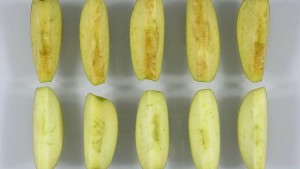
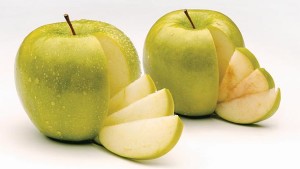
Arctic Granny and Arctic Golden apples, developed by Okanagan Specialty Fruits Inc., silence the browning gene in bruised, bitten, or cut apples.