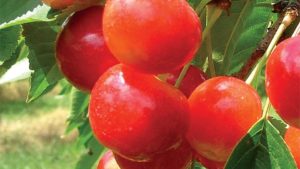
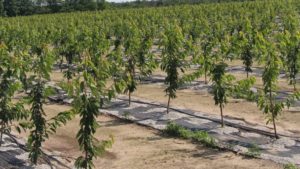
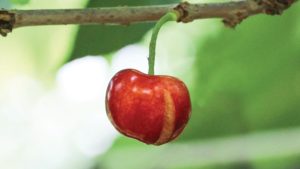
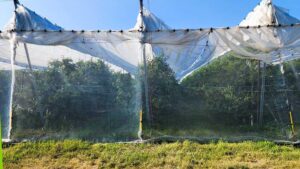
Netting Proves Effective in Putting Cherry Pests in Their Place By Michigan State University Extension|February 24, 2025 Two-year study on high-density cherry plantings shows damage from birds and spotted wing drosophila were reduced under nets.Read More
IR-4 Project on a Quest To Grow Specialty Crop Export Opportunities Posted by Growing Produce Staff|September 28, 2026
Ways Fruit Growers Can Get the Most Out of New Sprayer Tech By Gary Gao, Ohio State University|September 28, 2026
California Grapes and San Francisco 49ers Team up for New Promotion By California Table Grape Commission|September 27, 2026
What To Know About New Microbial Solution That Helps Crops Thrive With Less Water Posted by Growing Produce Staff|September 25, 2026
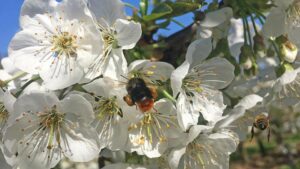
Wild Bees Setting Good Example for Pollination of Sweet Cherries By Dr. Maxime Eeraerts | Julia Osterman|May 5, 2024 Helter-skelter foraging traits of wild bees improve honeybees’ pollination contribution.
How More Shield Equals More Yield For This Cherry Grower By Thomas Skernivitz|April 30, 2024 Justin Finkler of Riveridge Land Co. in Michigan turns to rain covers and bird netting to safeguard his orchard returns.
Pressure On To Keep Sweet Cherry Crops Cool in the Face of Extreme Heat By Thomas Skernivitz|June 27, 2022 Despite valiant efforts to protect Oregon’s sweet cherry crop, last year’s heat dome was simply too hot to handle.
American Sweet Cherry Production Expected To Take a Big Hit in 2022 Posted by Growing Produce Staff|June 13, 2022 USDA crop forecast comes in 27% less than last year. Learn why.
What You Need To Know About Sweet Cherry Irrigation and Nutrition By Gregory Lang|May 22, 2022 Studies tout benefits of high-frequency, low-duration irrigation during canopy growth and foliar applications of urea in the fall.
A Solution To Fending off Leafhoppers in Stone Fruit By Thomas Skernivitz|January 11, 2022 Cherry growers, plagued by X-disease, can turn to insecticides and particle films to fight vectors.
Ways to Sharpen Your Sweet Cherry Production Systems With Precision By Gregory Lang|September 21, 2021 The precise development and simplification of fruiting units results in the most efficient canopy structure for harvest.
New Book Designed To Help Cherry Growers By David Eddy|March 24, 2021 ‘Sweet Cherries,’ co-authored by American Fruit Grower and Western Fruit Grower columnist Gregory Lang, caters to both new growers and seasoned pros.
Cherry Rootstock and Training Decisions: Thoughts for the 2020s By Gregory Lang|December 22, 2020 The question remains: Why haven’t more growers turned to orchards that are more readily harvested from the ground?
How to Build a Plant Biostimulant Program From the Ground Up By Richard Jones|May 28, 2019 Sweet cherry grower Mike Omeg shares his soil management program — and how it’s delivering big returns.
Provision Expands Disaster Aid to Cherries Hurt By Trade Posted by Christina Herrick|March 11, 2019 Part of legislation broadens window of trade-mitigation relief for farmers earning more than $900,000 on average.
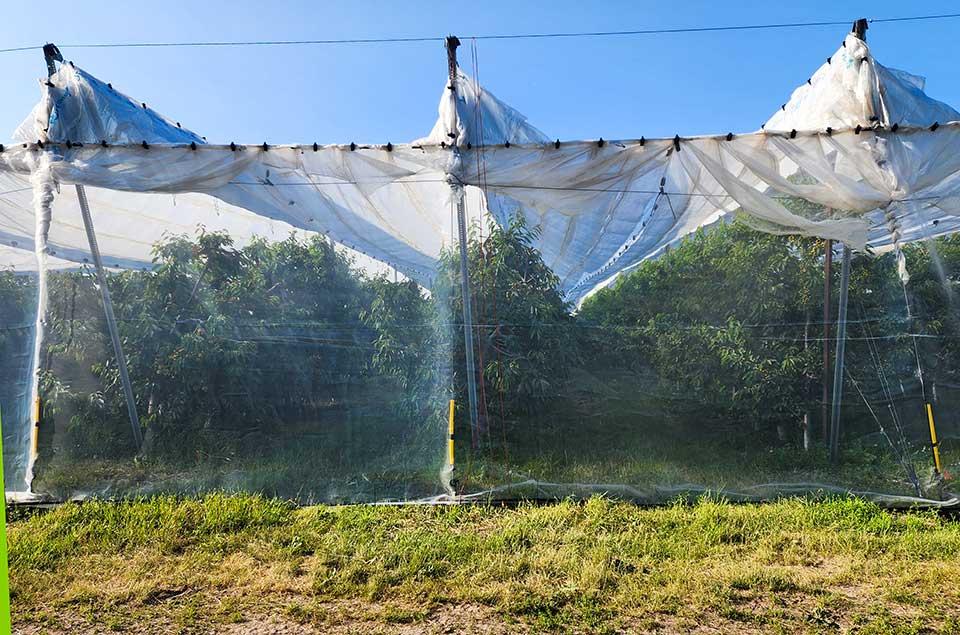
Ride-Along Turns into Lesson on New Cherry Disorder [Opinion] By Christina Herrick|September 4, 2018 A new disorder called slip-skin is challenging sweet cherry management in the Okanagan Valley of British Columbia.
Harvista Now Labeled for Use on Cherries at Bloom Posted by Christina Herrick|March 12, 2018 Label expansion allows for longer blossom window.
Many Pollinators Boost Cherry Yields — Not Just Honeybees By Katharina Ullman|September 25, 2017 Researchers are finding a multi-pronged approach to pollinators give both sweet and tart cherry growers the best results.
What Will Be the Next Generation of Cherry Canopies? By Gregory Lang|August 29, 2017 Take a look at what the future has in store for NC-140 Sweet Cherry Canopy Architecture and Rootstock Trials.
Researcher: Cherry Growers Must Use Disease Management Strategies When it Comes to SWD Posted by Christina Herrick|August 1, 2017 Dave Jones, Extension Educator with Michigan State University, says growers are well accustomed to monitoring and thinking ahead.
Monster Sweet Cherry Crop Expected Posted by David Eddy|June 12, 2017 But the tart cherry crop is forecasted to drop nearly one-quarter from 2016.
Managing Risks And Reward Of Going High Density In Michigan By Christina Herrick|December 2, 2016 The King family sees dwarfing high-density system as the future of their sweet cherry production.
New Research Gets To The Bottom Of Cherry Cracking By Christina Herrick|September 28, 2016 German researchers hope to identify root causes of rain-induced problem.





![Ride-Along Turns into Lesson on New Cherry Disorder [Opinion]](https://s3.amazonaws.com/files.growingproduce.com/growingproduce/wp-content/uploads/2018/08/Scouting-for-Slip-Skin-300x169.jpg)